

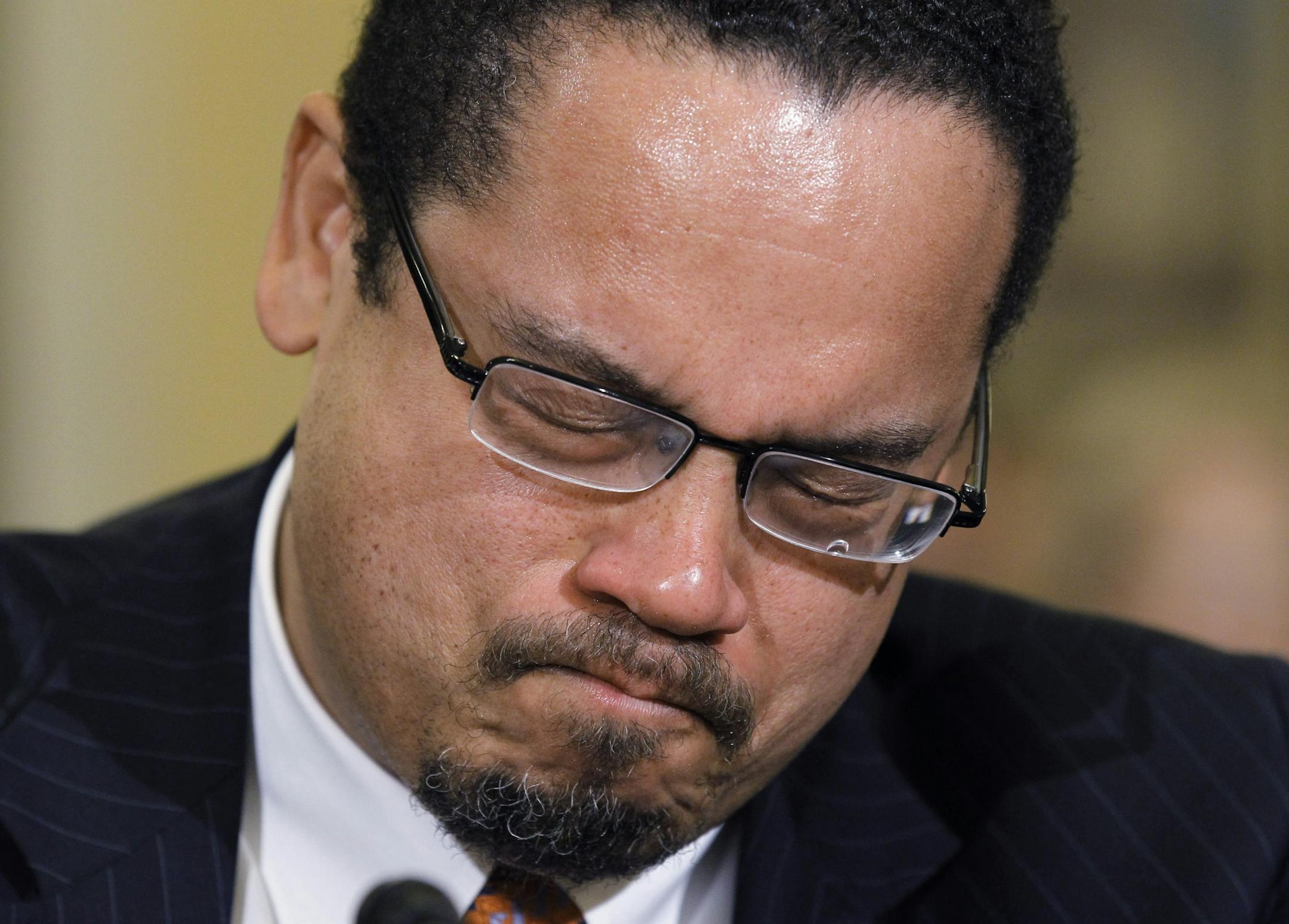
WASHINGTON - Amid the raw feelings of Thursday's House hearings on domestic Islamic radicalization, Rep. Keith Ellison could not fight back the tears.
As he told the story of Mohammed Salman Hamdani, a Muslim paramedic killed in the Sept. 11 terrorist attacks a decade ago, the Democratic congressman from Minneapolis choked up and spoke haltingly of how some tried to "smear" Hamdani because of his faith.
"His life should not be identified as just a member of an ethnic group or just a member of a religion," Ellison said, "but as an American who gave everything for his fellow Americans."
The emotional testimony from the first Muslim member of Congress came as Hamdani's mother looked on silently. The moment showcased the deep sensitivities underlying the hearing, which came amid tight security, protests and bitter complaints from civil rights and Muslim groups who feel their faith is being singled out.
But one counterpoint to Ellison's criticism of the GOP-led hearings came from Abdirizak Bihi, a Minneapolis activist whose nephew, Burhan Hassan, was among some 20 Somali youths who disappeared after being recruited by a jihadist group in their native land.
"We regret the silencing and intimidation faced by leaders and activists who dare speak out on the real challenges that keep our youth and community vulnerable to radicalization," Bihi told the Homeland Security Committee. "Burying our heads in the sand will not make this problem go away."
Bihi and others affected by domestic radicalization were brought in to testify by congressional Republicans to help make their case that Muslim leaders in the United States need to do more to confront Islamist-inspired extremism and violence.
"Their courage and spirit will put a human face on the horror which Islamist radicalization has inflicted and will continue to inflict on good families, especially in the Muslim community, unless we put aside political correctness and define who our enemy is," said Rep. Peter King, R-N.Y., the committee chairman.


