

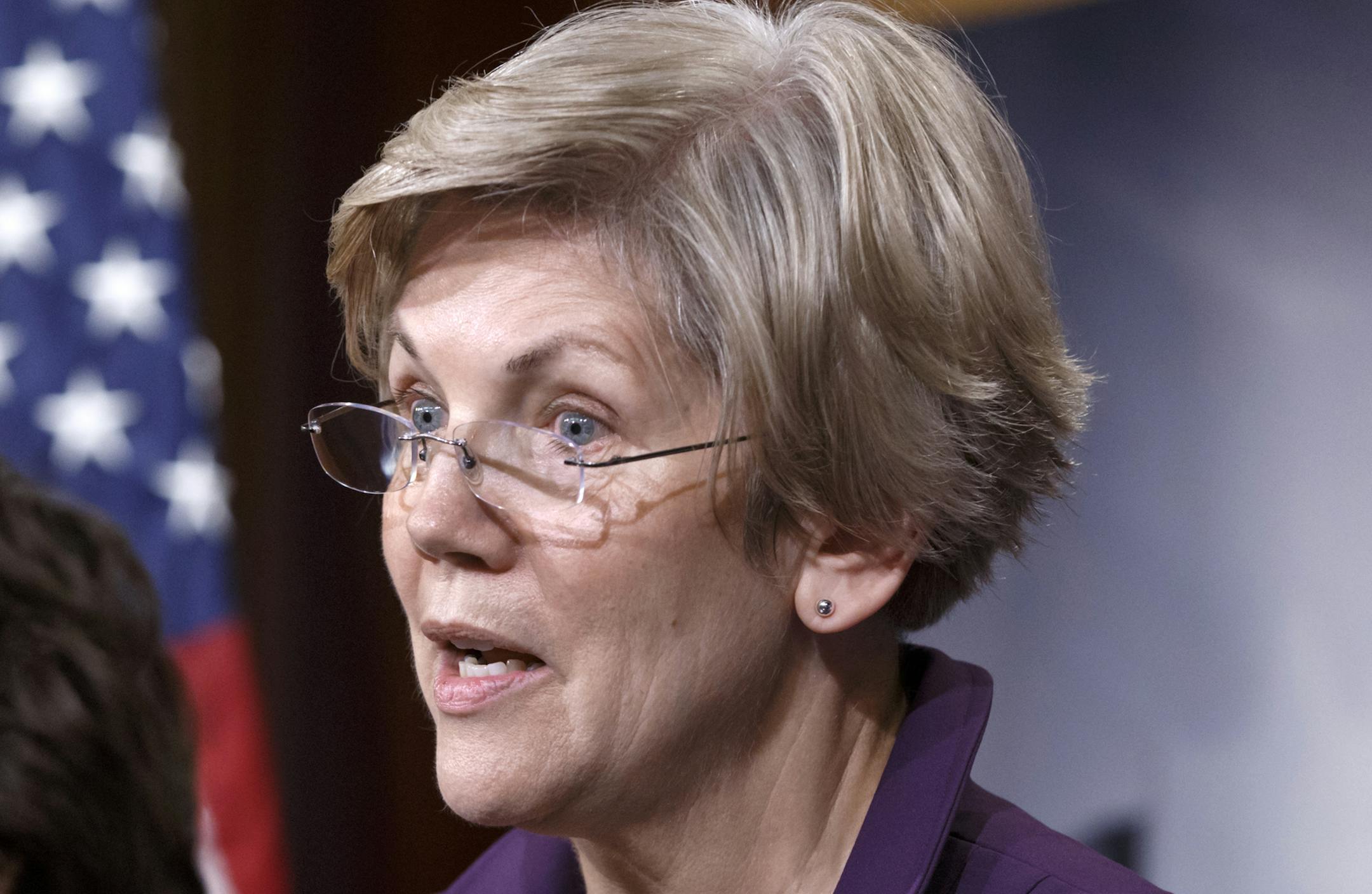
In her book released this year, Sen. Elizabeth Warren recounted a dinner she had with President Obama's chief economic adviser, Larry Summers, in April 2009, when Warren was the outspoken chairwoman of a congressionally appointed panel probing the government's response to the financial crisis.
"Larry leaned back in his chair and offered me some advice … He teed it up this way: I had a choice. I could be an insider or I could be an outsider. Outsiders can say whatever they want. But people on the inside don't listen to them. Insiders, however, get lots of access and a chance to push their ideas. People — powerful people — listen to what they have to say. But insiders also understand one unbreakable rule. They don't criticize other insiders." Warren ignored the warning.
And if the past few weeks are any indication, she can operate as an insider without giving up her outsider credentials. She's remained outspoken, but has become even more influential. She hasn't stopped throwing bombs at the rich and powerful — and causing trouble for the White House — but she's won a spot in Senate leadership, changed the shape of congressional debates over financial regulation and continued to draw attention as a potential presidential candidate.
It helps explain why, for the 300 former Obama campaign officials who last week urged her to run in 2016, she's the one they've been waiting for.
"Rising income inequality is the challenge of our times, and we want someone who will stand up for working families and take on the Wall Street banks and special interests that took down our economy," they wrote.
Leading Senate Democrats
In the past week, Warren galvanized liberals against a government spending bill that weakened a key provision of the 2010 Dodd-Frank law that tightened oversight of Wall Street.
The Senate may have passed the legislation late Saturday, but not before Warren and other liberals asserted their power in a confrontation with the White House, even winning over House Minority Leader Nancy Pelosi, who had initially supported the bill.
Warren is also in an unusually public battle with the White House and Treasury Department over Antonio Weiss, an investment banker who has been tapped for a key Treasury position. White House officials say Weiss is deeply sympathetic to Democratic views and is the right man for the job. But Warren says the administration is too cozy with Wall Street.


