

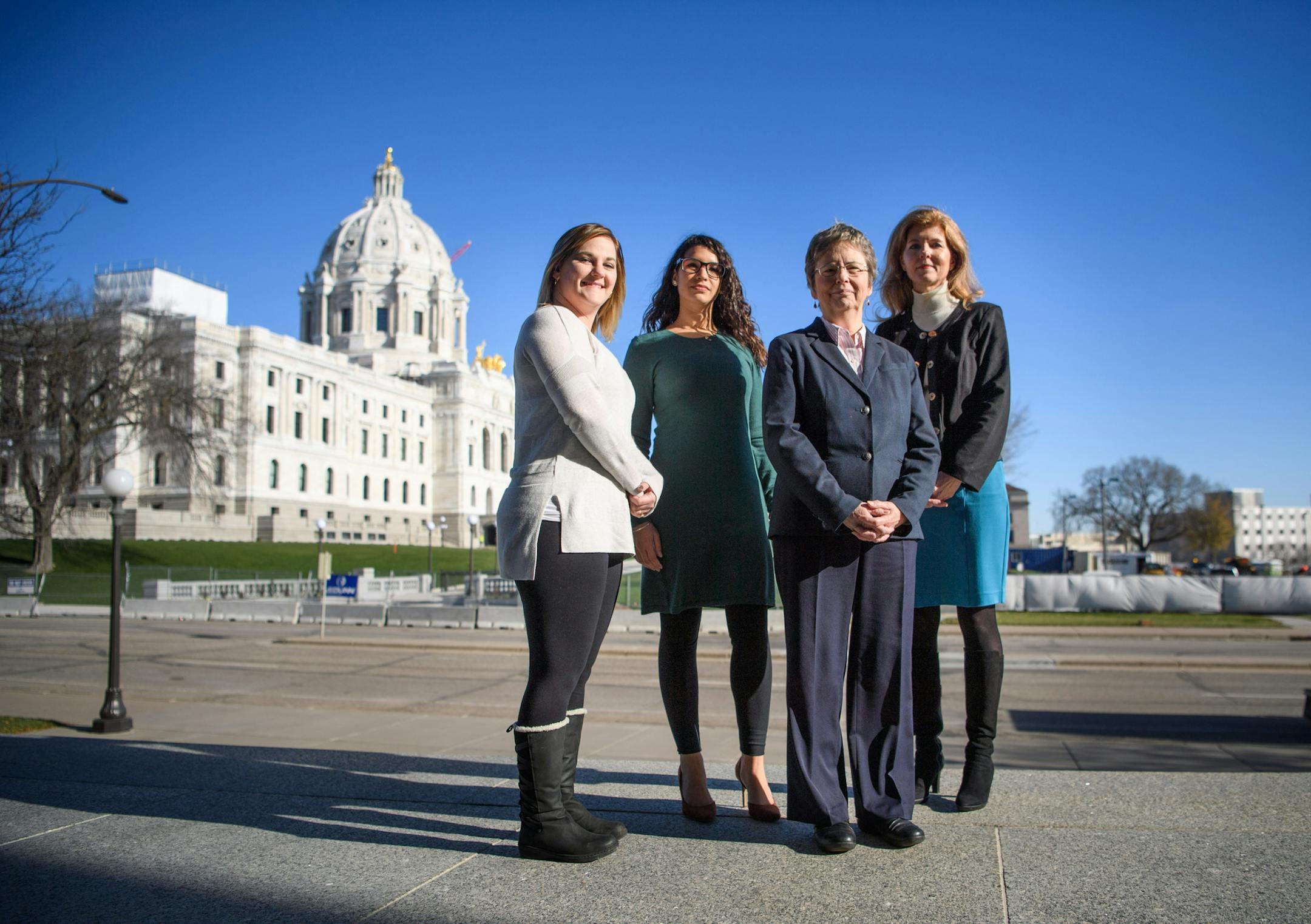
When the Minnesota House convenes in January, its members will have made history before considering a single bill.
Among the 134 members of the Legislature's lower house are 48 women, the largest number in history. Nearly half of the 23 new members of the House are women — three of them Republicans and eight DFLers.
But while legislators from both parties say they are pleased with the milestone for women in the House, they're also concerned with a very different kind of trend happening in the Senate. Next year, it will have just 16 women in its 67-member ranks, the lowest number of women in the Senate since 1991. Overall, the number of women serving in the Legislature will drop from 68 to 64, continuing a steady decline since the number of women lawmakers peaked at 70 nearly a decade ago.
As they prepare for the start of a new legislative session, both rookie and veteran female lawmakers said they're well aware of the gender gap in state politics — and hopeful that their work at the Capitol will continue to pave the way for future female legislators. In the meantime, while men still dominate both houses at the Capitol, some of the women said they see themselves as an answer to voters' frustration about slow progress in state government.
"We know when women are part of the process, things get done and get done well," said Erin Maye Quade, DFL-Apple Valley, an incoming member of the House. "People are sick of the gridlock, of not getting things done, and to that I say: 'We need more women.' "
It is not clear what is behind the recent decline of women in the Legislature, but the drop-off in the Senate has been particularly steep. Through the 1990s and early 2000s, the number of women serving there had been steadily on the rise, peaking at 27 women between 2007 and 2010. But by the last legislative session, there were just 23 women — and then nearly a third of them decided to leave. Then, in November, it wasn't a case of Senate women losing their seats to men — they just weren't running. Of the 12 senators who did not seek re-election, seven were women. And of the eight incumbents who lost their seats, only one was a woman.
Sen. Michelle Fischbach, R-Paynesville, said convincing potential candidates that serving at the Capitol is a good fit for their career and their family can be a challenge for both men and women. But she said the downward trend of women running and staying in office indicates that more work is needed.
"We've got to figure out what's keeping them from running," she said. "It could very well be family things, it could be they're doing very well in their career and they might not want to lose that momentum. … It's unfortunate that women don't run, because they're important to the process."


