

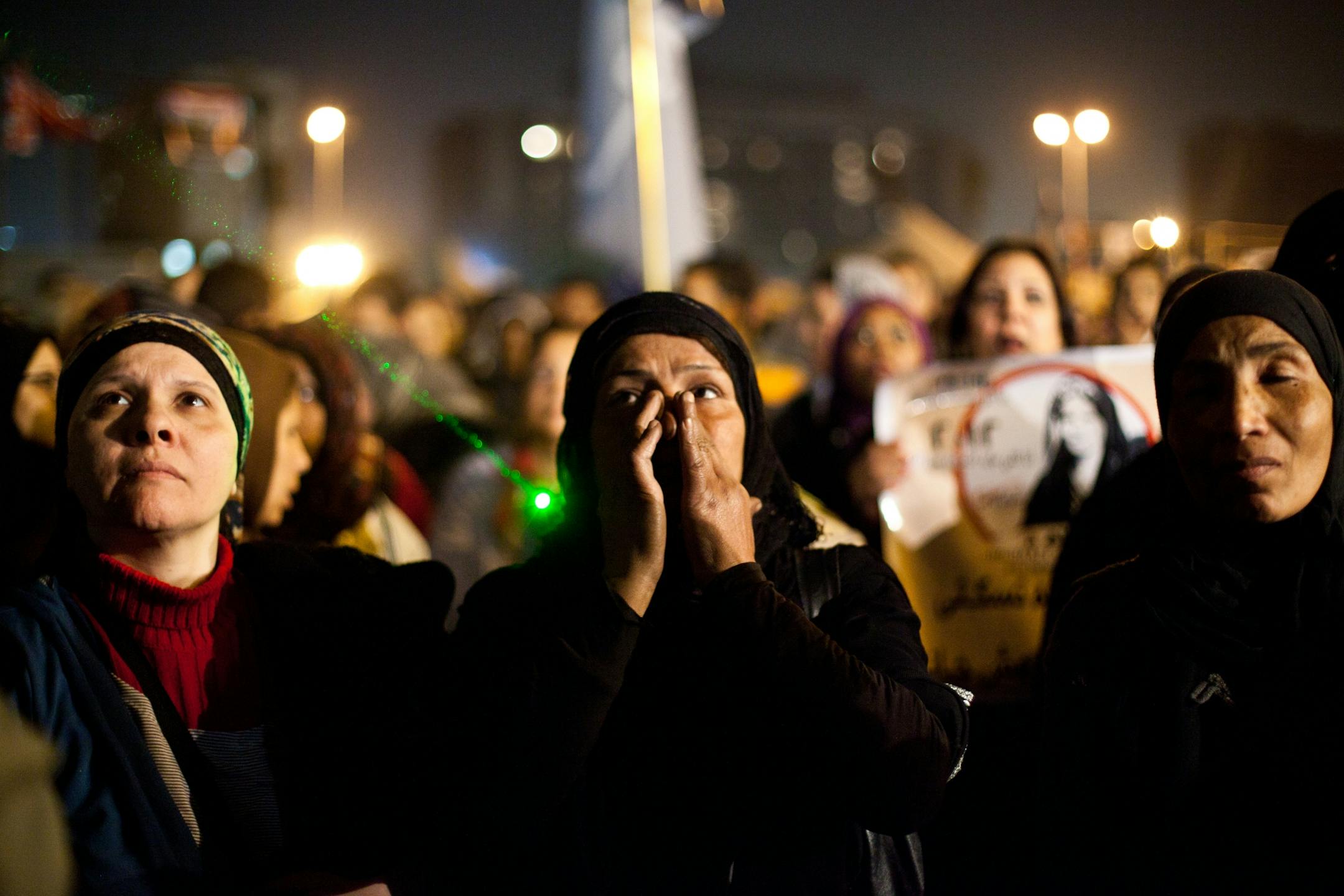
When I walk into Tahrir Square alone these days, carrying my notebook, I try to remain calm, act like I belong and move with the crowds.
If you seem scared or intimidated, they smell your fear.
Like other female reporters, I have grown accustomed to being constantly on guard while doing my job. But that can't guarantee safety. Sexual assaults on women protesters -- and journalists -- have become common in Cairo.
In late January, the United Nations strongly urged the Egyptian government to act, saying it had received 25 reports of assaults on women in Tahrir Square in a single week -- 19 of them in a single day. One young woman was hospitalized with lacerations after being raped with a sharp object. Witnesses described bite marks all over the woman's body.
Earlier this month, a public gang rape of two young women in Tahrir Square was caught on video. Dozens of men surrounded the women like they were pieces of meat. Some men who tried to help were also sexually assaulted. The victims said the attack against them was very systematic, almost as if it had been planned.
Last week, a report from Amnesty International concluded that the government's failure to pursue aggressively perpetrators of the harassment "has fueled violent attacks against women in the vicinity of Tahrir Square."
Every day on the job, I wonder: "Is today my turn?" As a journalist, my job is to remain neutral and objective. But, as a woman in Egypt, simply being out in society and doing my job might be considered an act of rebellion and resistance.
Intellectually, I know that such men are acting out against women because they view us as weaker. But when I'm alone, I sometimes wonder: "Did I do something subconsciously to deserve their harassment?" That is how it works with abuse.


