Some combination of denial and fear led the Egyptian government to refuse my colleague and me entrance to the country recently. The form wrapped around my colleague's passport describing why we were being denied entry was checked, "For security reasons."
No one from Human Rights Watch had ever been barred from Egypt, even during the darkest days of former President Hosni Mubarak's rule. But the reason for my visit was also unprecedented — a massacre that rivals the most notorious of recent times, such as China's Tiananmen killings in 1989 and Uzbekistan's Andijan slaughter in 2005.
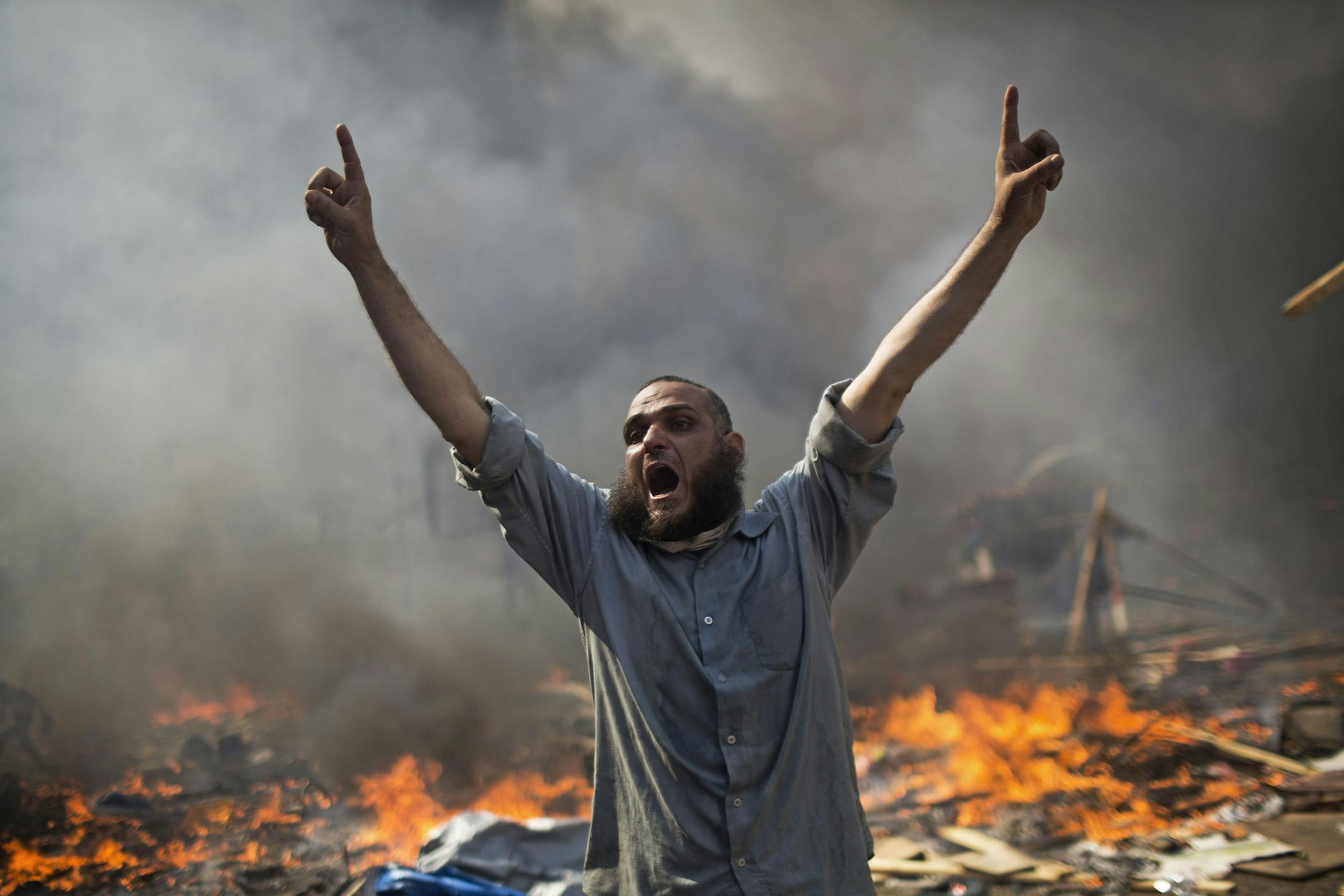
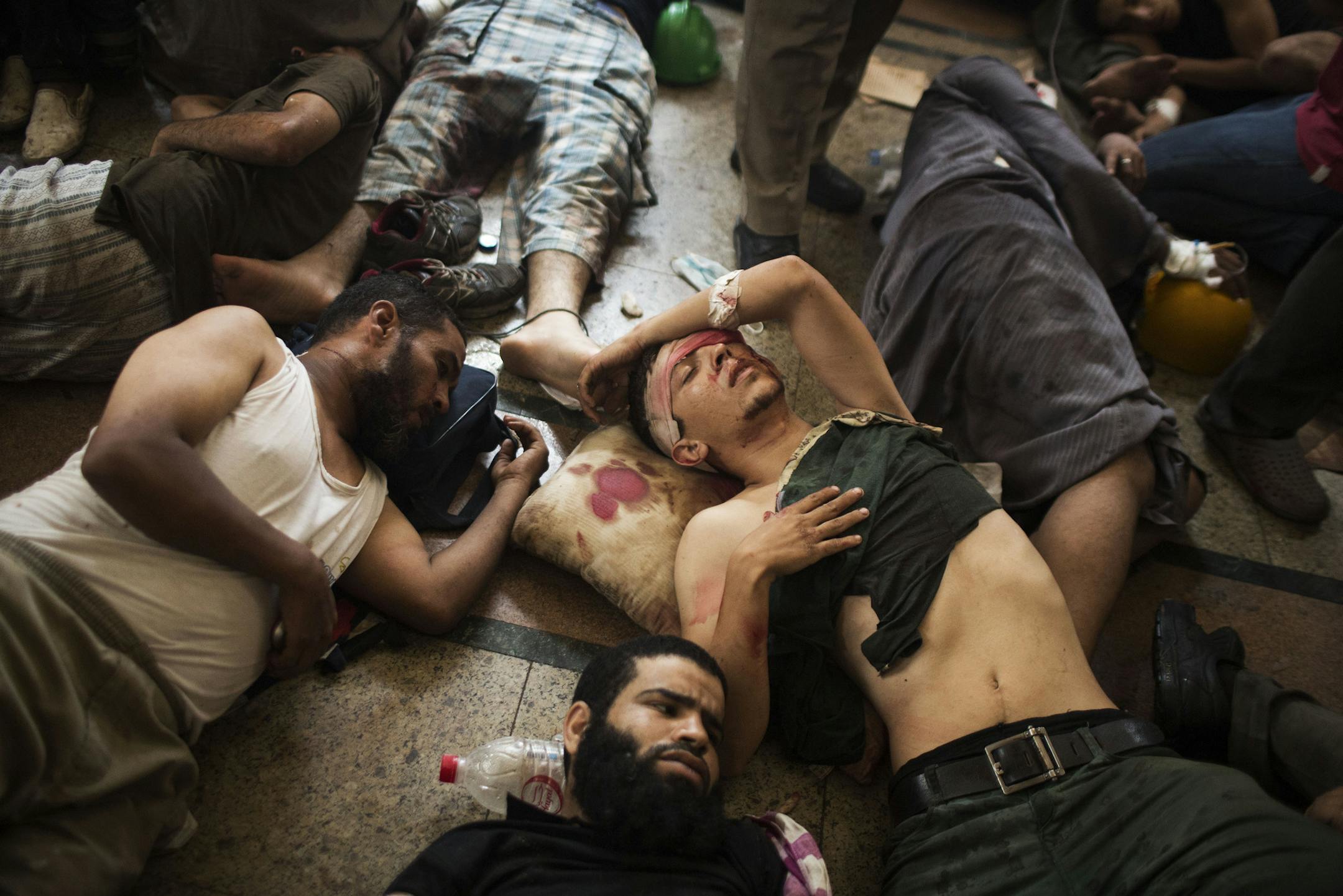
I went to Cairo to present the results of a detailed investigation that Human Rights Watch had conducted into last year's massacre by Egyptian security forces of protesters at a large sit-in demonstration in Cairo's Rabaa al-Adawiya Square, organized to oppose the military's ouster of the Muslim Brotherhood's Mohammed Morsi, Egypt's first elected civilian president. In some 12 hours security forces killed at least 817 people, each of whom has been individually identified by Human Rights Watch, and quite likely more than 1,000. The slaughter was so systematic that it probably amounts to a crime against humanity under international law.
The sit-in had been underway for a month and a half when Egyptian authorities moved to quash it. Egyptian officials promised a gradual dispersal that would include warnings and a safe exit for anyone who chose to leave. The actual dispersal was anything but that. Early in the morning of Aug. 14, 2013, security forces launched their operation: Within minutes, security forces — advancing on crowds of protesters with bulldozers, armed personnel carriers, and hundreds of ground forces — were already firing live ammunition, sometimes in intense fusillades.
Protesters began falling. The promised safe exits never materialized until the final minutes of the dispersal, causing protesters to cower in an ever-shrinking area as snipers picked off people from rooftops and ground-level police fired indiscriminately into the crowd. Snipers even targeted the entrance to Rabaa Hospital, which became known as "Sniper's Alley."
The Egyptian government has been quick to stress that there was some violence among the demonstrators as well, but that does not begin to justify the security forces' slaughter. On the periphery of the demonstration, some young men did throw Molotov cocktails at security forces and, in a few instances, used firearms. However, the police found only 15 firearms among the tens of thousands of demonstrators, and the police death toll, according to the government's own Forensic Medical Authority, was eight. Such a grossly disproportionate death toll suggests something deeply wrong with this operation, especially as it was a policing operation in which international law required that lethal force be used only if necessary to meet an imminent lethal threat.
Far from taking cover in fear of protester violence, the police stood openly on rooftops and armored personnel carriers as they fired and advanced on the protesters. Witnesses, including local residents and independent journalists, described anything but a targeted effort to neutralize a handful of armed protesters. Instead, they described security forces indiscriminately mowing down the demonstrators in Rabaa Square.
There is every reason to believe that this was a planned operation, implicating officials at the very top of the Egyptian government. Interior Minister Mohamed Ibrahim was the lead architect. His immediate supervisor, in charge of all security operations, was Abdel-Fattah el-Sissi, who was then defense minister and deputy prime minister for security affairs and is now Egypt's president.