

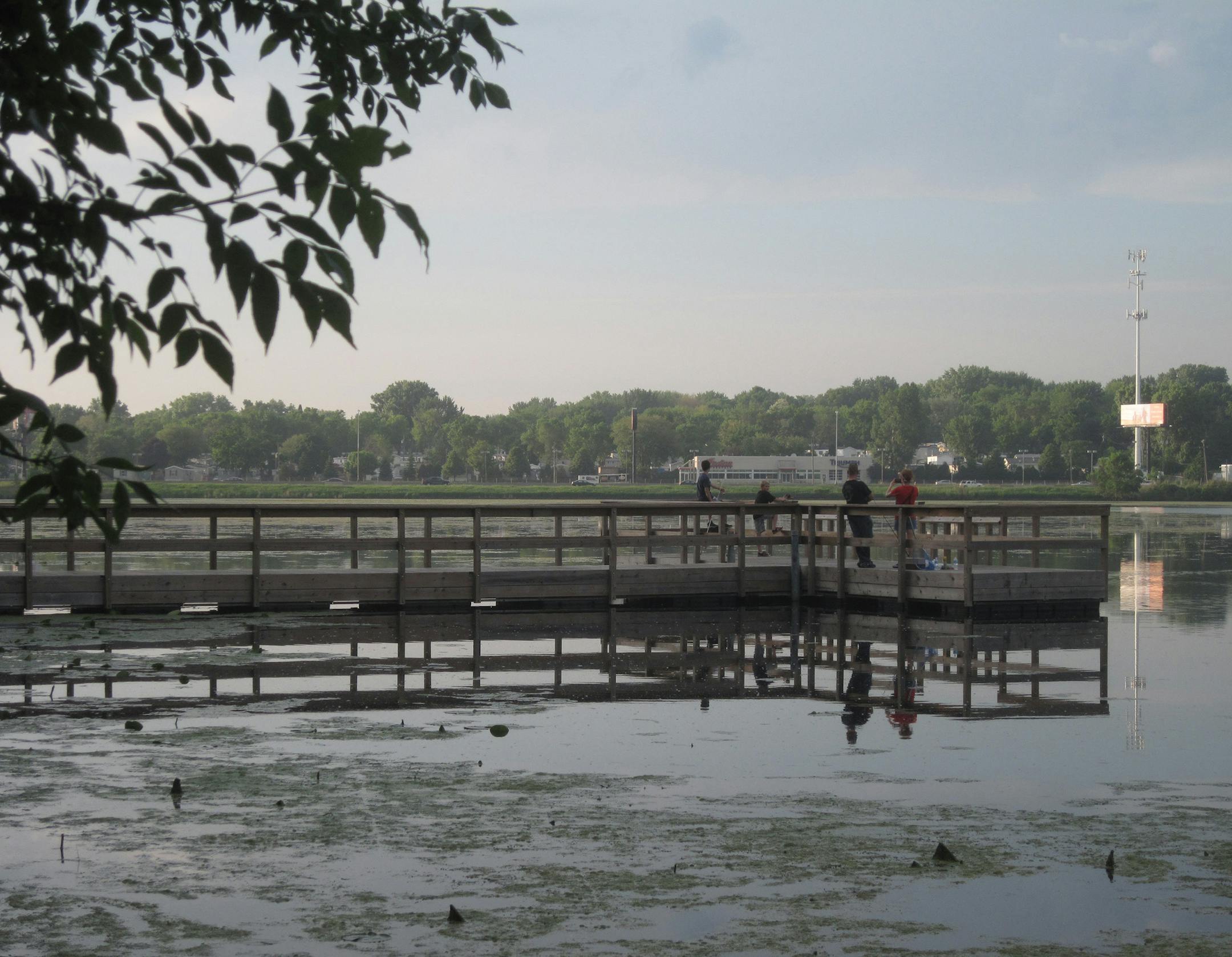
On the surface, so to speak, Colby Lake is one of several pretty bodies of water clustered in the western part of Woodbury, the focal point of nearby housing developments, encircled by a well-kept trail popular with joggers, bicyclists and dog walkers.
But serious problems have been lurking with the lake's water quality for years, and a broad-based effort is aiming to get the lake back into proper environmental shape by the end of next year.
The state Department of Natural Resources (DNR), South Washington Watershed District, the Washington Conservation District, the city and even homeowners near the lake are working in concert to achieve that goal.
"Everyone is working on different aspects of this — it's all about working together," said Jim Levitt, a fisheries specialist with the DNR who supervises the agency's Fishing in the Neighborhood (FiN) program. "It's about leveraging those local connections to do more with the limited resources that we have."
FiN has been managing the fish population in Colby Lake since 2002, Levitt said. It has been a slow and steady effort that will reach a key benchmark of progress when an 84-foot fishing pier — a T-shaped structure similar to those on Powers and Battle Creek lakes in the city — is installed on the south end of Colby Lake, probably by September.
The pier installation, which is planned at no cost to the city, comes a year after the watershed district installed an aeration system to keep oxygen in the lake and prevent the frequent winterkill of fish, Levitt said. With that and other steps, a lake once dominated by bullheads and white suckers will soon be giving way to bluegill, crappie and even northern pike.
The pier has been a priority for the FiN program. The program aims to increase angling opportunities, public awareness and environmental stewardship in the seven-county metro region. Ultimately, it works to keep the fishing tradition in Minnesota vibrant, particularly among young people, he said. A key aspect of that is to providing angling opportunities close to where people live.
Improving habitat is part of that mission, and Colby Lake clearly needed help.


