

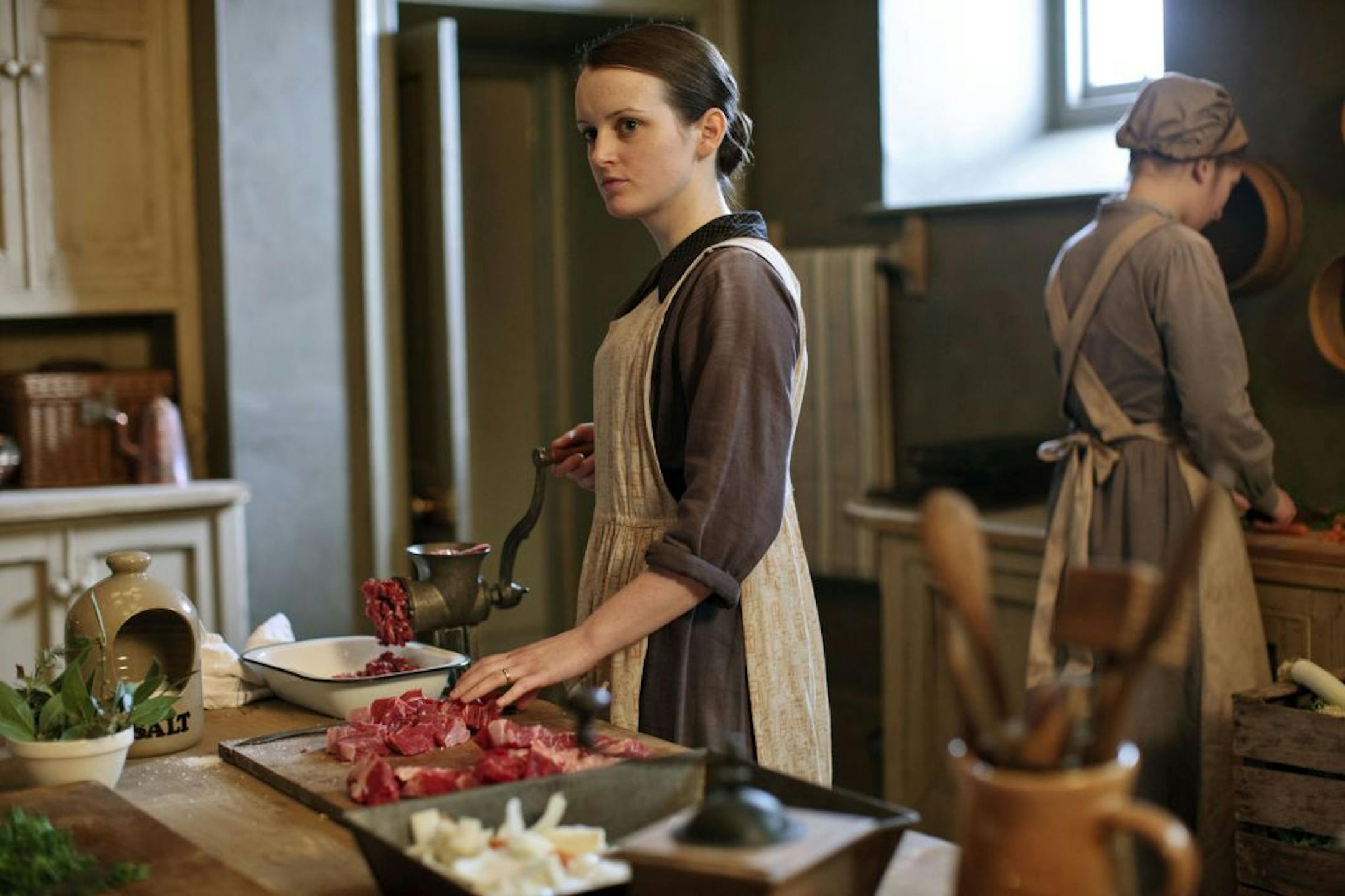
The romance. The intrigue. The big, beautiful country house.
We can analyze the recipe for success of "Downton Abbey" until our cups of tea go cold. The British television import's third season debuted Sunday on PBS. But one element that can't be overlooked, especially for those of a culinary bent, is the food.
Rather than letting it serve as mere eye candy, creator and writer Julian Fellowes has worked crêpes, puddings, roast chicken and other edible props into some of the series' most memorable plots.
Who can forget Mrs. Patmore's disastrously salty raspberry meringue pudding? How many fans fell hook, line and sinker for the implication that Branson the chauffeur would off the famous British general with a poison-laden soup?
The lavish spreads enjoyed by the aristocratic Crawley family in early-20th-century England are enough to inspire envy in those who might be watching with a microwave dinner in their laps. The show has revived an interest in British food, particularly that of the 1910s and 1920s, that could easily fall prey to stereotypes: Aspic! Haggis! Puddings! Instead, viewers have embraced the comestibles they've seen on the small screen, with spinoffs including Pinterest boards, blogs and a recently released unofficial cookbook.
"Because they love the show, it makes them more interested in the history of the food that was on the show," says Pamela Foster, a Toronto marketing professional who has put her history degree to good use on her Downton Abbey Cooks blog and in her e-cookbook, "Abbey Cooks Entertain." "It's sort of a teaching point to connect people to history."
The real thing
At Highclere Castle -- where "Downton Abbey" is filmed -- the downstairs area once included marble tops in a pastry area and separate preparation spaces for different types of food to avoid cross-contamination, says the Countess of Carnarvon, who, with her husband, the Earl of Carnarvon, lives at the 50-plus-bedroom castle.


