

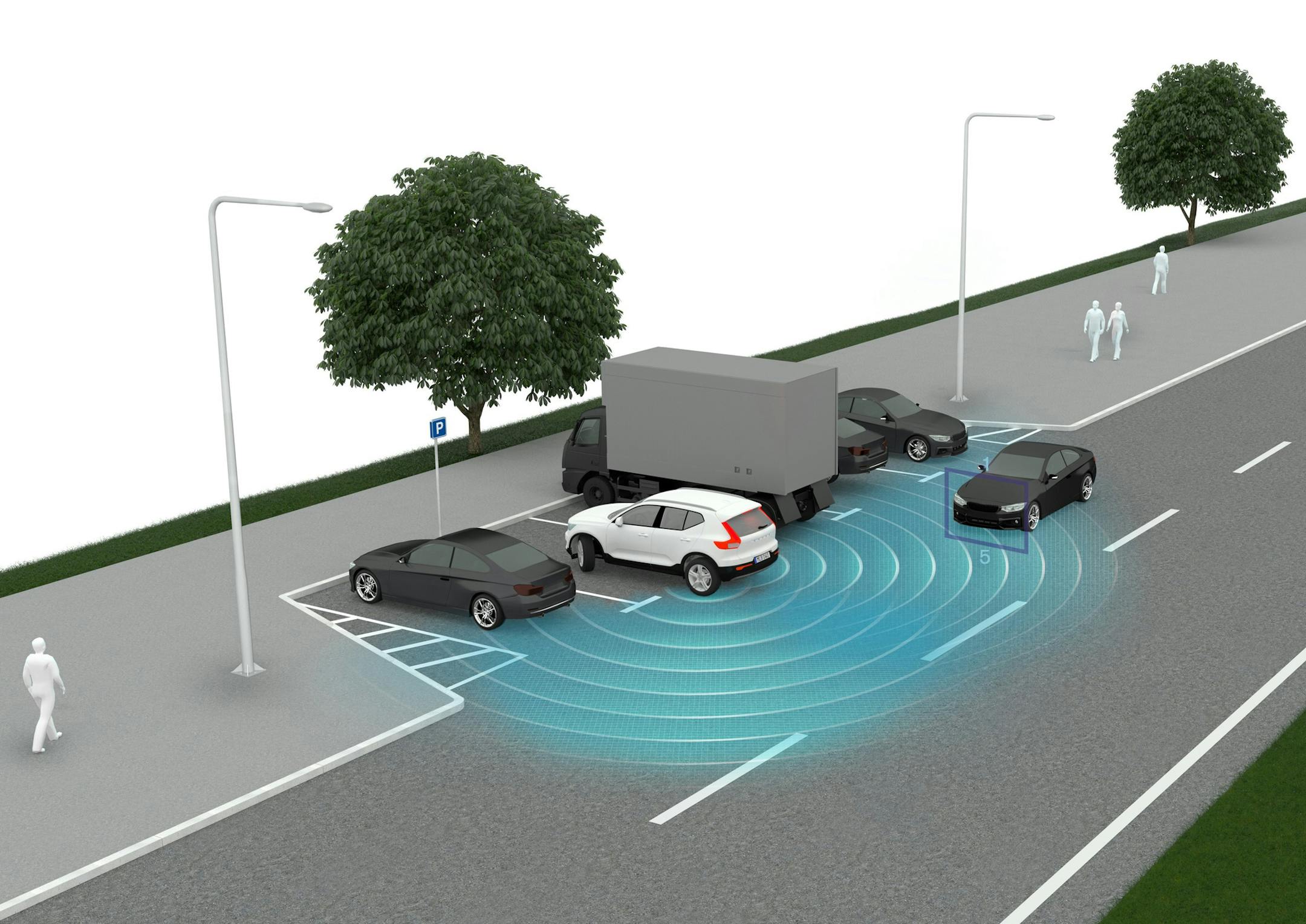
We are in a new era of car safety: The focus has shifted from reducing death and injury in a vehicle collision to preventing a crash from happening in the first place. Safety features designed to avoid accidents are becoming increasingly common in new cars. Here is an overview of the advanced safety features you're likely to encounter when shopping for a new car, along with examples of what carmakers call their versions of the features.
Forward collision warning: If you come up behind a slower or stopped vehicle and don't show signs of braking, the forward collision warning system will alert you that an impact is imminent. Some carmaker names for this feature include Predictive Forward Collision Warning (Infiniti), Forward Collision Alert (Chevrolet) and Forward Obstruction Warning (Mazda).
Should you get it? Yes. Distracted driving is at an all-time high, and this system can serve as an extra set of eyes. The National Highway Traffic Safety Administration (NHTSA) recommends the technology.
Automatic emergency braking: This system will become a standard feature on nearly all cars and light trucks by 2022, thanks to an agreement among most carmakers and the NHTSA. If the vehicle senses an imminent collision, the system will automatically apply the brakes to avoid or minimize impact. It is often bundled with forward collision warning and goes by names such as City Safety automatic braking (Volvo), Low Speed Forward Automatic Braking (Cadillac) and Frontal Collision Warning with City Collision Mitigation (BMW).
Should you get it? Yes. The fact it is becoming a standard feature soon speaks to its importance.
Adaptive cruise control: This system is less an active safety feature than a way to reduce driver fatigue on the highway. Let's say you set the cruise control at 70 mph. If a you catch up to another vehicle or one gets into your lane, the system will apply the brakes to slow your car down and follow the vehicle ahead at a preset distance. The naming is fairly standard, with the exception of more advanced systems such as Super Cruise (Cadillac), ProPilot Assist (Nissan) and Autopilot (Tesla).
Should you get it? It depends. These systems require you to trust the car to speed up and slow down on its own. If you're not OK with that or don't use cruise control at all, save your money. And, just as with some drivers, some systems brake more smoothly than others.
Blind-spot monitoring: This system will scan the rear corners of the vehicle and light up your side mirrors when it detects a vehicle in those zones. It's one of the most common new safety technologies, available on about 73 percent of 2017 models, according to Edmunds data. Some automaker names include Side Blind Zone Alert (Chevrolet), Audi Side Assist (Audi) and Blind Spot Detection (Hyundai).


