

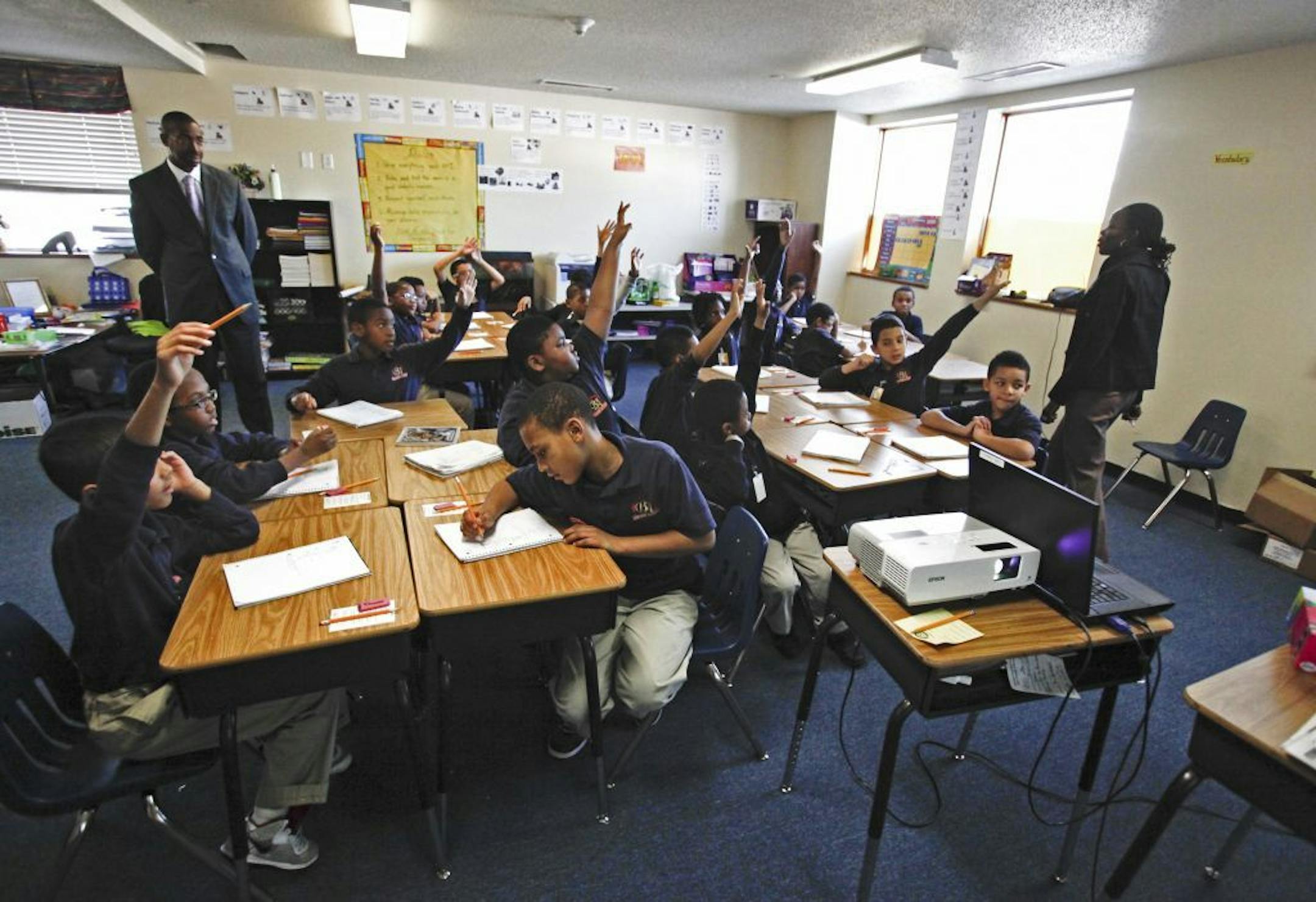
Back in 1992, with a handful of students and teachers, City Academy High School in St. Paul became the nation's first public charter school. Now, 20 years later, more than 5,600 charter programs have more than 2 million students in 40 states.
Charter advocates came together last week to celebrate their accomplishments over the past 20 years and ponder the challenges ahead. The 12th annual conference sponsored by the National Alliance for Public Charter Schools (NAPCS) brought nearly 4,000 advocates to downtown Minneapolis.
They appropriately lauded some Minnesota founders and supporters, including former state Sen. Ember Reichgott Junge, author of the original Minnesota bill, and longtime supporters and activists Sen. Gen Olson, Joe Nathan and Ted Kolderie. And they inducted into their Hall of Fame Minnesotans Eric Mahmoud, founder of Seed Academy/Harvest Prep in Minneapolis; John Schroeder, founding director of Charter Friends National Network, and City Academy.
While conferees predictably celebrated their best students, teachers and leaders, they also acknowledged formidable challenges. An NAPCS-commissioned report on the state of charters offered a number of recommendations to improve quality, turbocharge the growth of the best programs, hold authorizers more accountable, and close or intervene in persistently low-performing schools.
There are some shining stars among charters, but many do no better than traditional schools at educating those students who struggle the most. That must change -- for all public schools. One of the original goals of the charter-school movement was to try new and creative ways to educate kids who weren't getting what they needed in traditional schools.
Even though the growth of charter schools has been phenomenal, the overwhelming majority of America's students still attend traditional public schools. Charters still serve a small percentage of America's 55 million schoolchildren and that's not likely to change.
That's why one of the most promising developments for the future is increased cooperation between traditional and charter schools. Its well past time for the "us vs. them" mentality to end between the two types of public schools. Both have had successes and have proven their value with some groups of kids.
But to expand that success and fulfill the goals of the original law, charters and traditional public schools should work together to develop quality, effective programs by taking the lessons of the last 20 years and putting them to work for kids.


