

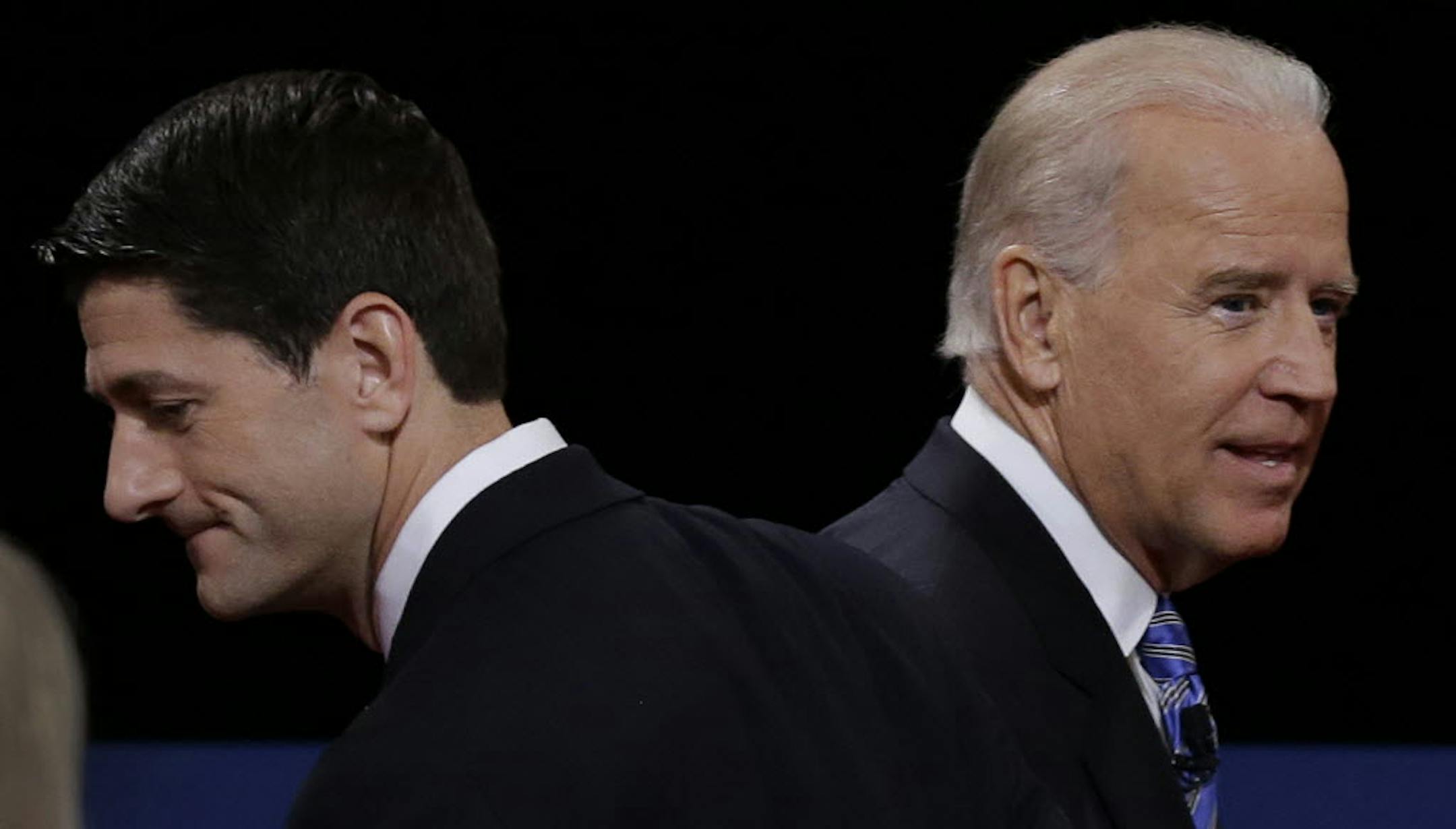
Voters will have only a few more days to digest Thursday's feisty debate between Vice President Joe Biden and Rep. Paul Ryan. The focus will now shift quickly back to the top of the ticket and the second presidential showdown, on Tuesday.
Biden and Ryan mostly reaffirmed well-established positions -- and dodges -- on key questions, and left the race largely unchanged. Above all, they left unanswered what may be America's central question in the home stretch of this campaign: how either the Democratic or Republican ticket will be able to break the political gridlock demonstrated by Biden's and Ryan's combative performances.
Their differing worldviews were apparent from the early sparring on foreign policy. Ryan was right to press the Obama administration on its handling of the terrorist attack on the U.S. consulate in Libya. Biden promised to shoot straight with the American people -- but, to date, inconsistent administration answers about the incident have only raised more troubling questions.
Biden was much stronger defending the administration's muscular, multilateral strategy on Iran. Working through the United Nations, sanctions are starting to cripple Iran's economy, increasing pressure to curb its nuclear ambitions. In particular, Biden wisely invoked the warnings of potentially catastrophic consequences of U.S. military involvement voiced by Robert Gates, defense secretary under the Obama and Bush administrations.
There was more agreement on Afghanistan, although Biden was rightly more resolute on ending combat operations in 2014.
Bigger divides opened on domestic policy, including what to do about the deficit and debt. Both showed understanding of the severity of the situation, but not of the deep frustration felt about Washington's unwillingness to compromise.
Pressed to reveal which loopholes would be closed to pay for tax cuts, and how the budget could ever be balanced without significantly cutting defense spending, Ryan, like his boss, was vague. Pressed to explain new strategies to negotiate the needed "grand bargain" to avoid the coming fiscal cliff and unsustainable deficits, Biden mostly blamed Republicans. Both evasions are a disservice to voters.
The sharpest contrast came on Medicare, with Biden forcefully pushing back on any kind of a voucher system, a hallmark of Ryan's "road map" plan in Congress. Biden's vociferous defense of Medicare and Social Security as cornerstones of retirement dignity were welcome. But the key question of how to maintain the popular programs into the future was not satisfactorily answered.


