

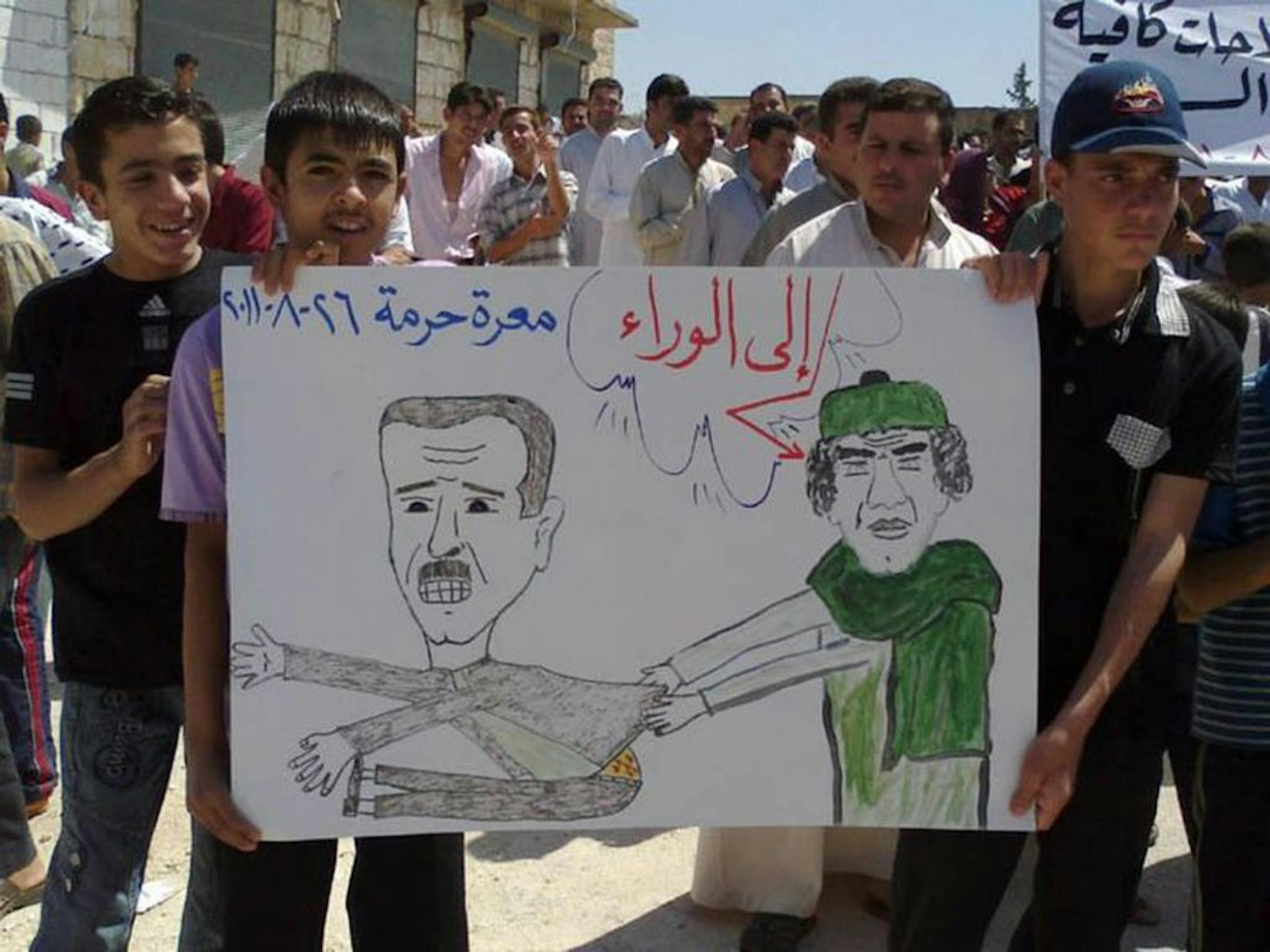
It may be a bit before Syrian political cartoonist Ali Farzat can draw again, after progovernment thugs broke bones in his hand and arm.
But his most recent drawing of Syrian President Bashar Assad hitching a ride out of town with former Libyan leader Moammar Gadhafi is an image that will last with Syrians.
Indeed, most would like to see the cartoon become a photograph, as they yearn for the day that their repressive ruler joins Gadhafi, Egypt's Hosni Mubarak and Tunisia's Zine El Abidine Ben Ali as dictators deposed due to the Arab Spring protest movement sweeping the Middle East and North Africa.
While it's unlikely that the international community will replicate the NATO airstrikes that tipped the scales in favor of Libyan rebels, recent moves from several global leaders are important steps in ridding Syria, and the world, of Assad.
On Aug. 18, the Obama administration not only called for Assad to step down but also further tightened sanctions to try to drive a wedge between Assad and his biggest backers -- the business and military elites.
Many observers complained that these actions were too late, given the ongoing and documented brutality of the regime. But it was actually savvy of Obama to wait. By doing so, he allowed an Arab -- and more important, a Turkish -- diplomatic process to run its course.
And now leaders from these countries know what Western interests learned long ago: Assad has no intention of ending his homicidal crackdown on protesters, which the United Nations says has claimed more than 2,200 people over the last five months.
Assad's rebuff resulted in Saudi Arabia, Bahrain and Kuwait all recalling their ambassadors, which is a rare and significant event in the region. And on Sunday, two other major regional players rebuked Assad.


