

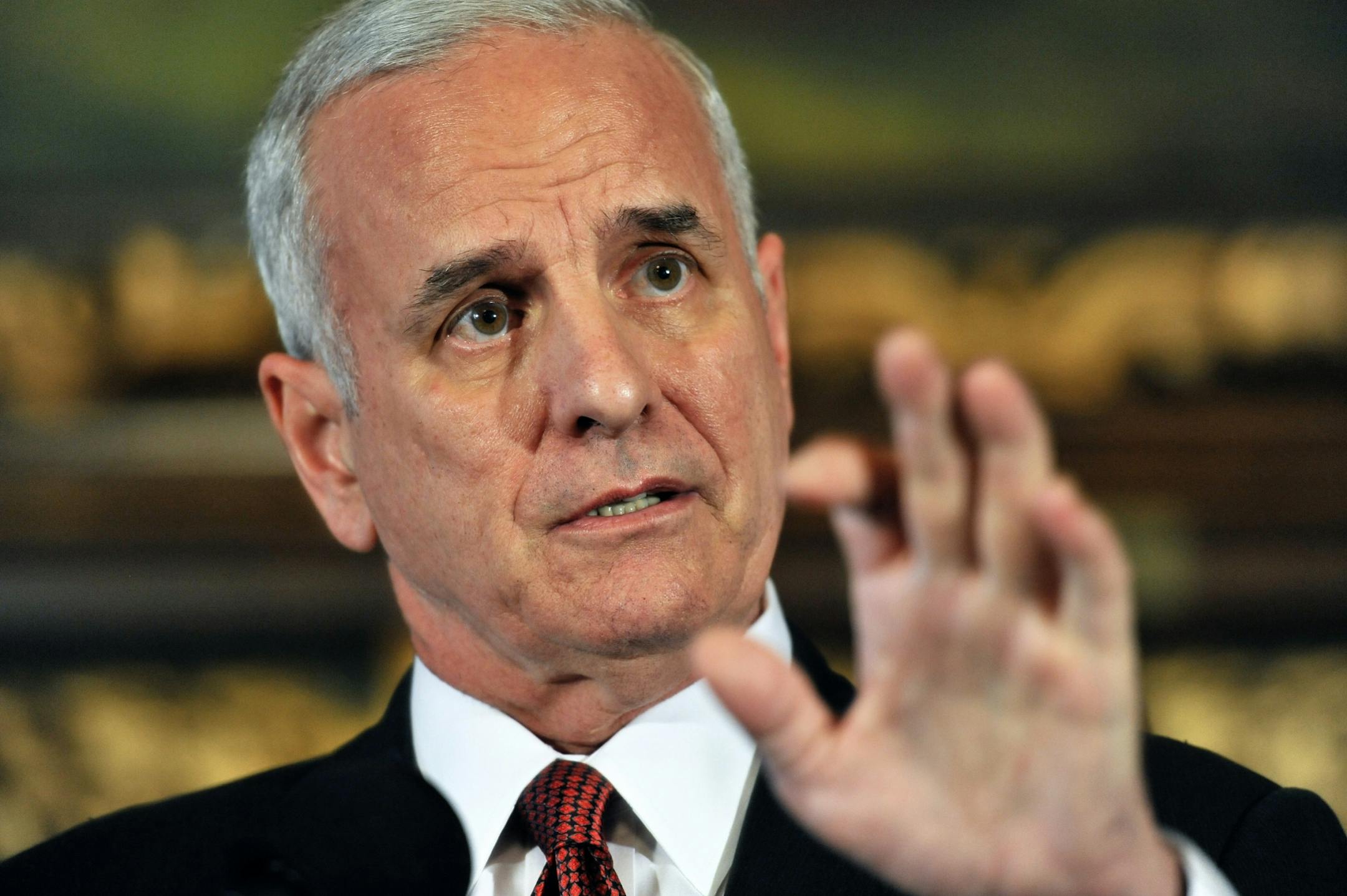
We had to listen closely to catch it: Twice in the last two weeks, Gov. Mark Dayton and Revenue Commissioner Myron Frans have let slip that they intend to launch a serious push for tax reform, aimed at producing proposals for the 2013 Legislature.
Good for them.
It may be a measure of how sore the tax subject still is in the wake of the bruising 2011 legislative session that their project has not been rolled out with reception-room fanfare or ballyhooed at Dayton's series of jobs meetings around the state. Instead, it was revealed in response to a gubernatorial news conference question last week, and during Frans' remarks at a government-insiders' policy conference earlier this month.
We hope applause from this corner will encourage the administration to more vigorously embrace this good intention, perhaps as soon as Tuesday's daylong Governor's Jobs Summit. Minnesota is overdue for an overhaul of state and local taxes, done with an eye toward improving the state's economic competitiveness and stabilizing deficit-buffeted government operations. The work ought to be bipartisan and far-reaching.
The timeline Dayton described -- work starting by Jan. 1 and completed before the 2013 Legislature convenes -- sounds appropriate for an effort of the scope and depth this one deserves.
But the DFL governor and the Republicans who control the 2012 Legislature should also prepare for the possibility that their 2012-13 budget work is not over. A state revenue forecast due on or about Dec. 1 will reveal whether patchwork is needed. If a revenue shortfall reappears, Dayton ought to recommend reform-related measures to close it -- and resist the temptation to reprise tax-the-rich proposals that GOP majorities have already flatly rejected.
The reform we have in mind would heed advice that economists from around the country have given Minnesota for many years: Make the sales tax a stronger workhorse by broadening its base to more consumer purchases. Trim the overgrowth of exemptions, deductions and credits in the personal income tax, and regularly review the public-policy value of the ones that remain. That goes double for the corporate income tax, whose high rate produces sticker shock but whose effective rate, after all the subtractions, makes it a slightly below-average source of state revenue.
The fattest, plainest target for sales tax expansion is clothing. Minnesota is one of only four states that exempt clothing purchases from sales tax. A number employ exemptions or credits to shield low-income purchasers from the full brunt of the tax. That's an option Dayton's tax reform panel should consider.


