

Big-time college sports are totally corrupt. Oh, by the way, what time does the game start?
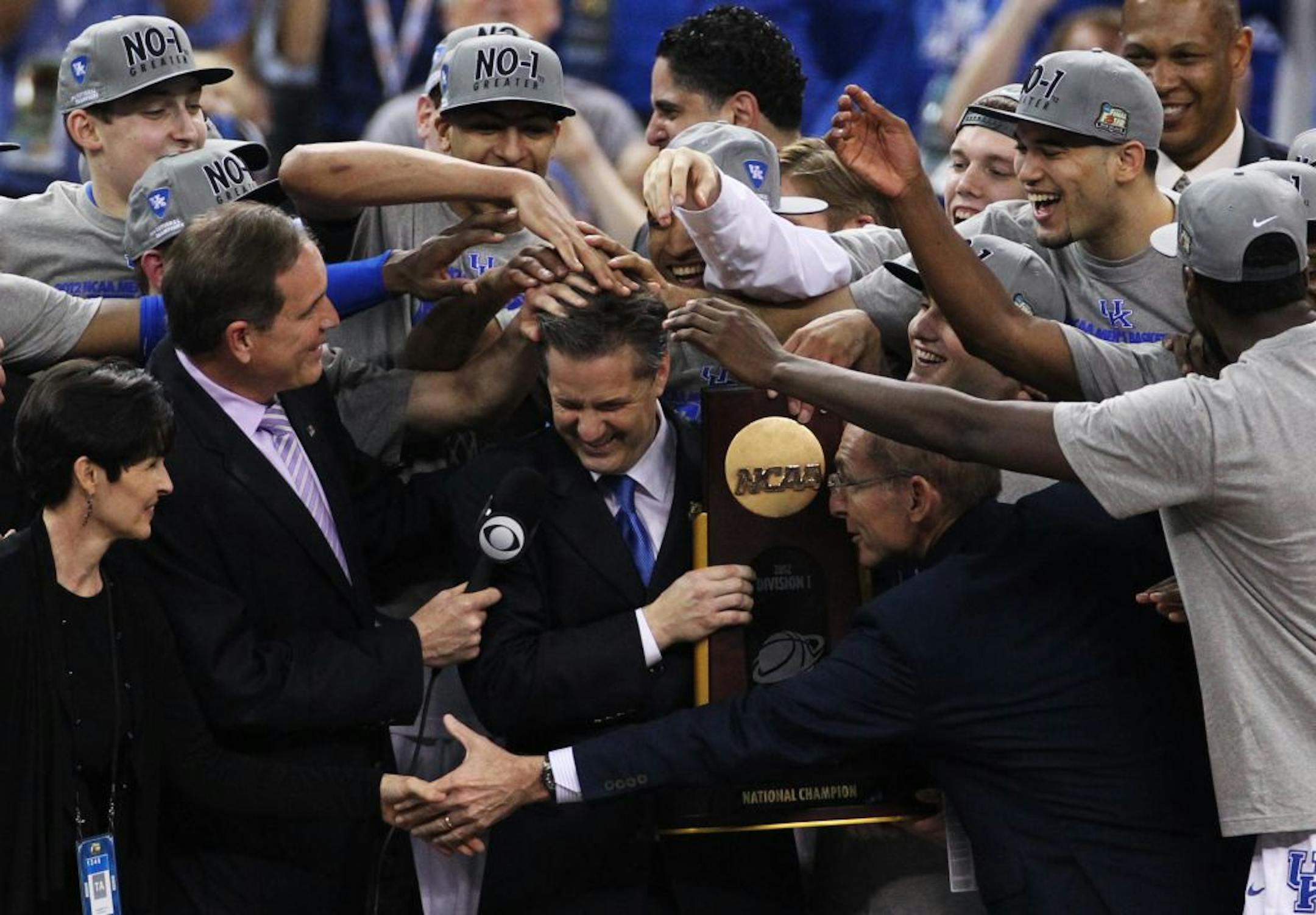
Monday night's NCAA basketball championship game started at 8:23, and over the next two and a half hours the corruption got so bad that we couldn't take our eyes off it. The University of Kentucky had placed more raw basketball talent on the court than any finalist had probably ever assembled. The Wildcats started three freshmen and two sophomores who played more like pros than college kids. And when it was all over, when the coach and "student athletes" were seated at the postgame news conference, no one asked our favorite fantasy question: "What's your favorite class?"
That's because everybody knows about the charade. These young stars weren't really college kids in the sense that their goal was to get degrees. Their brief stop in Lexington was aimed at winning a national title and moving on to the truckloads of money that await them in the NBA. (As many as six Kentucky players are expected to be first-round picks in the NBA's June draft.) They enrolled not so much at a university as in a "program," which is how the elite athletic schools now describe their basketball and football teams.
The schools strike a bargain of sorts with the most talented young players: Come to our campus for a year or two. We'll exploit and make millions of dollars off of you, and in exchange we'll showcase your talent on the national stage so you can pursue your professional dreams.
The strength of this cynical arrangement is obvious: People love it.
Who could not marvel at Monday's action: the above-the-rim acrobatics, the deft shooting touches, the brute physical strength and hustle, the symphonic teamwork, the courageous comeback by another storied program, Kansas, that fell just short? From the White House to the corner bar, March Madness and the Final Four have become a springtime obsession because it's so exciting -- and because it makes so much money.
The tournament generated an estimated $800 million for the NCAA, its member schools and various vendors, according to columnist Joe Nocera, who has written a string of scathing commentaries for the New York Times on the hypocrisy of big-time college sports. As performers in a $6 billion college football and basketball industry, the players, many of them from disadvantaged backgrounds, deserve more than just free tuition, campus glory and a chance at the NBA, he says. They should get real salaries, he says, as well as agents, a union, and other benefits that befit their status and value.
Nocera regrets the obvious overcommercialization of college football and men's basketball. But he can't abide the NCAA's dishonesty of protecting the "purity" of amateur sports while pocketing all that money.


