

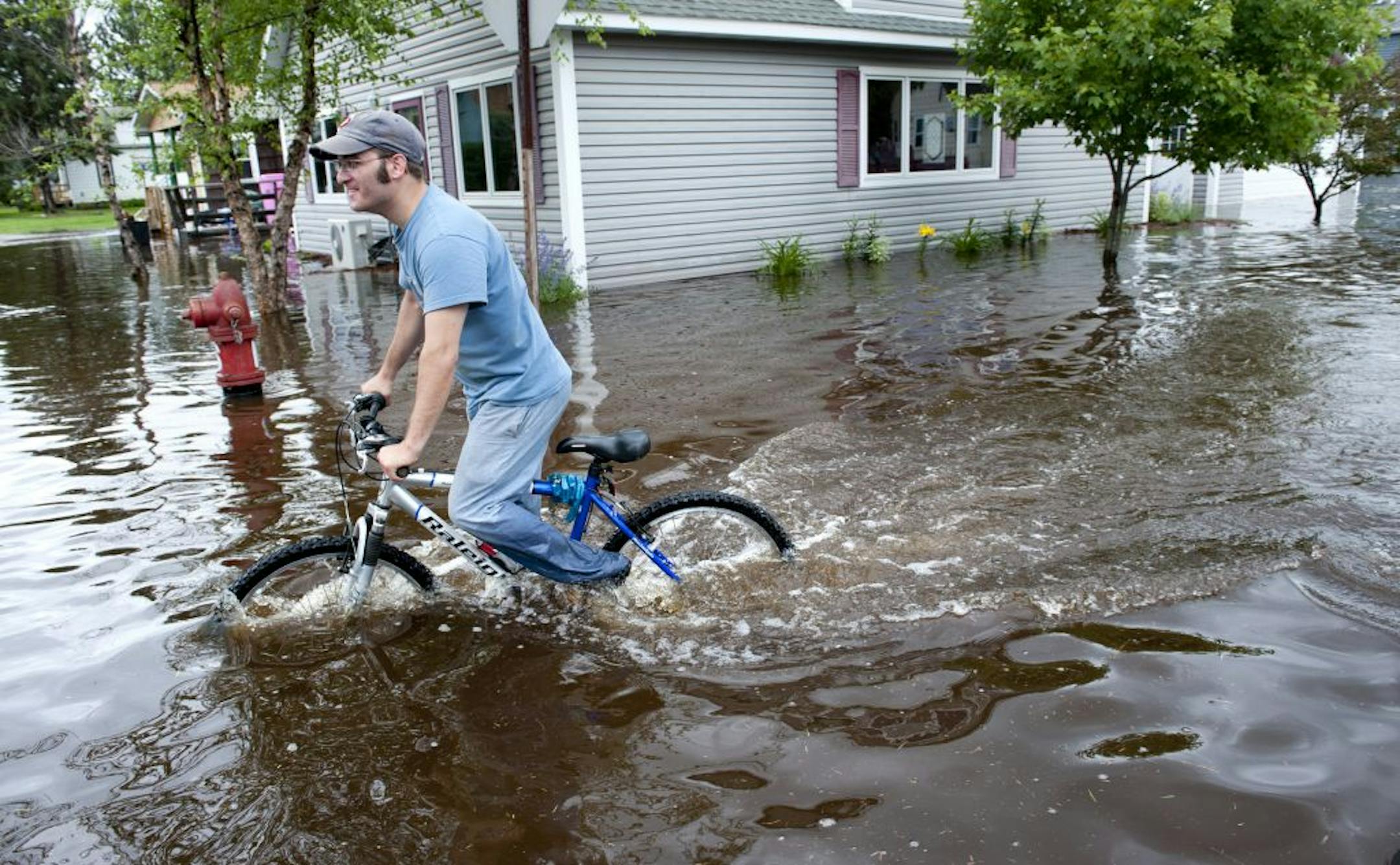
Permit a paraphrase of an old Boone and Erickson radio routine: Minnesota is a great state in which to be hit by a natural disaster. That claim appears likely to be affirmed Friday, when, at Gov. Mark Dayton's summons, the Legislature will return to St. Paul for a special session to authorize state aid for flood and windstorm relief.
Minnesota is disaster-prone indeed. By the state auditor's count, the state has endured 32 "severe" episodes of flood, tornado, windstorm and other natural calamities in the past 15 years.
With so much experience, the state has become increasingly systematic in its response. That doesn't mean disaster relief is on autopilot. A state auditor's report concluded in March that there's still too much room for guesswork and political caprice at the Capitol when disaster strikes.
Still, a good outline of how 13 state agencies ought to handle disaster cleanup and rebuilding has been in state statute since 2008. To their credit, the Legislature's Republican majorities and the DFL governor appear have largely "gone by the book" in crafting a $167.5 million assistance package for storm victims in Duluth and elsewhere. It includes $91.7 million in bonding and a $74.4 million drawdown from the state's $653 million reserve, which Dayton defended as a justifiable use of those funds.
A relief package that large ought to come as no surprise. By area legislators' tally, this summer's storms affected three times the land area and two times as many people as did the bluff country flooding in southeastern Minnesota in August 2007. By comparison, that storm cost state taxpayers $211 million in 2007-08. (A good share of the state trunk highway funds expended on the bluff country flood was eventually reimbursed by the federal government. That's expected this time, too.)
By that measure, the package agreed to by legislative leaders and Dayton on Wednesday appears to be a bargain. But it's also likely not the final word. Additional requests for aid are likely in 2013 and perhaps beyond.
The new package is $27.7 million smaller than the total the administration put before a legislative working group two weeks ago. But that does not mean less aid will come to affected home and business owners and local governments than first contemplated, Dayton said. Rather, the change reflects shifts within the Minnesota Department of Transportation and other state agencies of previously authorized funds from projects that have been delayed or canceled. Dayton had appreciative words for legislative input that led to those budgeting shifts.
A hefty downpayment on this summer's storm damage is warranted now, in part for practical lawmaking reasons. As Senate DFL Minority Leader Tom Bakk pointed out last week, the 2013 Legislature will be heavily populated with new members and, if the most recent projections hold, will have to eliminate another deficit as it sets the next biennial budget.


