

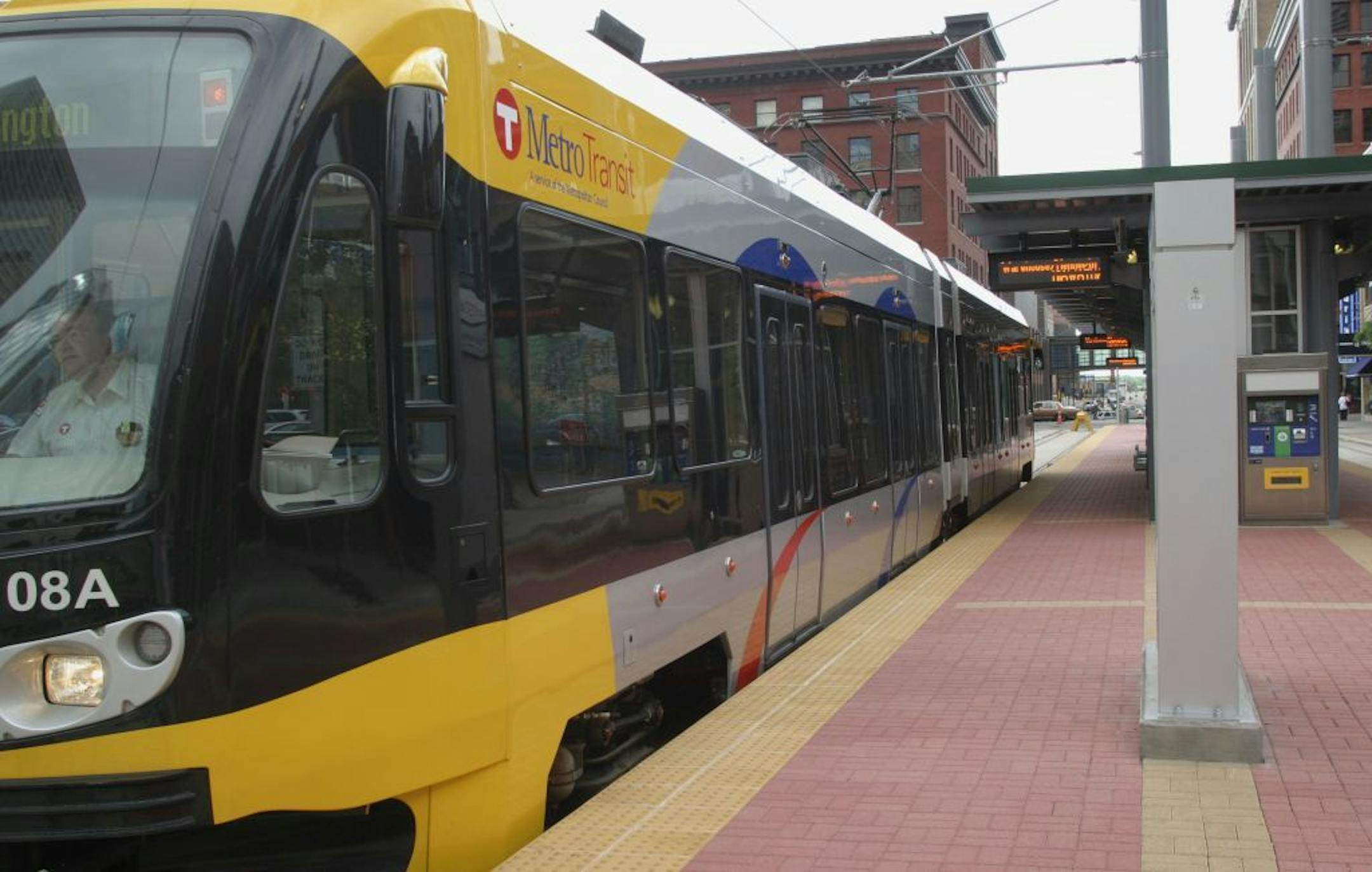
Republican legislators in St. Paul purport to be probusiness. In the case of the proposed Southwest Corridor light-rail transit line, they should respond like business executives and be nonideological, data-driven and consumer-responsive. Then, like any savvy executive, they should seize this transit opportunity while it's still available.
The 15-mile line would connect the burgeoning business districts in the southwest suburbs with downtown Minneapolis. From there, passengers could proceed on the same train to the University of Minnesota or to downtown St. Paul. Or they could transfer to the Hiawatha Line to get to the airport and beyond.
Out of more than 100 transit projects contending for scarce federal funding, Southwest was one of only 10 chosen by the Federal Transit Administration for preliminary engineering.
If the $1.25 billion project proceeds, the state would realize a nine-to-one return on investment, since it would only pay 10 percent of the cost.
(Half of the total cost would come from the federal government; 30 percent would come from the County Transit Improvement Board, and 10 percent would come from the Hennepin County Regional Railroad Authority.)
The Metropolitan Council estimates that over the next six years the project would create 3,500 construction jobs; 150 engineering, outreach and management jobs, and 175 operation jobs.
Most important, the line is projected to carry 30,000 riders a day by 2030. This would help alleviate congestion in a corridor that will grow by 60,000 jobs, to a total of 270,000, within the same time frame.
Critics contend that bus rapid transit is a better option than light rail. In some cases, that's correct. And indeed, two new BRT lines are set along Cedar Avenue and Interstate 35W. But for this corridor, in this case, BRT would be more expensive than light rail. Accordingly, BRT would not qualify for federal funding.


