

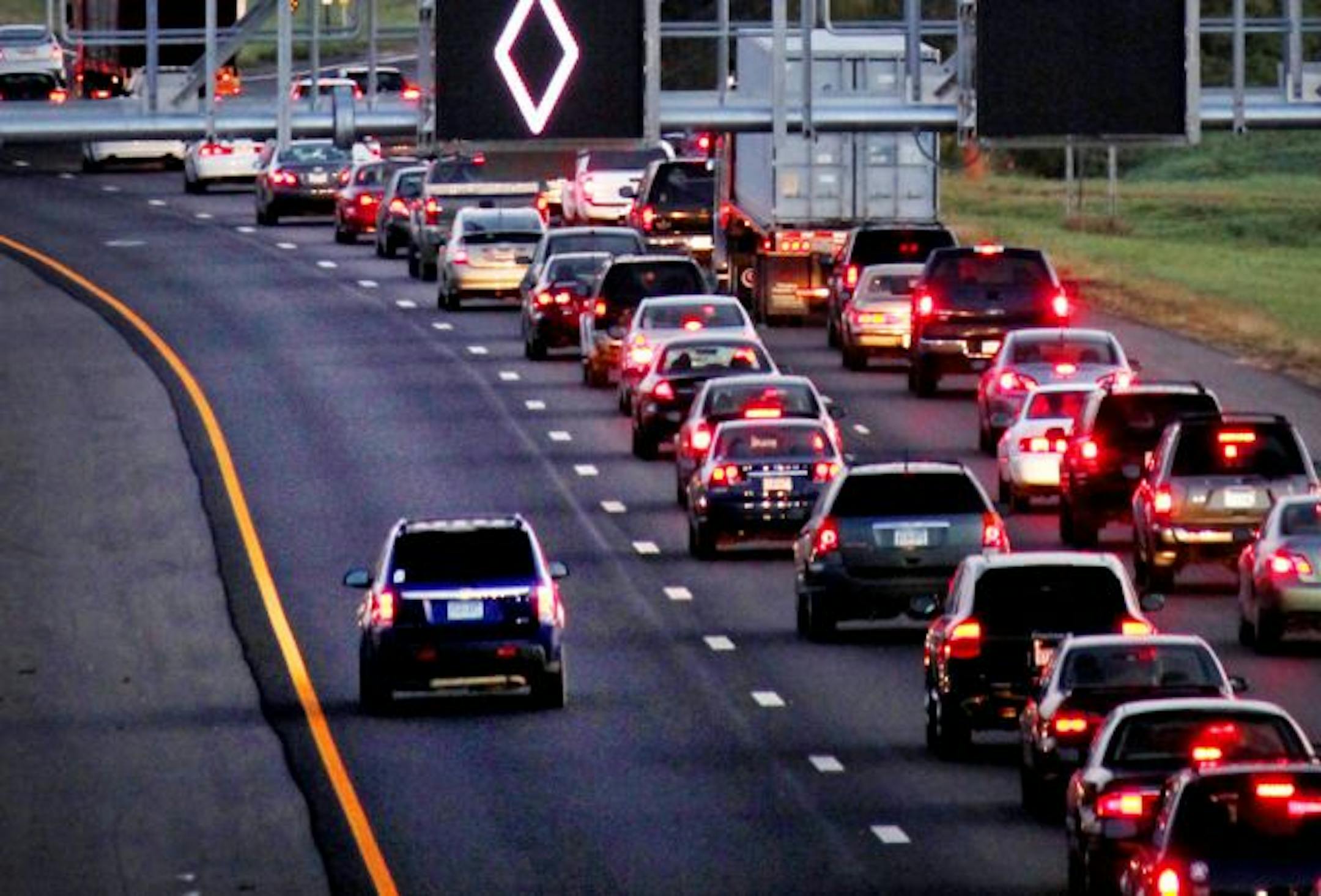
A green movement has significantly altered metro-area transportation planning.
No, not environmentalism -- although the Metropolitan Council and the Minnesota Department of Transportation are making strides in that direction, too. But rather the other green that matters: money. Or in the case of these cash-strapped times, a lack of it.
The Met Council's 2030 Transportation Policy Plan is a striking and intelligent shift from previous strategies. If, as we hope, the new plan is adopted and implemented, more of the limited funds allocated toward new roads in the metro area will be for "managed lanes," like the existing system on Interstate 394 and the emerging one on Interstate 35W. The newly built lanes on traffic-clogged freeways can be used by mass transit and carpool riders at no extra charge, and for a fee by those using the MnPass system. They've proven effective in encouraging bus ridership and carpooling and in pulling some cars out of the slower, "free" lanes. This speeds up traffic for all lanes, which in turn reduces fuel use and helps the environment.
"Managed lanes are a collection of tools to get more out of the dollars you're investing in transportation," said Lee Munnich, a transportation expert who is the director of the State and Local Policy Program at the University of Minnesota's Humphrey Institute. "It's also a way to integrate transit with roadways. If you just use the transitway for buses, that's not using it as efficiently as you could."
Efficiency is also the watchword for the Met Council and MnDOT, not just for traffic flow but for spending as well. "We're looking at projects that have a low cost but high benefit to the system," said Bonnie Kollodge, public-relations senior manager at the Met Council.
Other investments will be made in "active traffic management," with tools like traffic cameras, ramp meters and changeable message signs employed to get people to work, or home, faster. And up to half of the money will be spent on bridge repair, which is wise, particularly in the wake of the catastrophic collapse of the 35W bridge in 2007.
The revised plan means some long-planned road projects may be scuttled. Understandably, some who were waiting for these stand-alone projects reject the revisions to the 2030 plan. Many suburban and exurban communities in particular say they need relief from traffic caused by the building boom of the last generation.
These concerns put them at odds with some environmental and transit advocates who have embraced the Met Council's new approach.


