

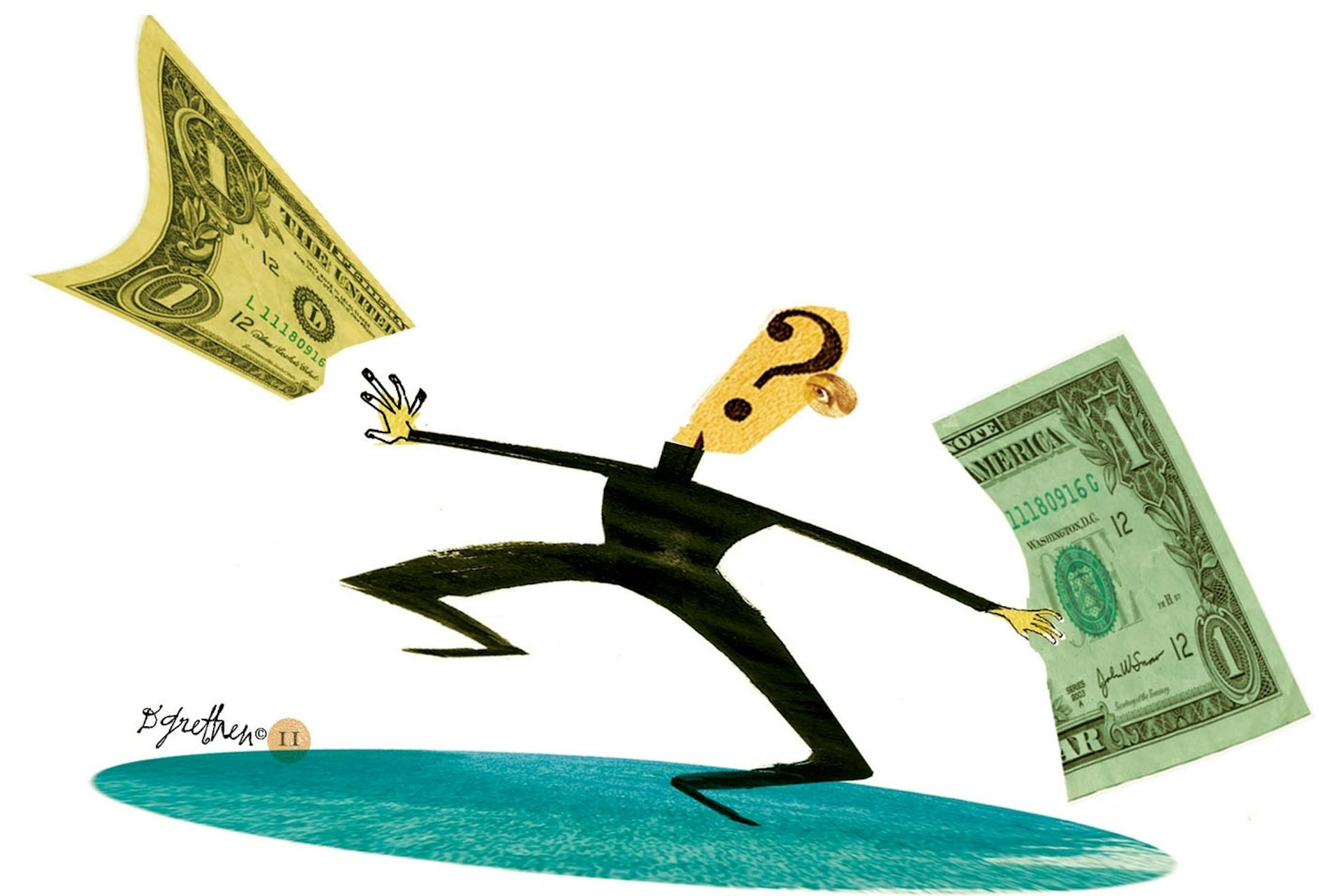
The only thing certain about state budget forecasts is that they are wrong, state economist Tom Stinson often says. But seldom has more uncertainty been attached to one of Stinson's forecasts than to Wednesday's projection of a $1.1 billion deficit in 2014-15 (or $2 billion, if inflation is appropriately factored in).
That forecast is based on the increasingly shaky premise that automatic federal tax increases and spending cuts will not commence at year's end -- that is, that the nation won't go over the so-called "fiscal cliff."
As the monthly calendar turned with no deal in sight in Washington, Stinson and his staff decided to hedge their bets. They made some hasty assumptions about what the automatic federal measures would mean for the economy and the state's bottom line in 2013 and beyond.
The result is sobering: Minnesota is still slowly recovering from the Great Recession, and gradually climbing out of the fiscal hole state government dug for itself beginning in 2008. The state's revenue recovery rate nearly matches the forecast average for the 50 states. But the state's recovery isn't sufficient to eliminate a deficit in 2014-15. Account for inflation in expenditures -- as sound budgeting requires, but legislators have forbidden since 2002 -- and the red ink is projected to persist past 2017.
The state outlook gets much worse if automatic federal spending cuts and tax increases proceed as slated after Jan. 1. The 2014-15 deficit would then balloon to $2.8 billion (omitting inflation), as personal incomes in the state fall off by 4 percent and the state unemployment rate, now at 5.8 percent, surges back above 7 percent, Stinson projected.
Those figures give Minnesotans fresh reason to call on the White House and their congressional delegation to remove the threat to the economy. Going over the fiscal cliff would be no joy ride for this state.
But Minnesotans should heed the rest of the story the numbers tell: Too much reliance on one-time gimmickry is keeping the state budget in the red long after the end of the 2008-09 recession. That's not the way to run a state whose services are vital to preserving prosperity. The 2013 Legislature's Job One must be setting the state's fiscal house in lasting order.
If the 2012-13 state budget had been balanced with the tax increase Gov. Mark Dayton sought, rather than by borrowing from school districts and against future state tobacco lawsuit payments, the state budget would be in the black by now. Instead, in addition to the forecasted $1.1 billion general fund deficit, the state will owe its schools $1.1 billion in "shifts," or IOUs. That's so despite the forecast's release of $1.3 billion to schools later this month, funded by previously unforeseen tax receipts in the current fiscal year.


