

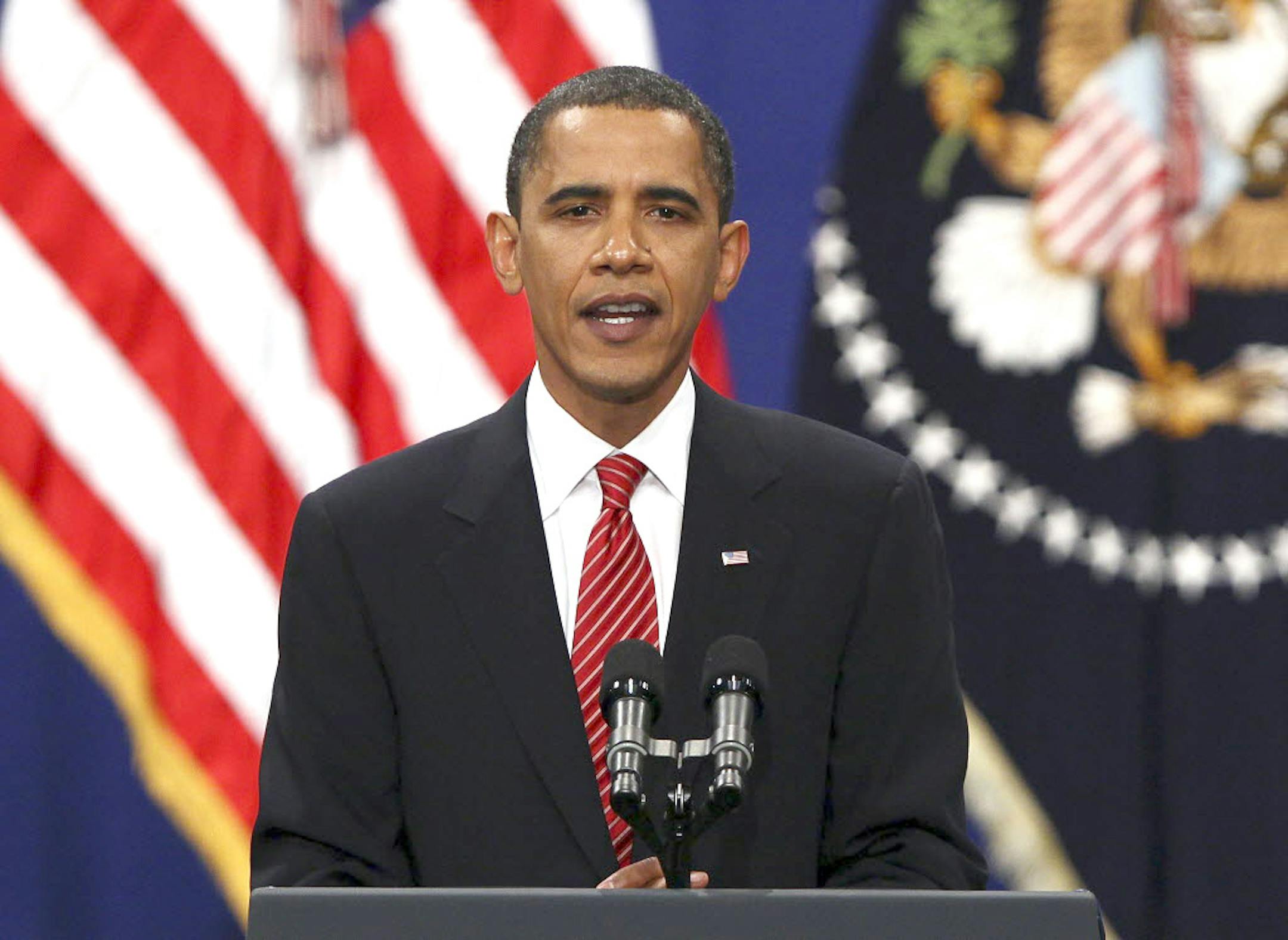
Echoing many critics, former Vice President Dick Cheney called the strategic review of the war in Afghanistan "dithering." But deliberate would be a more appropriate description of the decisionmaking process, the results of which President Obama finally announced from West Point on Tuesday.
With such a monumental and difficult decision, Obama was right to take his time. Unfortunately, he made the wrong decision to send an additional 30,000 troops, which will bring the U.S. total to more than 100,000.
The surge is the wrong choice even though Afghanistan is, as Obama has called it, a "war of necessity." That need is rooted in the fact that the Taliban gave safe haven to Osama bin Laden and Al-Qaida to plan the 9/11 attacks. But even a war of necessity can be won in other ways. Adding troops makes the United States an even larger occupying force. Many critics of the surge strategy, including some within the Obama administration, believe that adding troops will only intensify the insurgency.
Making the war an even bigger American and NATO commitment also takes the pressure off Afghan President Hamid Karzai to develop his country's own army -- which after eight years should be a far more effective fighting force -- and to make the Afghan government worth fighting for by stopping the systemic corruption he and his cronies have orchestrated.
Distrust of the Karzai government was the key theme struck by retired Lt. Gen. Karl Eikenberry, the U.S. ambassador to Afghanistan, who recently expressed serious reservations about the surge strategy.
Obama reportedly will lay out specific benchmarks for the Afghan government, and on Tuesday he provided a timeline on U.S. involvement that has troops returning home beginning in July 2011. This is reassuring, in concept, as quiet diplomacy has not cleaned up Karzai's act and Americans, already weary over an eight-year war, were justifiably wary about an open-ended commitment.
But war is unpredictable. Who would have foreseen, for example, that the ragtag Taliban, routed out of power in 2002, would pull off one of the most remarkable military comebacks in history? It's at best unrealistic, and at worst naive, to believe timelines can be closely adhered to.
And actually having timelines will be far from reassuring to some constituencies. How will the exit strategy play with Afghan villagers, whose long-term support is needed in resisting the Taliban? And how will the timetable bolster the Pakistani government, which is already allied with America in its bid to push back the Pakistani Taliban but is so weak that its president had to cede his position in the nuclear command structure to keep his government from collapsing?


