

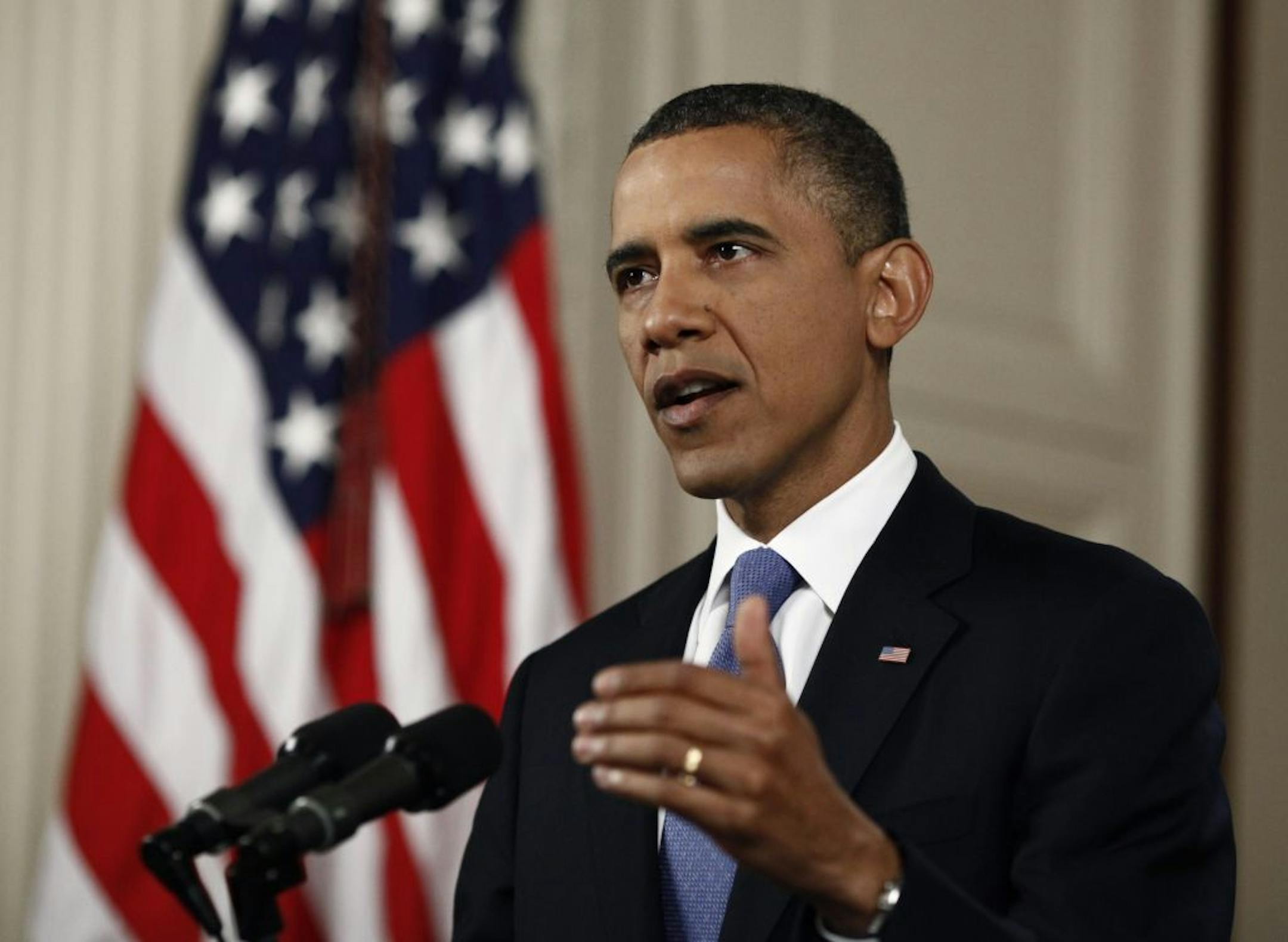
Four years ago, as an economic storm gathered, candidate Barack Obama advocated continuing the Bush-era tax cuts for American households earning less than $250,000 per year.
On Monday, in the wake of Friday's release of the latest in a grim series of stagnant monthly jobs numbers, President Obama urged Congress to extend the Bush-era tax cuts for one year for households earning less than $250,000 per year.
With due respect, Mr. President: Is that all you've got?
The nation's economic recovery appears to have flat-lined. Concern about a return to recession is growing. High unemployment is a burden throughout the population but is particularly hard on young adults attempting to get a toehold on the middle class. The June unemployment rate for 20- to 24-year-olds was 13.7 percent, back up to where it was last fall.
Obama is right to press Congress to do something about it. The federal government ought to assure Americans now -- not after the election -- that federal income tax rates won't rise for middle-class taxpayers next year, as they are set to do under current law.
But that's the least the federal government ought to do. A bigger, quicker jolt from Washington is also needed to pull the nation's economic engine out of its stall. The president ought to draft and send to Congress an emergency economic-stimulus package, one narrowly aimed at increasing consumer spending and quickly creating more jobs for young workers. A payroll tax cut and short-term tax credits for targeted hiring would fill that bill.
Republicans who counter that the 2009 stimulus measures enacted by Congress were ineffective will have a point, to this extent: That $787 billion package was too small and too riddled with measures unlikely to quickly increase spending and hiring. But those are mistakes to be avoided a second time. They aren't reasons for inaction now.
The fact that an election is four months away is also not a good reason for delay. The global economy is no respecter of the U.S. political calendar.


