

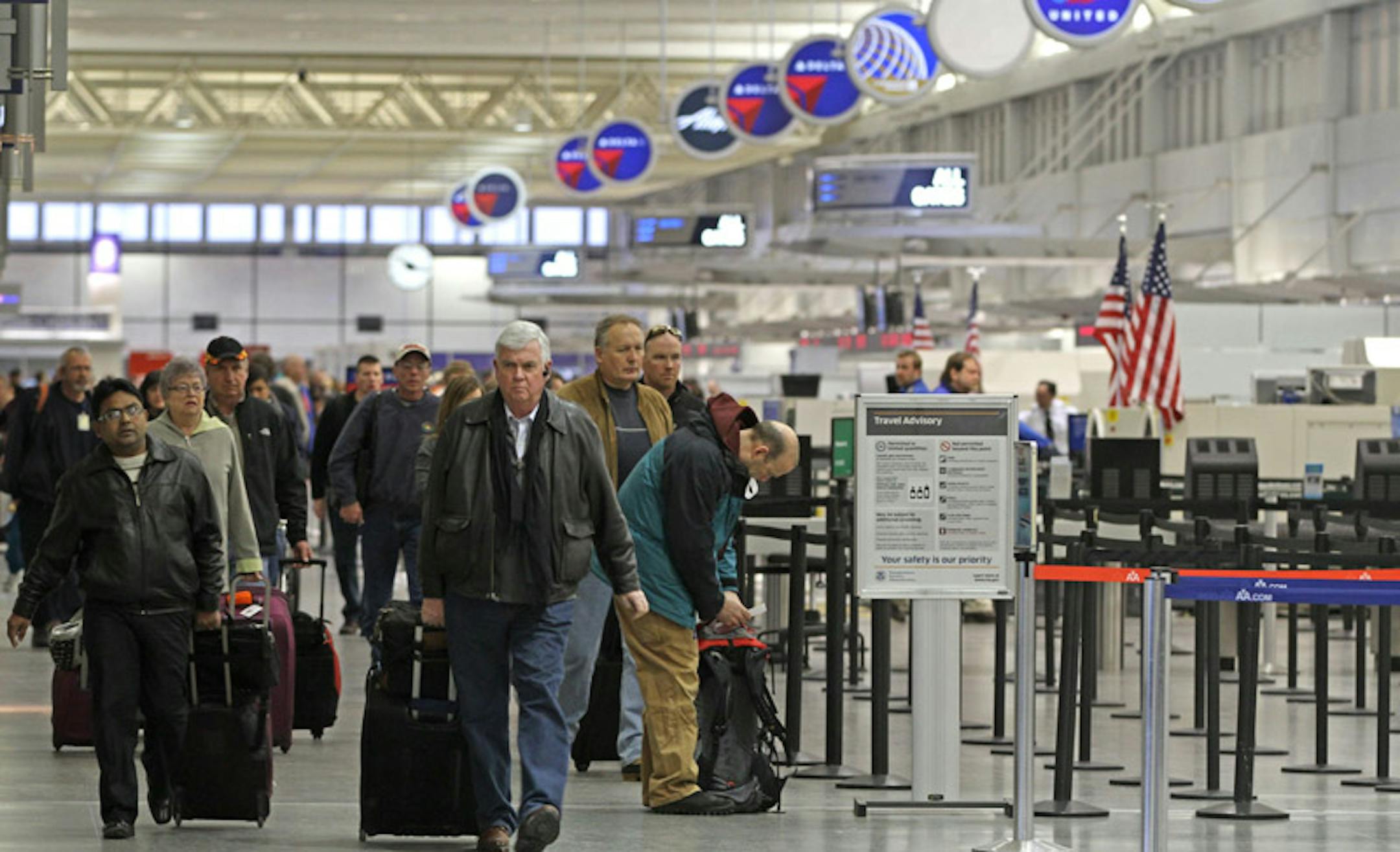
To expand or not to expand? That's the question facing the Minneapolis-St. Paul International Airport as its operators try, as best they can, to peer into the future and weigh the metro region's air-travel demands over the next two decades.
If this were still the go-go 1990s and MSP were still the headquarters hub for Northwest Airlines, a decision to move confidently forward wouldn't be so hard. But times have changed, and so has the airport.
A confluence of factors -- recession, Northwest's bankruptcy, Delta's takeover and the rise of rival markets -- have diminished the airport's status in recent years. Passenger boardings have declined by 12 percent since 2005, and flight operations by 18 percent. Once the nation's 10th-busiest commercial hub, MSP has slipped to 16th, overtaken by Charlotte, Orlando, Miami, Seattle and Newark.
Fortunately, there's a mechanism that allows airport operators to match those new realities to market demand, allowing MSP to grow only if and when it needs to. That process is now underway. Here's how it works:
Federal and state environmental assessments are required any time the Metropolitan Airports Commission (MAC) contemplates major expansion. Those assessments can take four to six years from the start of the study to the completion of construction. That's not enough flexibility to respond to changes in the market.
But by completing the assessments for maximum expansion in advance, including all of the public comment required, the MAC can, in effect, put the completed assessments in its pocket and parcel out the degree of expansion required, whether major, minor or no expansion at all, depending on market conditions.
"You don't have to pull the trigger on a particular project until it's needed, but you have all of the environmental requirements in place," explained Commissioner Rick King. So, if a new carrier -- say, Jet Blue or Lufthansa -- decides it wants to come into the Twin Cities, the airport can have gates and customs facilities ready within a reasonable period of time.
It's worth noting that, despite recent declines, MSP remains one of America's most important airports. Its Delta hub operations are on par with those in Detroit and New York. Altogether, the airport handled 33 million passengers and 437,000 flights in 2011 and provided nonstop air service to 118 domestic and 20 international destinations.


