
Editorial: Minnesota Hockey minds 'STOP' sign

Enhanced penalties and other changes can make the game safer.

June 30, 2012 at 2:39PM
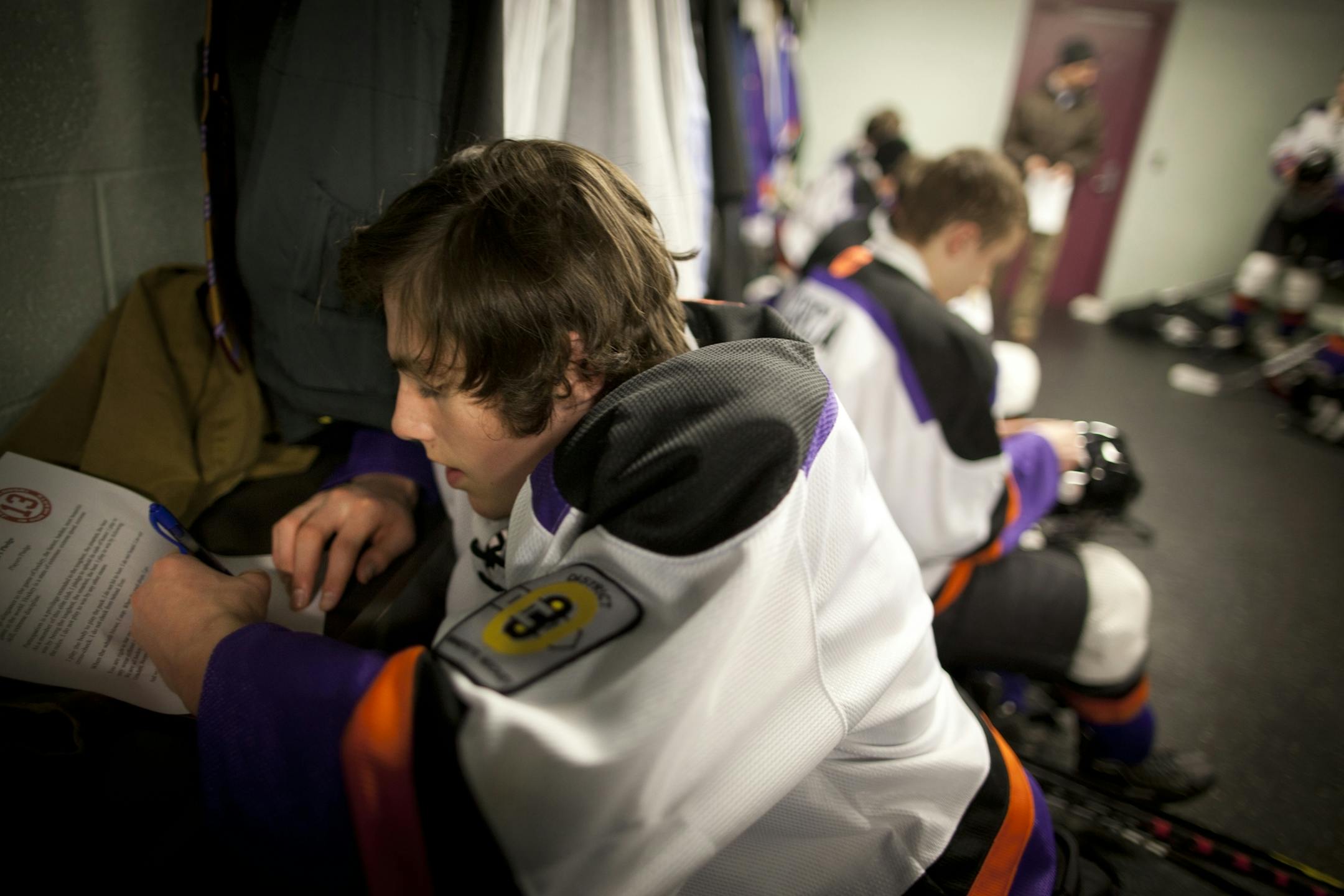
Minneapolis Storm Bantam A youth hockey player Cade Gleekel signed a pledge called Jack's Pledge along with his other teammates in the locker room before a game against Osseo/ Maple Grove at the Parade Ice Garden in Minneapolis, Minn., on Wednesday, January 11, 2012. They are the first team to take the pledge which was written in honor of Jack Jablonski who was paralyzed after a check from behind at a hockey game recently.
Minneapolis Storm Bantam A youth hockey player Cade Gleekel signed a pledge called Jack's Pledge along with his other teammates in the locker room before a game against Osseo/ Maple Grove at the Parade Ice Garden in Minneapolis, Minn., on Wednesday, January 11, 2012. They are the first team to take the pledge which was written in honor of Jack Jablonski who was paralyzed after a check from behind at a hockey game recently. (Star Tribune/The Minnesota Star Tribune)

Most Minnesota youth hockey teams wear a bright "STOP" patch on their backs as a visual reminder to players not to hit from behind.

The board of Minnesota Hockey, which governs about 45,000 youth hockey players in the state, seemed to heed the "STOP" message as well last weekend, wisely reconsidering a recommendation to scrap the tougher penalties it imposed after an on-ice hit paralyzed Benilde-St. Margaret's hockey player Jack Jablonski.

The 17-6 vote (with one abstention) means that checking-from-behind and boarding infractions will continue to result in an automatic five-minute major penalty. The offending player will remain in the penalty box for another five minutes after the team returns to full strength.

The rules match those imposed by the Minnesota State High School League, which also switched to tougher enforcement after Jablonski's injuries. The rules will be the strictest of any state governed by Hockey USA, making Minnesota the national leader in protecting its young players.

Several safety measures already have been put in place. For boys, checking is allowed only at the Bantam and Junior Gold levels. It is not allowed for Mites and Squirts, and it was removed from the Pee Wee level last season. Checking is not allowed at any level for girls, who make up about one-third of players governed by Minnesota Hockey.

Retaining the tougher rules will not make youth hockey injury-free. Players may still get hurt, as they do in most every other sport. But the rules send a strong signal that checking from behind, boarding and other illegal hits are dangerous and will not be tolerated.

Had the rules reverted to previous form, Minnesota Hockey would have faced a public-relations backlash. The organization likely would have had to answer to players and parents governed by the organization.

The fallout might have been most significant among parents who decide which sports their children will play. Reasonable checking rules at the youth and high school levels should offer reassurance that the adults who govern hockey have the right priorities.

An increasing number of parents rightly worry about the growing body of conclusive medical evidence on the long-term impact of injuries -- especially concussions. If those concerns go unaddressed by sports such as football and hockey, fewer parents are going to let their kids participate.

Rule changes are only part of the solution. The attitudes of players, coaches, referees and parents toward reducing or eliminating dangerous and illegal contact is critical as well.

Fan behavior is a factor, too. Riding the refs for calling penalties and celebrating dangerous hits over finesse and speed can sometimes send the wrong message. And, no, we're not advocating banning legal contact.

Hockey is Minnesota's official state sport for a reason: It's a beautiful, physical and competitive game that's a perfect fit for our cold climate. The kind of thoughtful governance that Minnesota Hockey has displayed can help make the "State of Hockey" safer and more appealing for young players and their families.

--------------------

Readers, what do you think? To offer an opinion considered for publication as a letter to the editor, please fill out this form. Follow us on Twitter @StribOpinion and Facebook at facebook.com/StribOpinion.

about the writer

about the writer