

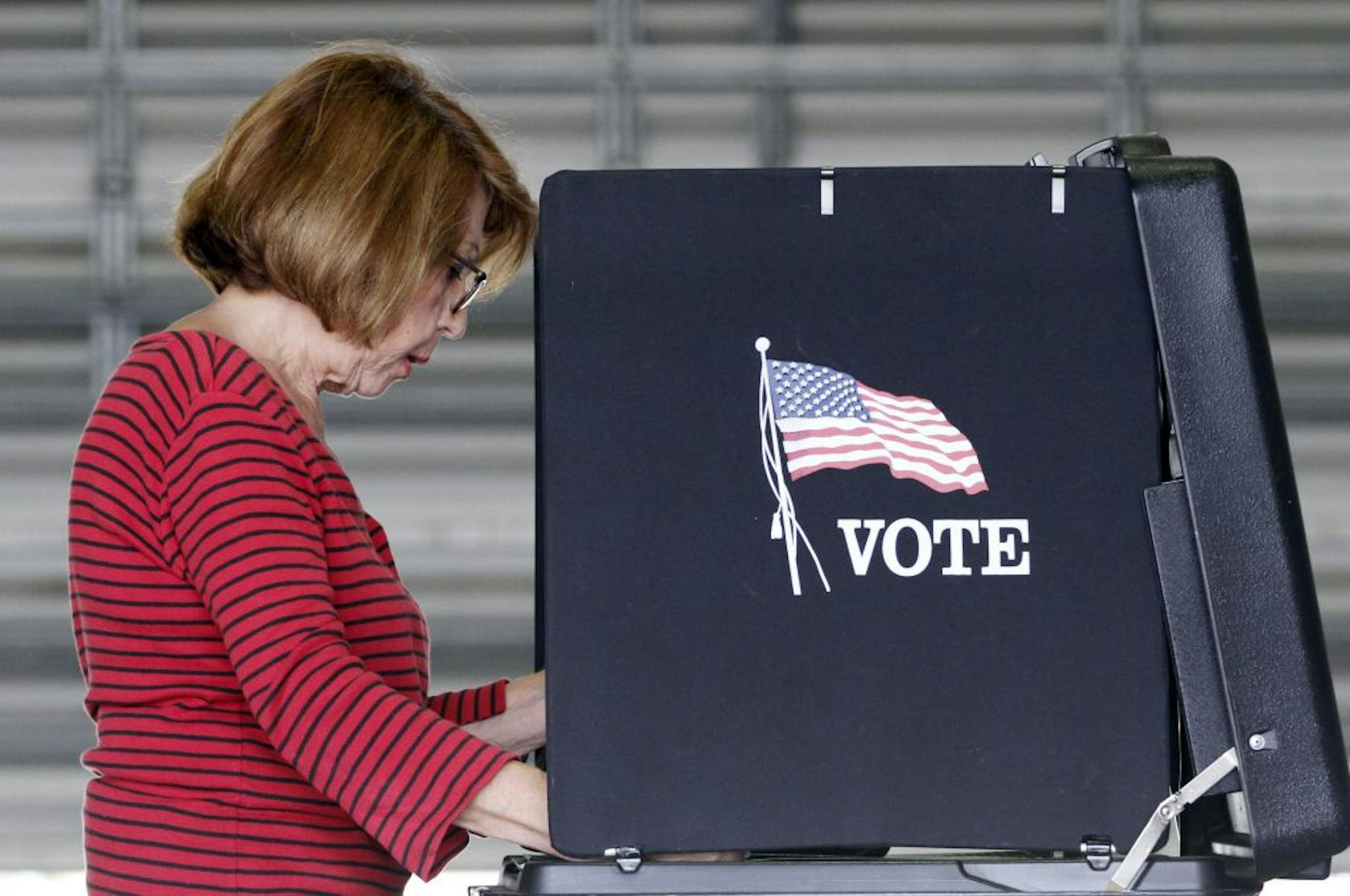
It's said that the world belongs to those who show up. It follows that Minnesota's 2012 general-election ballot belongs to about 9 percent of this state's adult citizens. That's the meager share of eligible voters who turned out in Tuesday's primary election to settle intraparty contests for positions on the Nov. 6 ballot.
That pathetic showing ranks second-lowest among primary elections since 1950, according to the Office of the Secretary of State. Only in 2004, a year devoid of either statewide races or seriously contested congressional primaries, was turnout lower -- but not much lower -- at 7.7 percent.
No high-profile statewide contests lured voters to the polls this year. But primaries in two of the state's eight congressional districts were hard-fought, and several dozen legislative districts had battles, some intense. Yet even in places with hard-fought races in the district's dominant party, turnout left much to be desired (examples at right.)
Primary turnouts have been trending lower for decades in Minnesota. It's not a welcome trend. Whenever the few decide for the many in a democracy, the legitimacy of the outcome is called into question. Low turnout increases the likelihood that the outcome was skewed by a well-organized minority of the electorate, motivated by a single issue or narrow cause. It's not a coincidence that as primary turnout has dwindled, partisan polarization has widened in Washington and St. Paul.
A low-turnout cloud will linger over Tuesday's winners. Through no fault of their own, it will hang especially low over those who won three-way races by narrow pluralities -- including DFLer Rick Nolan in the Eighth Congressional District, who became his party's challenger to GOP U.S. Rep Chip Cravaack with just 38.3 percent of the vote.
Those results strengthen the case for two election changes this newspaper has long favored:
• A June primary. This is Minnesota's second election cycle with an August primary. The old date, the second Tuesday in September, was abandoned in 2010 because it ran afoul of the federal requirement for an adequate interval between the primary and general elections for overseas military absentee voting.
The August date meets the federal standard. But it leaves uncorrected another flaw in the state election calendar: It devotes too much time to intraparty conflict. Candidates spend long months courting their party bases, and comparatively little time wooing general-election voters. The calendar seems designed to generate excessive devotion to party dogma among elected officials.


