

A clinic's name doesn't appear alongside the drug manufacturer's on medication packages or vials. But it might as well be printed there.
From a patient's perspective, there's an inherent clinic seal of approval on medications given during medical treatment. Those seeking care understandably assume that the drugs swallowed, injected or distributed on the premises have been purchased from reputable suppliers.
But a deadly meningitis outbreak linked to a pharmacy firm essentially operating as a drug manufacturer suggests that this trust in providers has sometimes been misplaced. While federal oversight should be strengthened, medical practice boards and professional associations in Minnesota and elsewhere must do more to ensure that providers know how to spot and root out potentially risky suppliers.
The meningitis outbreak has so far sickened 170 people in 11 states, with three of the cases in Minnesota. Fourteen people have died.
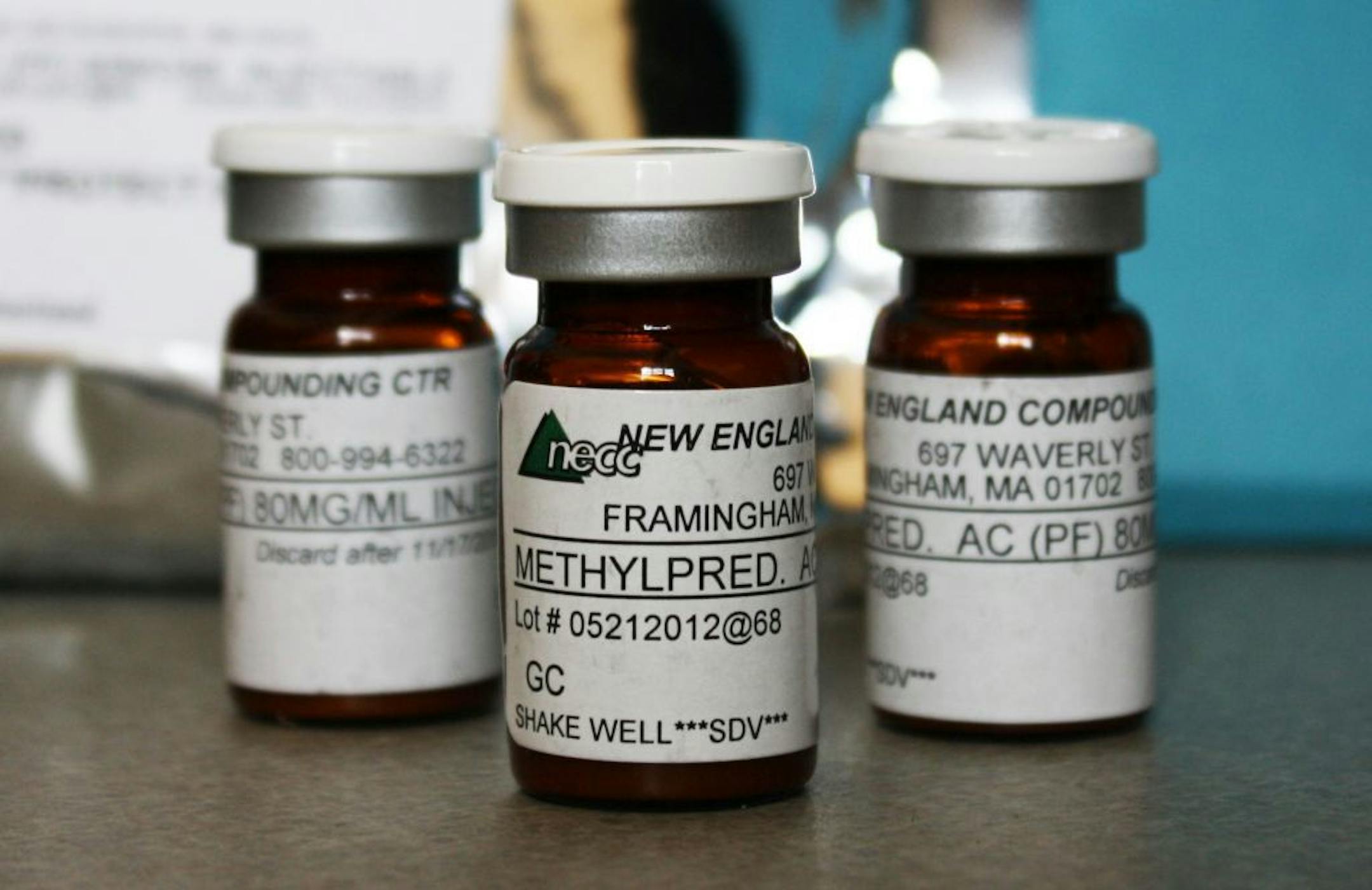
According to the U.S. Centers for Disease Control and Prevention, the illnesses are associated with a "potentially contaminated" injectable steroid medication manufactured by the Massachusetts-based New England Compounding Center. The injections were typically used for back pain. More than 17,000 vials were shipped to 75 clinics in 18 states, the New York Times reported.
The outbreak has put an overdue spotlight on large "compounding" pharmacies that have branched far beyond the traditional, respected niche of customizing medications on an individual basis (such as adding flavor to a child's medication or mixing a dye-free version of a brand-name drug) to producing much larger volumes of pharmaceuticals.
These firms essentially are acting as drug manufacturers. But their status as compounding pharmacies creates uncertainty about where states' historic authority over professional practices (such as pharmacists) ends and where federal authority over drug manufacturing begins. While Congress passed a law in 1997 giving explicit authority over compounding pharmacies to the U.S. Food and Drug Administration, those measures were mostly struck down by a 2002 U.S. Supreme Court decision.
Congress has done nothing since then to remedy the situation, even as additional court action has further muddied the agency's authority. FDA funding challenges also make it a difficult for the agency to police small, under-the-radar manufacturers.


