

Until now, a big but abstract number on the nation's Visa card has been the main consequence of politicians who talk piously about deficit spending but fail to offer up the bipartisan solutions needed to rein it in.
But with fiscal cliff negotiations foundering in Washington, it's critical to remember that this time is different. Years of my-way-or-the-highway budget stances have led to the fiscal cliff's reckless, default deficit-reduction plan. The deep automatic spending cuts and sweeping tax increases set to kick in next month -- the result of the congressional deficit "supercommittee's" failure to reach a more sensible compromise in 2011 -- would likely drag an economy still staggering from 2008's severe downturn back into recession again as 2013 wears on.
Political inaction this time would carry a steep, real-world price tag. Rattled financial markets drove that message home Friday after an alternative fiscal-cliff plan offered up by Republicans, one that would have raised tax rates only on millionaires, failed to generate enough support within the party to go to a floor vote.
If the cliff's sudden dose of austerity is allowed to fully play out next year, businesses large and small will struggle as consumer demand drops. Going over the cliff could result in the loss of 16,000 jobs in Minnesota, according to a new analysis publicized by Fix the Debt, a nonpartisan organization.
Safety-net programs that are already maxed out would have to meet even greater demand, further straining limited public resources even as federal dollars sent to states for housing, education and low-income initiatives shrink -- a situation that has serious implications for state budgets and economies. A deal that gradually reduces deficit spending will help minimize the economic impact of necessary spending cuts and tax increases. Such an agreement is needed "for the good of the economy and the country," said Robert Bixby, executive director of the Concord Coalition.
In the weeks since the November election, the smoke signals emanating from these behind-closed-doors cliff negotiations have suggested that President Obama and congressional leaders understand not only the stakes involved, but the message sent by voters.
Obama was re-elected and his Democratic Party strengthened its hold on the U.S. Senate. Republicans maintained control of the U.S. House. Neither party was given a green light to muscle through its agenda. The fiscal cliff needs to be solved, but not just with spending cuts on social programs, as the GOP prefers, or with Obama's tax increases on the wealthy.
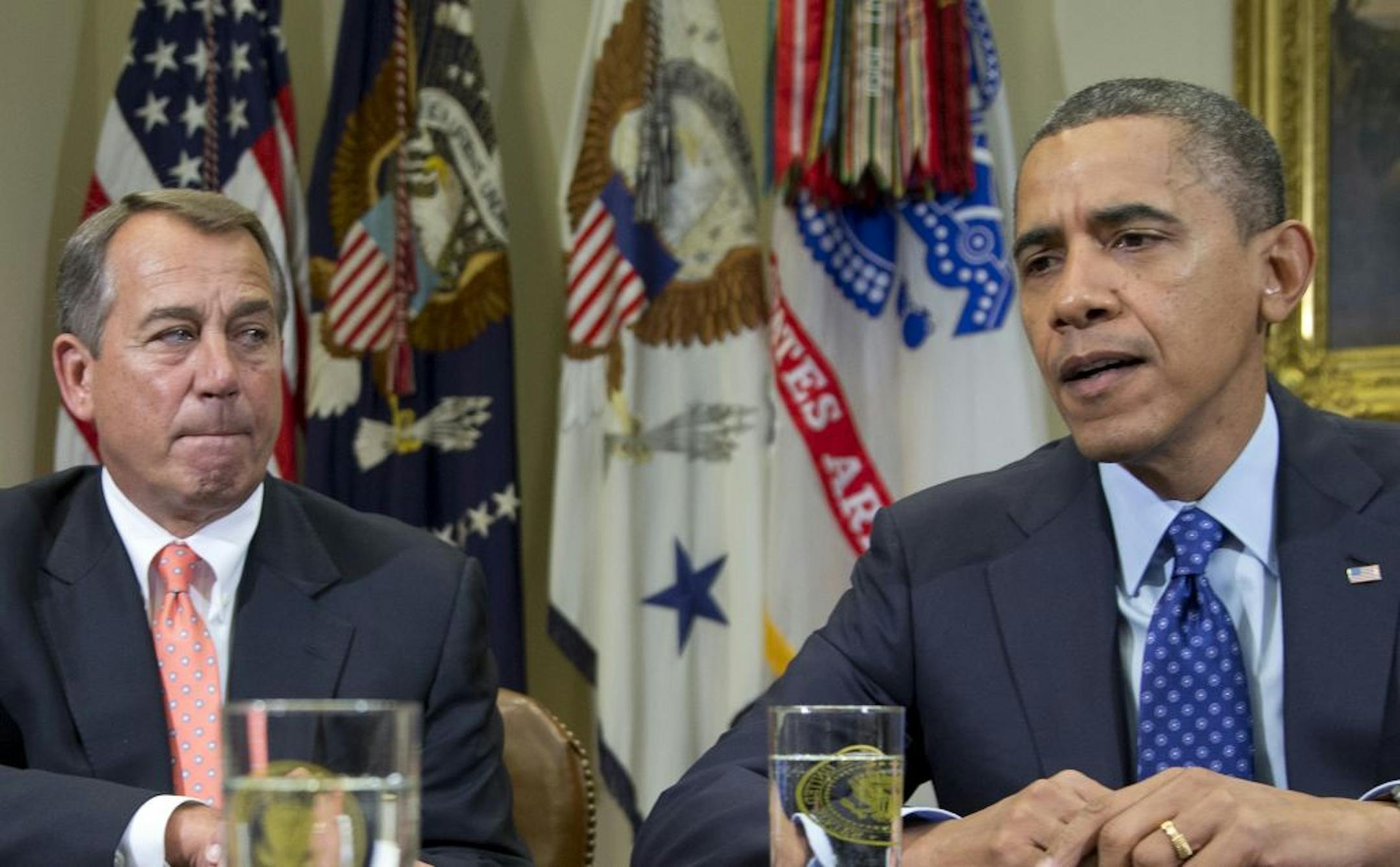
There's been welcome movement by Republican House Speaker John Boehner on raising tax rates, not just closing loopholes. Obama has yielded on his target amounts for deficit savings yielded by tax increases and spending cuts, underscoring that he is serious about a broader budget deal.


