

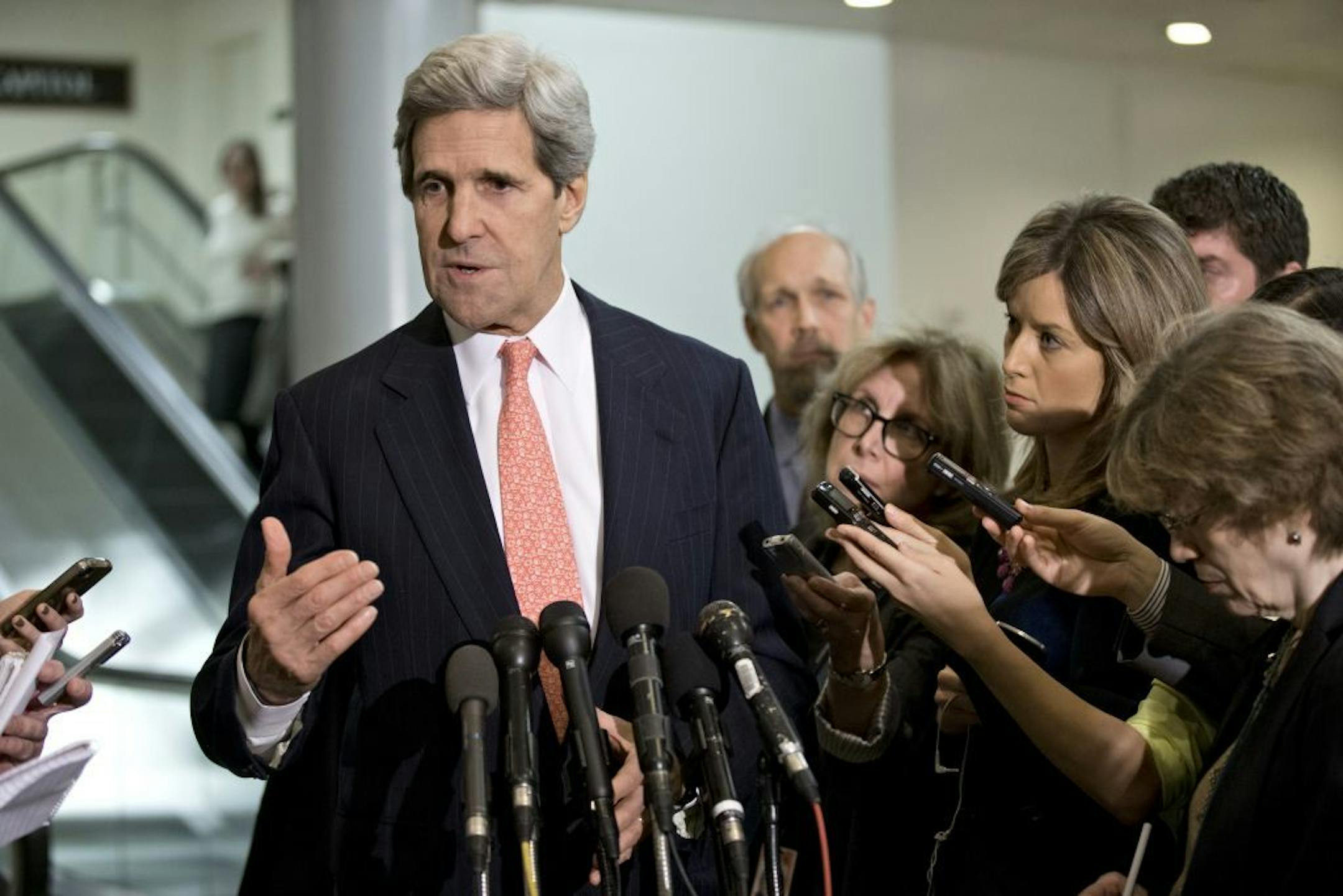
It's expected that President Obama soon will name his former U.S. Senate colleague John Kerry as his nominee to succeed Hillary Clinton as secretary of state. Kerry has the diplomatic skills, military background and political savvy to be an effective and engaging envoy. Accordingly, the Senate should send a clear vote of confidence to global leaders by easily, if not unanimously, confirming him.
Kerry has long been a member of the Senate Foreign Relations Committee and has chaired it for four years. The Massachusetts Democrat is widely considered an astute student of foreign policy, and has been an effective envoy to Afghanistan, Pakistan and other hot spots. His tenure has resulted in close relationships with many foreign ministers and heads of state.
Kerry also has a strong legislative and personal understanding of military affairs from his years in the Senate and from fighting for his country in Vietnam. Having witnessed war, he knows the true price paid when diplomacy fails.
Perhaps as important, Kerry's Senate tenure will help him get treaties, such as further arms-control agreements with Russia, ratified in the Senate. And despite losing the 2004 presidential race, Kerry's unique understanding of the American electorate will be useful in convincing Americans of the need for global engagement at a time when domestic issues are at the forefront.
If confirmed, he won't have long to celebrate: Despite the domestic focus of the campaign, the next four years will be internationally intensive, with multiple crises expected to test this nation's leaders.
First and foremost will be the Mideast. Kerry would need to be creative and agile in working America through the dynamics of the Arab Spring, which has turned into a winter of discontent in war-torn Syria, constitutionally convulsed Egypt and often lawless Libya. Even Tunisia, where the Arab Spring started, is struggling with its transition.
An even bigger test may be Iran. Israel -- like several Sunni, Arab Gulf nations -- rightly considers the Shiite, Persian nation's potential nuclear-weapons program an existential threat. Time is dwindling to diplomatically defuse the crisis, and military options could lead to yet another major Mideast war.
And Kerry would need to bring new energy, pressure and, most important, ideas to the Israel-Palestine stalemate in order to avoid a repeat of November's deadly confrontation between Israel and Hamas.


