

At presstime, according to the Israeli Defense Forces, 1,432 rockets fired from Gaza have hit Israel this year -- 664 just since Nov. 14. No nation, anywhere, would tolerate constant rocket attacks upon its citizens. So it is not surprising or improper that Israel has struck back militarily against Gaza-based Hamas, which Israel, the United States and the European Union rightly consider a terrorist organization.
Hamas has amassed increasingly sophisticated missiles that have greater accuracy and range than ever before. Many of these missiles allegedly arrived in Gaza after being manufactured in Iran, shipped to Sudan, brought through Egypt, disassembled then put back together once smuggled through tunnels connecting Sinai to Gaza.
Israel's air strikes have reportedly destroyed many of these larger, more lethal missiles, and killed Ahmed al-Jabari, who headed Hamas' military wing. But many more weapons, and a widespread willingness to use them, still exist. That is one of the reasons why Israel is making preparations for a possible ground invasion of Gaza, just as it did four years ago under a similar provocation of rocket attacks.
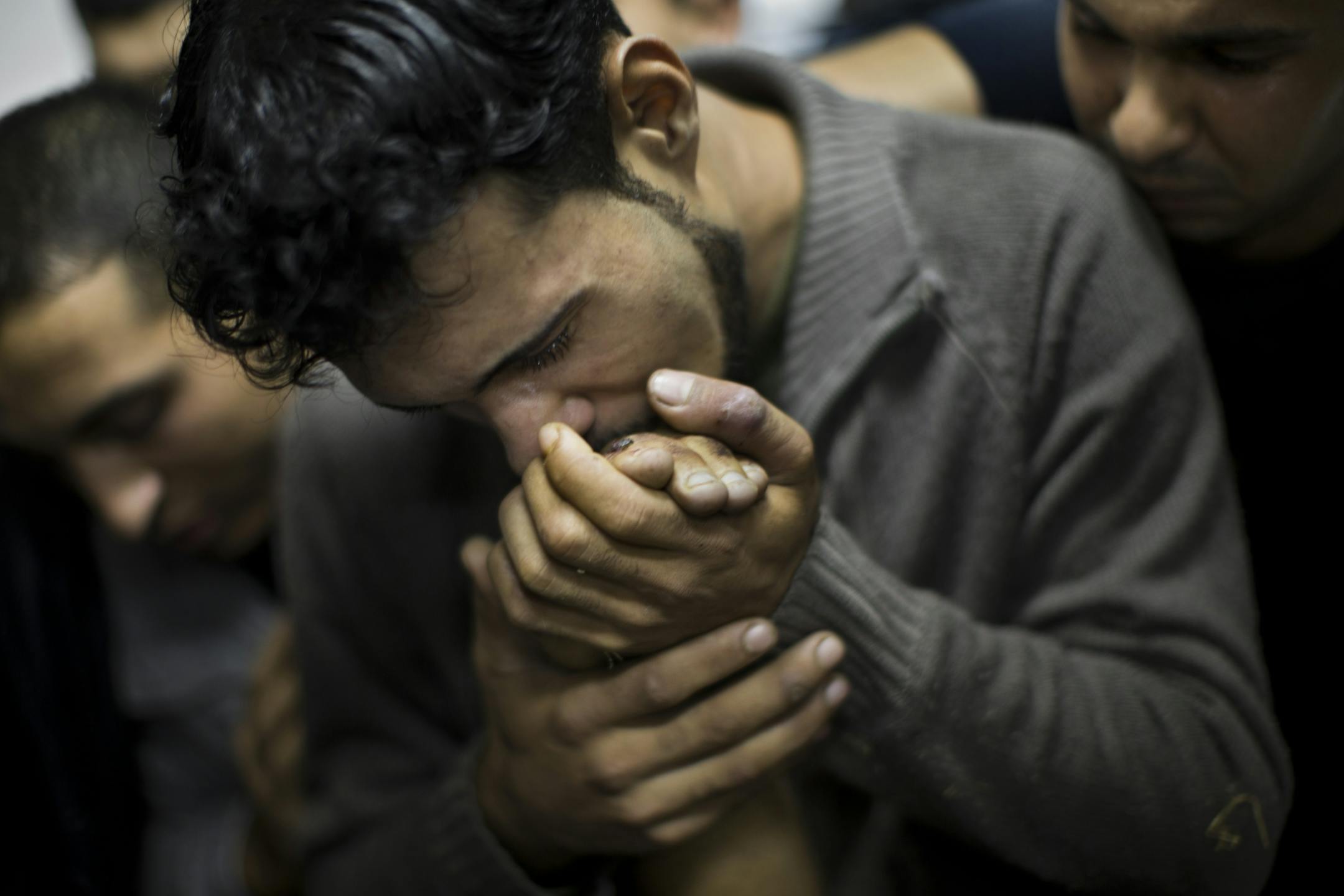
Every effort must be made to head off an invasion and implement a cease-fire, and America must participate. The human suffering was immense four years ago: About 1,400 Gazans, many of them civilians, were killed. Already the current campaign has reportedly claimed more than 100 Palestinian and three Israeli lives.
What's more, much has changed in the Middle East and North Africa in the last four years, adding to the unpredictable dangers of escalation. Many Mideast governments and societies have undergone rapid, radical transformations. Arab Spring popular movements have replaced repressive regimes in Tunisia, Egypt, Libya and Yemen. And a vicious civil war in Syria may eventually end Bashar Assad's brutal dictatorship there.
Meanwhile, the nation Israel rightly considers an existential threat, Iran, has not yet yielded to intense international pressure to end its quest to develop a nuclear capacity.
These changes in the surrounding region may be emboldening Hamas, along with its more advanced weaponry. It may also be motivated by a desire to raise its stature in its rivalry with the more moderate Palestinian Authority that rules the West Bank.
Israel can militarily defeat Hamas. But it risks further inflaming a region already engulfed in violence, as well as disrupting relations with Egypt just when it needs that country's help to better enforce its border with Gaza.


