

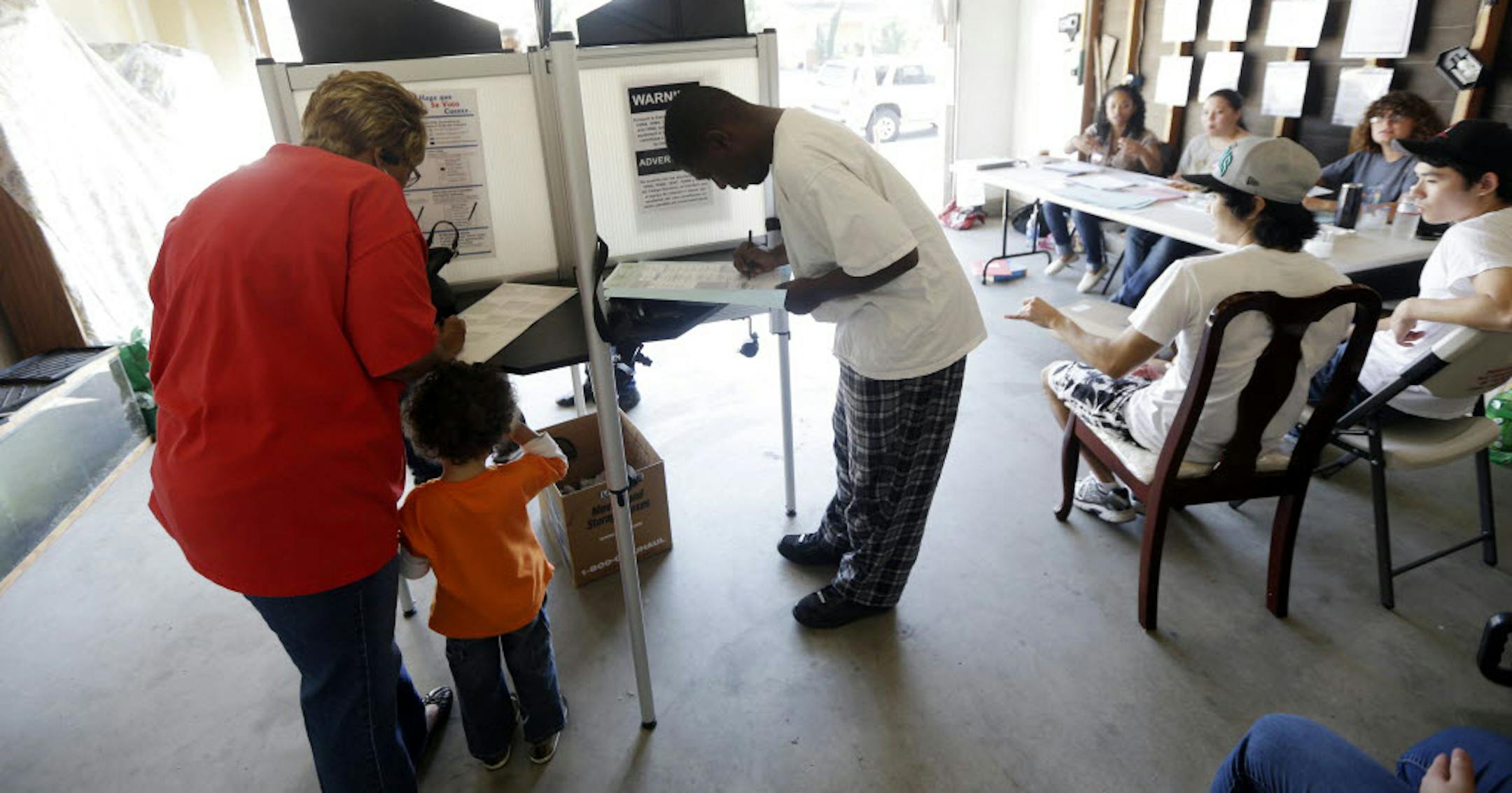
After election ballots were tallied and President Obama's victory was assured, a social commentator declared: "The white vote doesn't decide elections anymore."
Obama won 80 percent support from Hispanic, black and Asian Americans -- groups that are expected to become the nation's majority population by 2050, according to the Pew Research Center.
Hispanics made up the most powerful voting bloc, accounting for 10 percent of the electorate. They backed Obama by more than 70 percent, in part because of Mitt Romney's support for harsh laws such as those in Arizona that are designed to force undocumented immigrants to "self-deport."
In a hopeful sign, Obama's victory awakened some Republicans to the reality that America's changing demographics should prompt a shift in the party's opposition to reform. Several GOP lawmakers and prominent conservatives such as Grover Norquist, Haley Barbour and even pundit Sean Hannity said Republicans should stop being an impediment.
Hispanics had criticized Obama for not pushing reform earlier, and for a heavy-handed deportation policy. But he championed the DREAM Act, a measure Republicans tanked in 2010, because it provided a pathway to citizenship for some young immigrants. He also appointed the first Hispanic U.S. Supreme Court justice. And this summer he lifted the threat of deportation and offered opportunity for two-year work permits for qualified undocumented immigrants under age 30.
During his election night speech, Obama cited "fixing our immigration system" as a second-term priority, and Americans should hold him to that pledge. Democrats retained a majority in the U.S. Senate and majority leader Harry Reid of Nevada promised to introduce immigration legislation early next year.
But winning support from the Republican-controlled House is far from sure because of the Tea Party's continued chokehold there. House Speaker John Boehner struck a conciliatory tone on immigration immediately after the election, saying the time for reform had arrived. But after outcry from Tea Party lawmakers, he tempered his views.
In contrast, Republican President George W. Bush worked hard for reform before it collapsed in 2007. His brother, former Florida Gov. Jeb Bush, urged the GOP to soften its rhetoric and increase its Hispanic outreach this election cycle. But the far right ignored him.


