

In Egypt, the Arab Spring has yielded to a long, hot summer. Gone are the heady days of Tahrir Square protesters rightly calling for an end to Hosni Mubarak's dictatorship. That clarity has been replaced by a process that so many countries, including the United States, have gone through: the messy, risky birth of democracy.
U.S. Secretary of State Hillary Clinton's weekend visit to Egypt underscores the stakes. The course of Egypt, the Arab world's most populous country, following its historic break from decades of autocratic rule matters far beyond its borders. There are no policy options by which the United States can control the outcome; patient, cautious diplomacy will be needed to advance U.S. interests.
America's guideposts must remain our longstanding commitments to democracy, human rights, the rule of law, and our key regional alliances. But it is prudent to remember that every society must and will travel its own path.
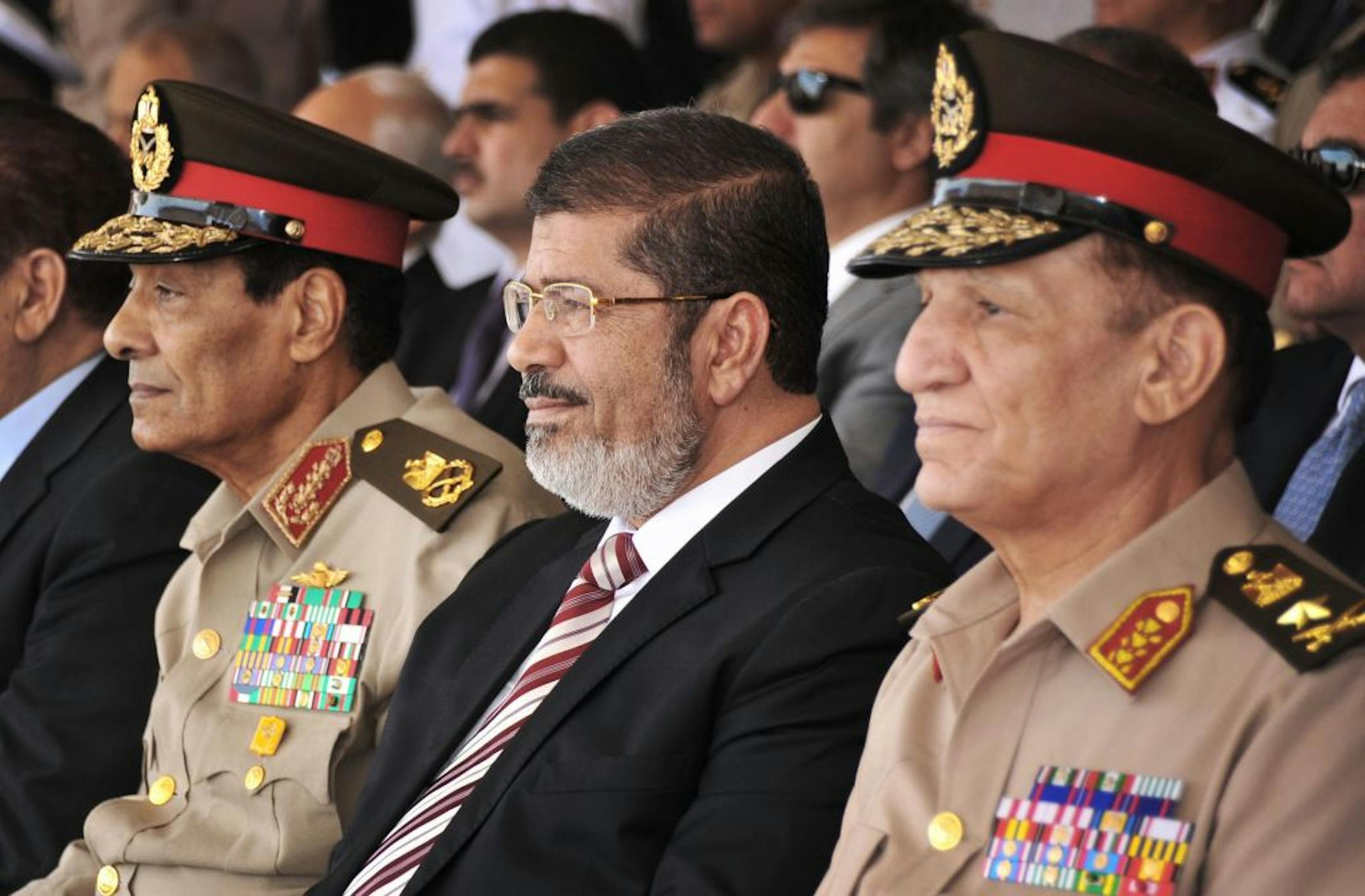
Egypt's situation is fluid, but its central fact is a developing all-out power struggle between the military and the Muslim Brotherhood. Mohammed Morsi, the Brotherhood's presidential candidate, was declared the nation's new chief executive last month, after a tense week of concern that the military's preferred candidate would be seated instead.
Morsi's inauguration caps the remarkable rise of the Muslim Brotherhood. Not long ago a suppressed, indeed outlawed, opposition group, the Brotherhood also won about half the seats in parliamentary elections. But the military dissolved Parliament after a court ruled some of its members' elections illegal. The same judicial process boosted the power of the military at the expense of the presidency. A week ago, Morsi defied the generals and reconvened Parliament, which met briefly and approved a proposal to appeal Parliament's dissolution to a higher court.
"Both the military and the Muslim Brotherhood are trying to cover what is really a naked struggle for power with the veneer of judicial decisions," said Marina Ottaway, senior associate for the Middle East program at the Carnegie Endowment for International Peace. "But," she added, "the courts have become totally politicized, and it's quite clear the courts are part of the old regime."
Indeed, the regime's remnants -- "the deep state," as Ottaway calls it -- remain embedded throughout Egypt's government and power structure. So even if the Muslim Brotherhood prevails in the current struggle, it will govern through a kind of power-sharing reality. The United States will have to understand and work with the duality of present-day Egypt.
Several forces could have a moderating influence on the combustible situation in Egypt.


