

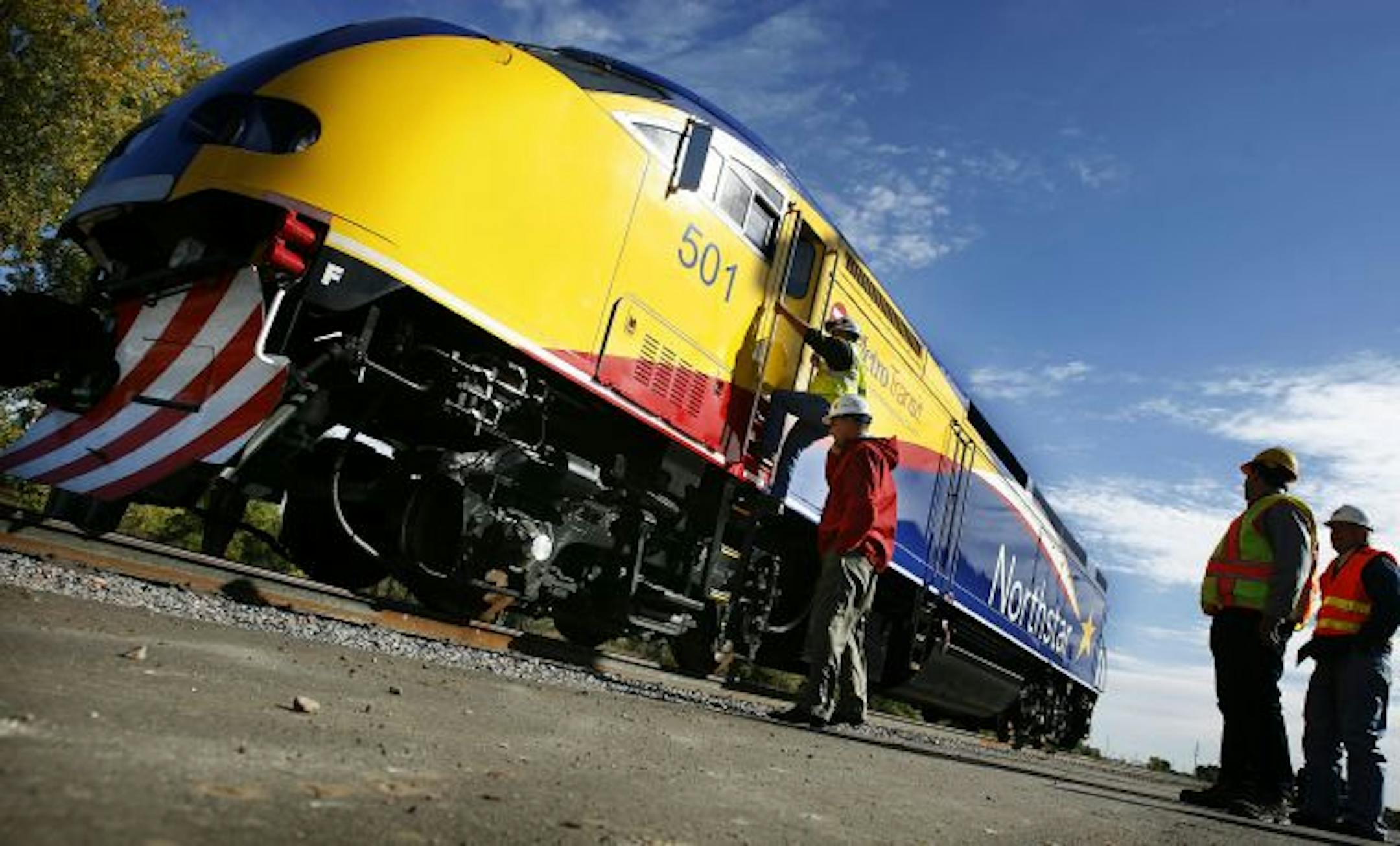
It was a news conference 12 years in the making. After a long battle to secure support and funding, metro champions of a passenger rail line serving the northwest suburbs announced Monday that Northstar Commuter Rail will begin service Nov. 16.
As such events go, this one was nearly picture perfect. The sleek blue-and-yellow cars that will soon make the Big Lake-to-Minneapolis run gleamed against a stunning backdrop: the Twins' new outdoor stadium. Advocates such as Anoka County Commissioner Dan Erhart, Hennepin County Commissioner Peter McLaughlin and Metropolitan Council Chairman Peter Bell deserved their moment in the late summer sunshine. The northwest metro corridor is one of the state's fastest-growing areas. The $317 million project positions the region for a future in which oil supplies and prices are increasingly uncertain.
The occasion, however, is also a time to remind these officials that their work as Northstar advocates is far from done. Some key challenges lie ahead as riders learn firsthand the critical difference between a commuter line and light-rail transit.
Target Field served as a can't-be-ignored reminder of that fact on Monday. The ballpark is Northstar's endpoint in Minneapolis, and many of those arriving on it will go directly into the stadium. There, they'll catch an escalator up to a higher-level Hiawatha Line station to take a light-rail train further into the city and beyond.
But Northstar riders may be surprised to learn that their options for catching a Twins game -- or any big event downtown, for that matter -- will be far more limited. That's by design. The officials who pushed for Northstar did so with an eye toward minimizing cost and maximizing ridership.
Unlike Hiawatha, which provides flexibility for those who need transit very early or very late, Northstar will operate on a much more limited schedule. It will make five runs from Big Lake to downtown Minneapolis in the morning, and five runs from Minneapolis to Big Lake in the afternoon, with one additional weekday "reverse commute" and three daily roundtrips on weekends. The line did not build the tracks on which it runs -- saving millions of dollars -- but instead purchased the right to run at certain times on tracks still used by Burlington Northern Santa Fe railroad. Those times are aimed at easing congestion during a.m. and p.m. rush hours rather than serving people who want to go downtown for entertainment. Those who need to be at work very early or later in the evening may also find the train's schedule unworkable.
The difference between commuter rail and light rail may be clear to policymakers and transportation wonks, but there's going to be a learning curve for riders as operations begin. Metro Transit General Manager Brian J. Lamb wisely acknowledged the situation and said officials are looking at options for more scheduling flexibility. There's talk of a "cleanup" bus to serve Northstar riders who missed the evening's last train out. The rail line could also run 30 additional special event trips per year; officials are working to coordinate those with the Twins schedule and other big-draw events. Additionally, there's some flexibility built into the railroad arrangement so officials could expand standard operating times if ridership demand grows.
Officials have a challenging task ahead of them in balancing the excitement over this new transportation option with its limited schedule. Managing expectations is critical and the stakes -- continued public support for the metro's other high-profile rail projects -- are high.


