

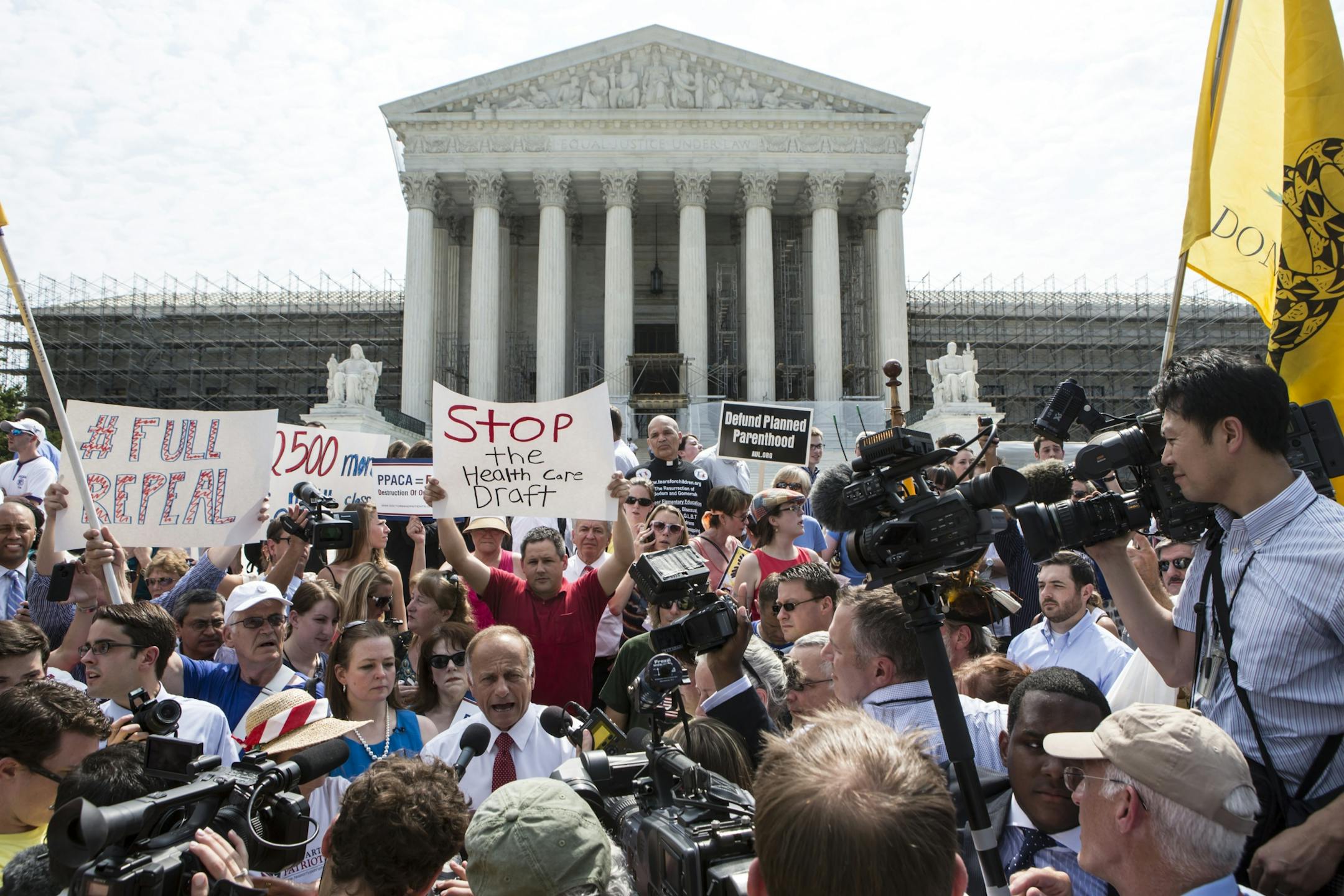
Now that the U.S. Supreme Court has mostly upheld the Affordable Care Act, it's time for Minnesota's Republican legislative majority to take care of some important unfinished business: passing enabling legislation and working with Gov. Mark Dayton's administration to make the state's online "health exchange" marketplace a reality. The upcoming special legislative session is a good opportunity to kick-start that process.
Health exchanges are a key component of the 2010 federal health reform law. Once launched, they'll allow many consumers and small businesses to comparison-shop for insurance coverage. Consumers also will be able to determine eligibility for medical assistance or federal subsidies to help buy coverage.
The ACA encourages states to build their own exchanges. But if adequate progress isn't made by 2013, federal officials are preparing to step in with a one-size-fits-all exchange to ensure that one is ready to go in each state in 2014. States must submit their detailed plans for this by mid-November of this year.
A Minnesota-made exchange is a chance to build on the state's historic strength in providing quality care and controlling costs. That's a key reason organizations such as the Minnesota Medical Association, the Minnesota Business Partnership and the Minnesota Chamber of Commerce support a state-tailored effort.
It's time for influential supporters like these to prod Republican legislative leaders -- who may be inclined to delay work on the exchange in hopes of an election sweep this fall -- to heighten their involvement.
The Dayton administration has made remarkable progress on this online marketplace after former Gov. Tim Pawlenty left the state at a disadvantage by refusing to apply for planning grants. Work on this initiative is drawing praise nationally, though some critics contend that state officials haven't been transparent enough.
Although Dayton may be able to make the exchange operational through executive authority, it would be best if lawmakers passed enabling legislation to do so. Republican lawmakers have delayed work on this as the law's constitutionality was debated. They've also failed to make the best of opportunities to shape the exchange in a way that best fits the state's needs.
With the Supreme Court ruling, it's time for them to ramp up involvement and make discussions more public. There may not be time to prepare legislation for the looming special session. But passing an exchange bill should be a top priority when the Legislature convenes early next year.


