

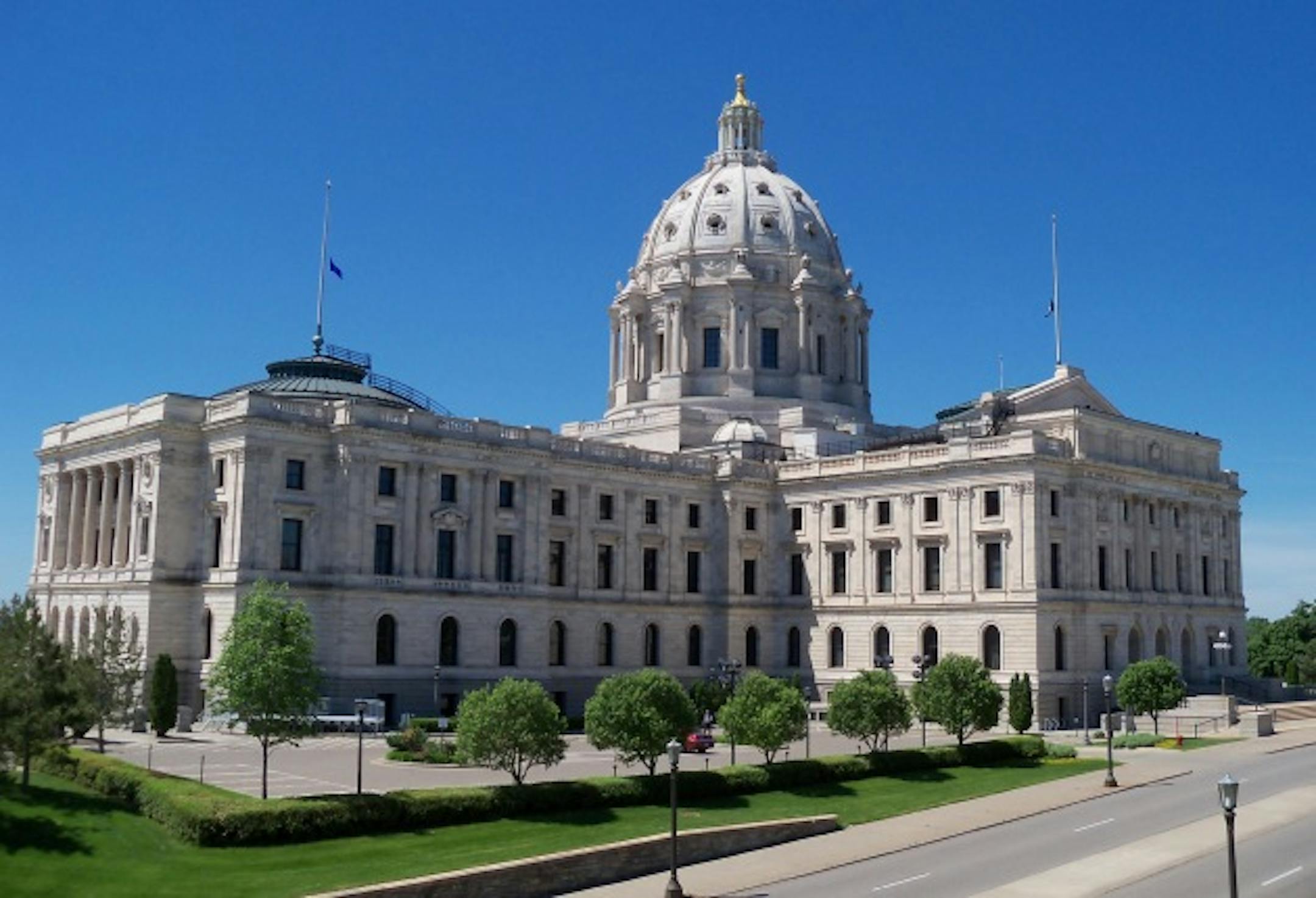
Thorough reform of the way Minnesota taxes businesses is at least a year away at the State Capitol. But for understandable economic and election-year reasons, the political itch is intensifying to make a modest down payment on lower, smarter business taxes this year.
Republican legislative majorities say now's the time to begin a multiyear teardown of the 11-year-old statewide business and seasonal-recreational property tax. It's a tax oddity developed as part of the 2001 property tax overhaul to put a floor under business property taxes for education's sake. Only a dozen other states employ such a tax.
Some DFLers are nodding in tentative agreement with the Republicans. DFL Gov. Mark Dayton is not among them. He has his own idea: a one-time tax credit -- $3,000 per new hire this year, $1,500 in the first half of 2013 -- for new hires from the ranks of the unemployed, veterans and new college graduates.
Dayton would do well to give the GOP alternative serious consideration. For a comparable expenditure of state revenues in fiscal 2013, the Republican plan offers many more businesses a promise of lasting relief from a regressive tax -- that is, one that is borne disproportionately by low- and middle-income Minnesotans, in the form of higher prices and lower wages (see box, above right).
Amid the overblown partisan rhetoric about how government "uncertainty" is damaging the business climate lies a kernel of truth: Businesses don't respond well to short-term tax incentives, here this year and gone the next. A decision to hire is a long-term commitment by an employer. Few such decisions are likely to be much swayed by a one-time credit, particularly one as small as Dayton proposes.
Dayton's tax credit would deprive the state of $35 million in forecasted revenue. He proposes to rebalance state books by eliminating some or all of a tax advantage for foreign-operating corporations that has morphed into a tax dodge unintended by the lawmakers who created it in the late 1980s. Closing that corporate tax loophole is a change long sought by DFLers and resisted by Republicans.
By comparison, Republicans propose to spend $31 million in fiscal 2013 to begin a 14-year phaseout of the $800-million-per-year "state general levy." They say they can find additional spending cuts in the current budget to pay for it. Depending where they look, they'll meet with stiff resistance in the governor's office.
To be sure, those are two distinct approaches with two different funding strategies. But it would be a shame -- and a telling failure of divided government -- if those differences cannot be bridged in a year when both parties say that a small, stimulative business tax break is both affordable and warranted.


