

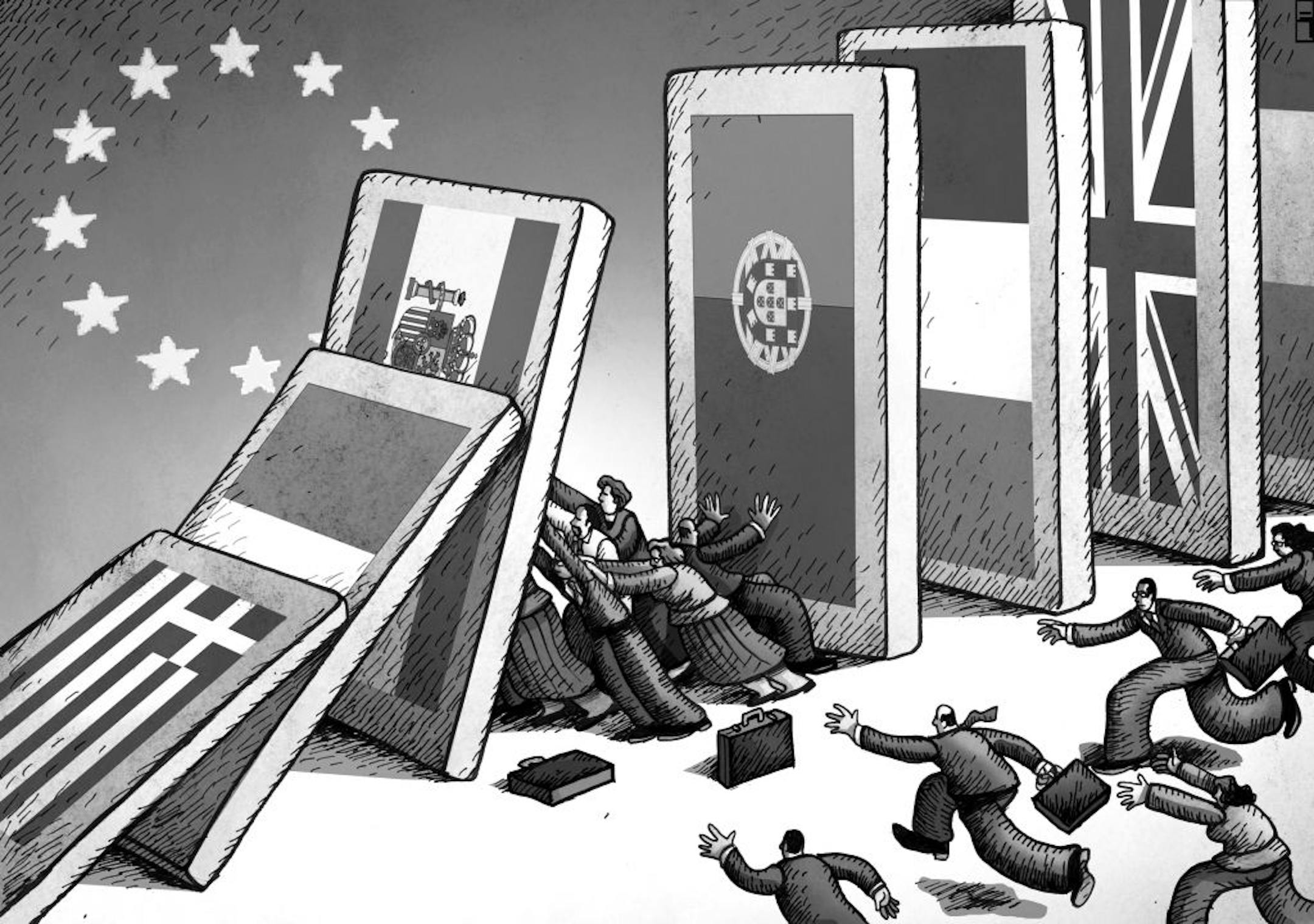
With our own political process so gridlocked that a congressional supercommittee is needed just to keep government operating, it's tempting to consider the ongoing European fiscal, debt and political crises as concerns confined to another continent.
They're not, of course. Instead, we're being reminded that the degree of international interconnectivity in global economic and banking systems creates real risks -- and provides a cautionary tale -- for Americans, too.
Globalization has meant great gains for many U.S. consumers (although not always for U.S. workers), because it has increased choices and lowered prices of consumer goods.
It's also often been a boon to U.S. investors, many of whom have significant exposure to multinational companies through direct or indirect investments.
But it also means that, more than ever, our fates are intertwined. So if, or when, Greece defaults on its debts, an economic event like the Lehman Brothers collapse of 2008 could plunge European, American and even global economies back into a recession. Or worse.
To avoid such a calamity, an expanded bailout fund for shaky euro zone countries such as Greece, Portugal, Italy, Ireland and Spain is grinding its way through several European nations' parliaments.
That includes Germany, the richest, and thus most crucial, nation, which approved the expansion last week. Attention now turns to Slovakia, as each of the 17 European Union countries using the euro have to agree to the revised plan.
America isn't in the same situation as the fiscal basket cases in Europe. But it could be headed that way unless we address our overextended and unbalanced entitlement programs such as Social Security, Medicare and Medicaid, as well as chronically underfunded public pensions.


