

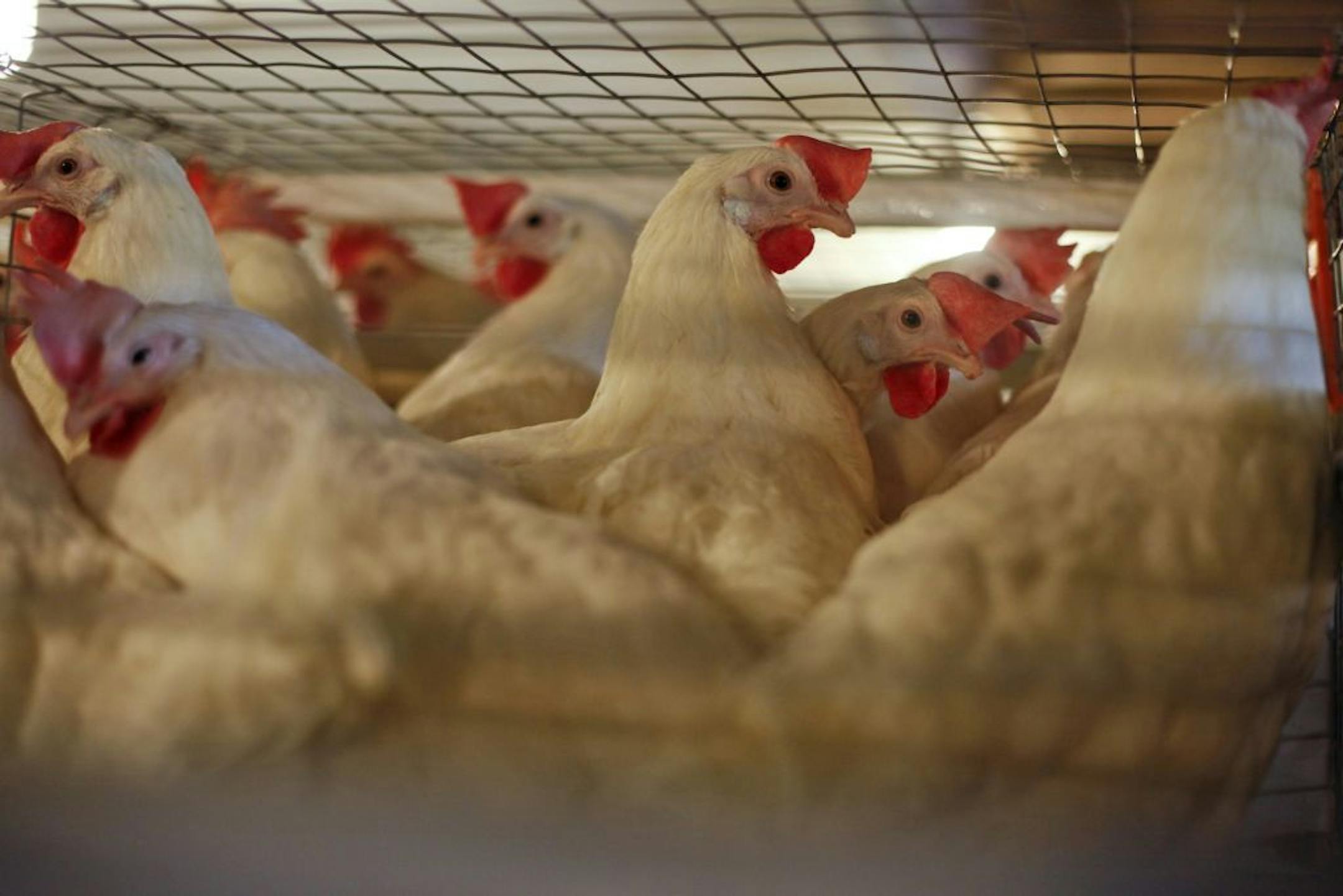
Providing hens a humane-sized cage in which to lay their eggs should be a no-brainer for Congress. Animal cruelty shouldn't be tolerated in U.S. food production.
But some lawmakers, including Minnesota Rep. Collin Peterson, oppose a bill that would establish a national standard for the cages used by commercial producers.
The bill would dramatically increase the standard of living for laying-hens, which are often crammed in groups inside tiny cages, each with only about 67 square inches or less of space. For comparison, an 8.5-by-11-inch sheet of paper is 93.5 square inches.
Cramped cages create enormous stress because the birds can't stretch their wings or exercise, which weakens their bones. In addition, many hens are only exposed to artificial light and endure hot-blade beak trimming and other gruesome practices.
The bill calls for 124 square inches of cage space and provisions such as scratching posts, perches and nesting boxes. It mandates better air-quality standards and less draconian means of euthanasia (i.e., live animals could no longer be thrown into grinders). It prohibits withdrawing food from flocks of hens for several days to induce them to molt simultaneously (the shedding of feathers) -- a practice already banned by the European Union. The bill also requires cartons to identify eggs as being from caged, free-range, enriched system or cage-free hens.
These would be welcome changes. Sadly, Peterson, the leading Democrat on the U.S. House Agriculture Committee, insisted to an editorial writer: "Nobody knows whether the chickens are better off with these cages. ... And I'm not sure the chickens care." He sides with the three most vocal organizations opposing the bill: the American Farm Bureau Association, the National Pork Producers and the National Cattlemen's Beef Association.
Their opposition is curious, since the bill affects only egg producers. And it was crafted by two organizations that are usually at odds -- the United Egg Producers, which represents most of the nation's egg farmers, and the Humane Society of the United States, the country's largest advocacy organization for animal welfare. Both groups compromised on long-held beliefs about egg production, which brought down the wrath of smaller animal-welfare groups on the Humane Society.
Gene Gregory, president and CEO of UEP, said his organization sought a compromise after the Humane Society led a successful ballot initiative in California that set strict production standards. The law applies to all eggs sold in the state, no matter where they were laid. Other states with large egg producers were being targeted for similar ballot measures. If adopted, those producers would be at a disadvantage in the market.


