
Editorial counterpoint: What if the police acted properly?

We should take a breath and consider the possibilities.

February 8, 2022 at 11:45PM
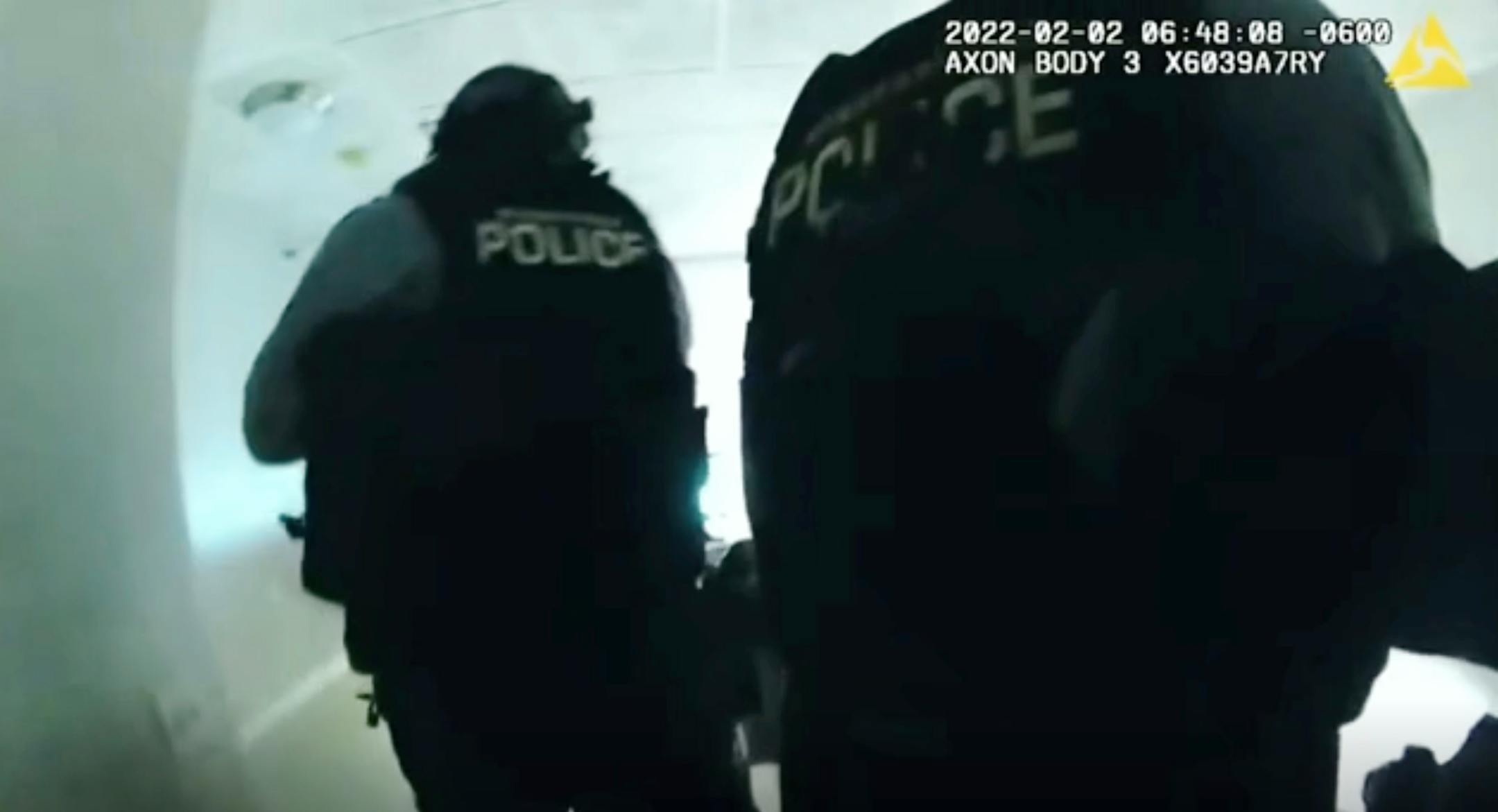
In this image taken from Minneapolis Police Department body camera video Minneapolis police enter an apartment on Feb. 2, moments before shooting 22-year-old Amir Locke. (Minneapolis Police Department/The Minnesota Star Tribune)

The Star Tribune Editorial Board writes, "This has to stop," in reference to the police shooting of Amir Locke ("No-knock failure left Amir Locke dead," Feb. 6).

But realistically, it's not going to stop anytime soon.

First of all, let's decide what it is that needs to stop. Is it the rampant violent crime in the city of Minneapolis? Is it the young men shooting one another, as at the Richfield South Education Center? Is it the police shooting young Black men? Is it no-knock warrants? Is it the seeming conspiratorial politics associated with the workings of the Minneapolis Police Department (the alleged lies by Mayor Jacob Frey)?

Before we throw the police under the bus, let's consider what we know about the Locke shooting. First, the MPD was doing the St. Paul Police Department a favor by serving a St. Paul warrant in Minneapolis. Since this was a warrant related to a homicide, one could have assumed it was high-risk and been concerned that an occupant within the target dwelling might be armed and might have used violence in the past, including in the suspected homicide. (A suspect in the underlying case was arrested Sunday.)

Given the risks, a no-knock warrant was applied for and signed by a judge.

No-knock warrants offer the police and occupants some level of protection, since the occupants have little time to prepare for an armed standoff. These encounters are still extremely dangerous — hence the SWAT team, which practices high-risk entries, serves these warrants.

As is often the case with warrant service, the entry team announces its presence at the door and then quickly attempts to locate and secure the occupants so that no one is injured. While it is very frightening to be awakened by loud, unfamiliar voices followed by footsteps and camouflaged strangers carrying semiautomatic subguns, the normal response, if there is such a thing, is to follow the orders of the police, show one's hands and get down on the floor, so that all occupants can be accounted for and safely searched.

The last thing an occupant would want to do would be to present a gun. Presenting a gun to officers serving a warrant leaves them two grim choices: wait and see if the occupant is going to shoot them, or shoot the armed occupant. Police should not have to wait until they are shot to begin to defend themselves. They are not paid enough for that. By the time an officer finished the phrase, "Drop the gun," he or his partners could be dead.

Once a gun is presented, I'm afraid it's too late. Was Locke raising his gun? It appeared to me that he was, but I'm confident a better video will be produced as the case unfolds. From a quick glance at his firearm it appeared to be an FN 5.7, which uses ammunition very dangerous to police, capable of defeating body armor.

So who is to blame for the tragic death of Locke? There always has to be someone to blame, right? It can never be the fault of the deceased young man with the gun. We can speculate that Locke understood he was staying in the apartment of a young man or woman somehow connected to a homicide investigation — hence the firearm. But what was the firearm for and why was he sleeping with a gun in his hand? Or, did he retrieve the nearby firearm when he was awakened by the police and, if so, what was his intent? Or, was he in such a deep sleep that when startled by the loud garbled voices at the door he did not connect them with the police and was simply preparing to defend himself from an unknown intruder?

Unfortunately, we will never know what his perceptions were or what his intent was in presenting a firearm. His perceptions are crucial but they will remain a mystery.

So is Locke's death then the fault of the police, the police chief, the mayor, the judge who signed the warrant or all of the above? It has to be someone's fault and that person must be fired, followed by arrest and conviction for murder — before we really have a complete understanding of what actually occurred. Because "this has to stop." And what happens to the city if someone is not quickly fired and charged?

Is it possible to take a breath and consider the possibility that the police acted properly given the tragic circumstances presented to them? Is it possible?

Richard Greelis, of Bloomington, is a retired police officer.

about the writer

about the writer

Richard Greelis

More from Commentaries

See More
card image
Erica Dischino/For the Minnesota Star Tribune

We don’t need to take shortcuts that could potentially harm our environment and our future.

card image
card image