

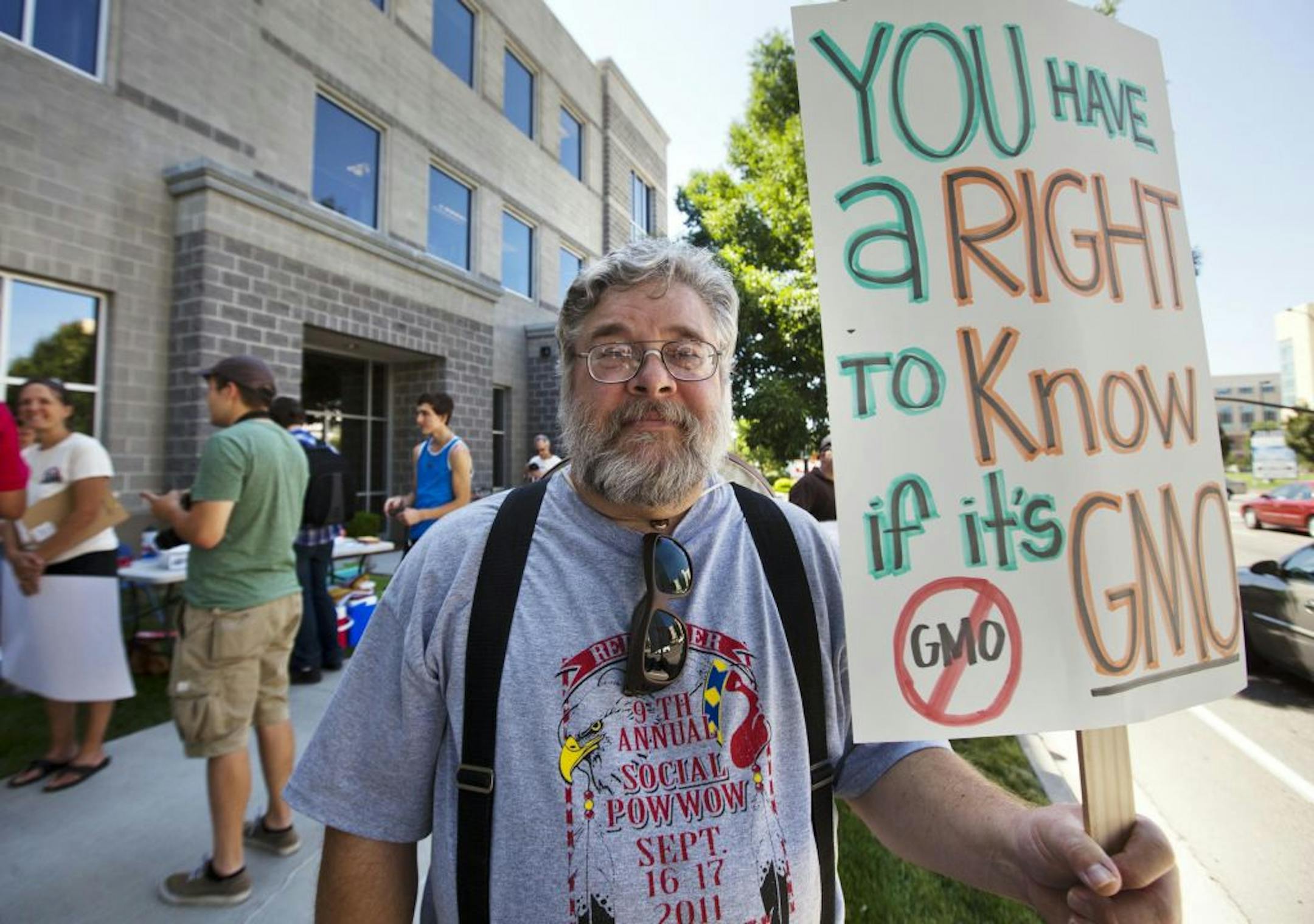
Congress and state legislatures across the country are facing growing initiatives to require greater transparency in the labeling of foods containing genetically engineered ingredients. Californians will even vote on the matter come November.
Nearly 50 countries around the world already require such labeling. But in the United States, foods from genetically modified organisms (GMOs) are given a pass, while the use of nearly 3,000 other ingredients, from high-fructose corn syrup to tricalcium phosphate, must be identified on labels.
California's "right to know" initiative is a reasonable demand from the growing numbers of health-conscious consumers, who simply want to make informed choices about their food. Without the labeling, Americans who don't wish to eat GMO products have no sure way to avoid them unless they know the product producer. If the California measure passes, and survives the subsequent battles over implementation, the rest of the country would likely follow.
Over the past year, at least 36 bills calling for such labeling have been introduced in at least 19 states: Alaska, California, Connecticut, Hawaii, Illinois, Iowa, Maryland, Massachusetts, Missouri, New Hampshire, New Jersey, New York, North Carolina, Oregon, Rhode Island, Tennessee, Vermont, Washington and West Virginia.
Congress has entertained the issue, too. In June, the U.S. Senate voted down an amendment to the farm bill that would have granted states the authority to require the labeling. The measure was offered by Sen. Bernie Sanders, a Vermont independent, and cosponsored by Democratic Sens. Barbara Boxer of California and Mark Begich of Alaska.
"This is the very first time a bill on labeling genetically engineered food has been brought before the Senate," Sanders said. "It was opposed by virtually every major food corporation in the country." Also among the leading opponents of such measures are the major chemical companies, such as DuPont, Dow Agro and Monsanto, one of the largest developers of biotech crops.
GMOs most commonly refer to plants that have been modified genetically to improve nutritional content or a desired trait, such as drought tolerance. Monsanto insists the foods are safe, and the Food and Drug Administration allows them. The reasons some consumers want to avoid them vary, but that's another matter. Transparency, rather food safety, is really what's at stake in the labeling initiatives.
Let's be honest: The companies are resisting the labeling because they fear that sales will drop on their vast assortment of GMO-dependent processed foods, which are staples in supermarkets. Supporters of the labeling include the American Public Health Association, National Sustainable Agriculture Coalition, National Cooperative Grocers Association and the Center for Food Safety. They represent a small fraction of the populace who think food production practices in America need dramatic change.


