

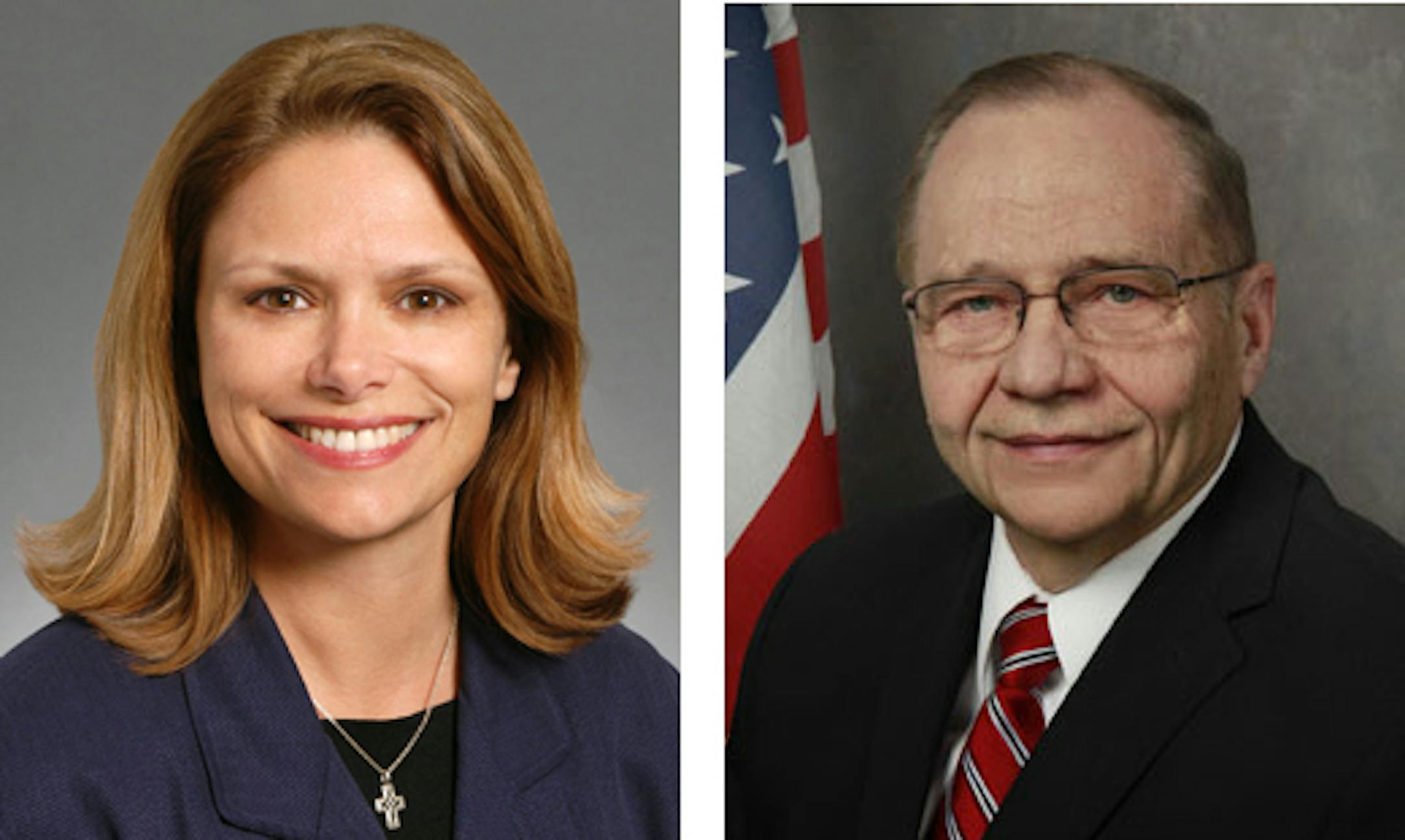
Minnesota's sprawling southern First District has a history of electing congressmen who rise to national notice -- people like Al Quie, a Republican education policy leader before becoming governor, and Tim Penny, a Democratic fiscal hawk who was ahead of his time. The district's three-term incumbent, Democrat Tim Walz, has begun to attain similar stature. His work on congressional ethics and veterans affairs legislation has been truly distinguished.
Walz's strength makes the task that confronts the winner of the Aug. 14 Republican primary in the First District a daunting one. Understandably, GOP partisans are looking for a candidate whom they believe can defeat Walz. This newspaper's criterion for a primary endorsement was slightly different. We looked for the candidate more likely to give Walz the kind of competition that can make a good representative better.
Former state Rep. Allen Quist better fills that bill than state Sen. Mike Parry. Quist has been out of elective office since 1988. But the St. Peter farmer and recently retired government professor from Bethany Lutheran College demonstrates deeper knowledge of the issues that confront Congress and more ability to debate them with Walz this fall.
Quist, 67, has been a local and state Republican Party leader for nearly 30 years, and ranks among the engineers of the party's shift to the philosophical right. He and his energetic wife, Julie, a former district director for Sixth District U.S. Rep. Michele Bachmann, were forces to be reckoned with inside the state GOP well before his unsuccessful party-endorsed bid to topple Republican Gov. Arne Carlson in 1994.
Quist's sustained political involvement contrasts with Parry's briefer public career. The 59-year-old radio and pizza restaurant businessman served one term on the Waseca City Council, ending with a reelection defeat, and three years in the state Senate. Aligned with the Senate's most conservative faction, Parry chaired the Senate's State Government Innovation and Veterans Committee with a blend of charm and pugnacity.
Parry is not well-known among primary voters. He might have used his comparatively small war chest to tout his own assets. Instead, he's been bashing Quist's record. Among the things he dredged up is Quist's support in the 1980s for gas tax and cigarette tax increases, both of which occurred in the context of an overall state tax reduction.
We think those features of Quist's record do him credit. They are evidence that his mind is not automatically closed to all arguments for higher taxes, and that he appreciates government's rightful role in securing public health and providing for public mobility. That record ought to strengthen Quist's credibility among general-election voters as he questions Walz's views on the federal budget.
As a legislator in the 1980s, Quist focused excessively on social issues. Today he assures that while his positions have not changed, his emphasis has. If he wins on Aug. 14, he promises a robust debate with Walz over how best to reduce the nation's fast-growing debt. First District Republicans should give him the green light to proceed.


