

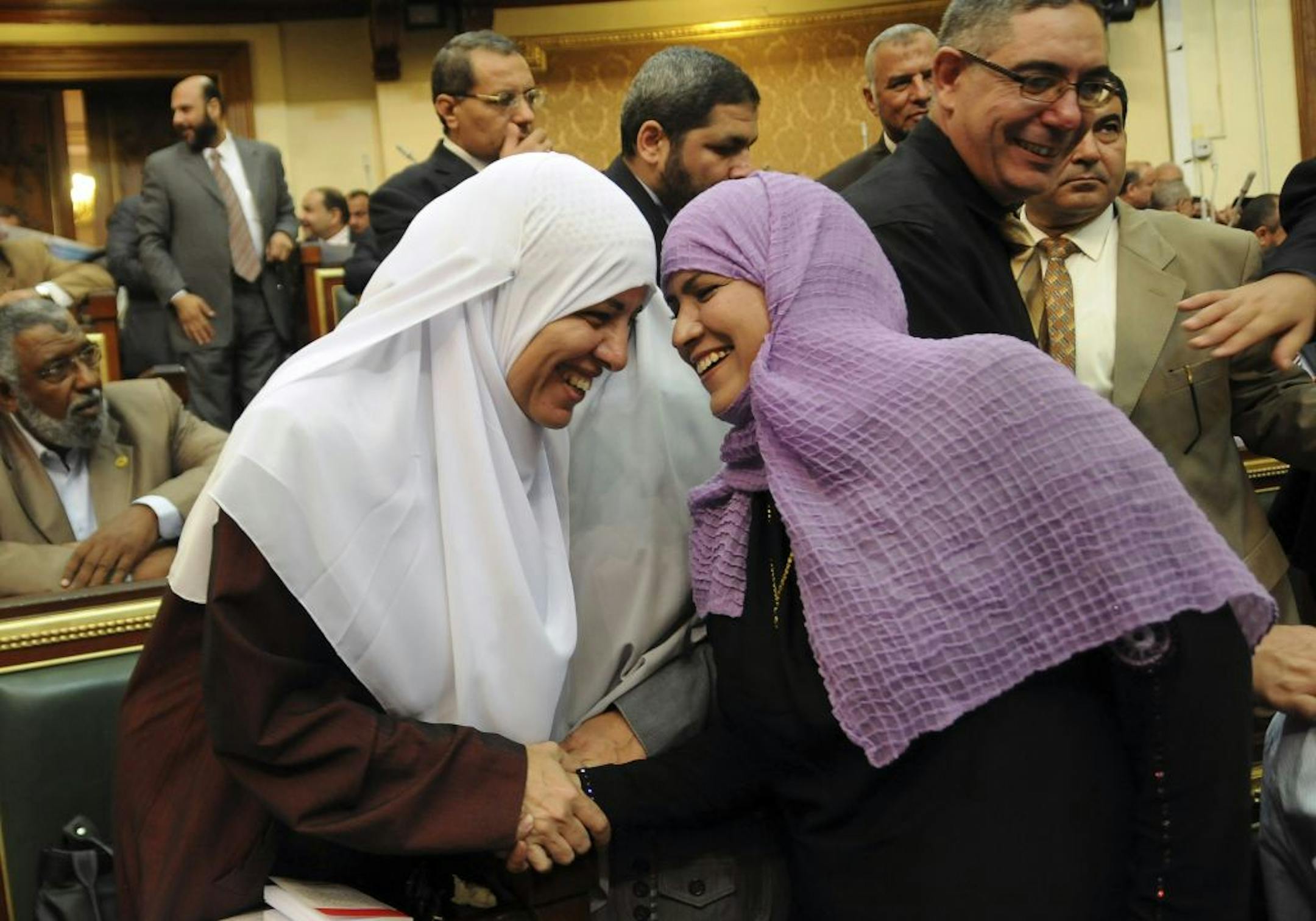
From the Eastern bloc to East Asia and beyond, the United States has an admirable and long legacy of supporting societies making democratic transitions. Now that it's the Mideast undergoing rapid transformation, our foreign-policy should be equally vigorous.
The Obama administration can provide a major boost to the democratic process in the region by relieving Egypt of $1 billion of its debt, backing a $4.8 billion International Monetary Fund loan and taking other measures to help stabilize the country's struggling economy. U.S. and Egyptian diplomats are negotiating terms of the loan-forgiveness package.
There are private-sector efforts underway as well. Egypt's economic potential has lured a high-profile delegation representing nearly 50 U.S. businesses. That group will leave for Cairo on Saturday.
The administration risked being on the wrong side of history during the heady days of Tahrir Square protests. But it soon smartly signaled that it was time to end Hosni Mubarak's military dictatorship.
Now it's time to strengthen the commitment to Egypt's democratic transition -- even if the legitimately elected new president is a member of the Muslim Brotherhood, an entity that Mubarak banned and U.S. diplomats shunned.
It was not the ideal group to emerge in Egypt, but since gaining control the Muslim Brotherhood has shown signs that its history of fiery rhetoric is giving way to the cold, hard realities of governing. There have been significant setbacks to press freedom, and other politically heavy-handed measures are sources of significant concern. But to date, it has acted in a relatively responsible manner.
New President Mohammed Morsi and his legislative supporters realize that unless they begin to revive Egypt's sclerotic economy, protesters may take to the streets once again to demand more change. Next time, those who gain power may not be the relatively rational actors that the Muslim Brotherhood appears to be.
Stabilizing the economy, as well as Morsi's government, is in the best interest of Israel as well. Early, legitimate fears that Egypt may abrogate its peace treaty with Israel have subsided, which is most likely one of the reasons why Israel's ambassador to the United States has encouraged the economic assistance.


