

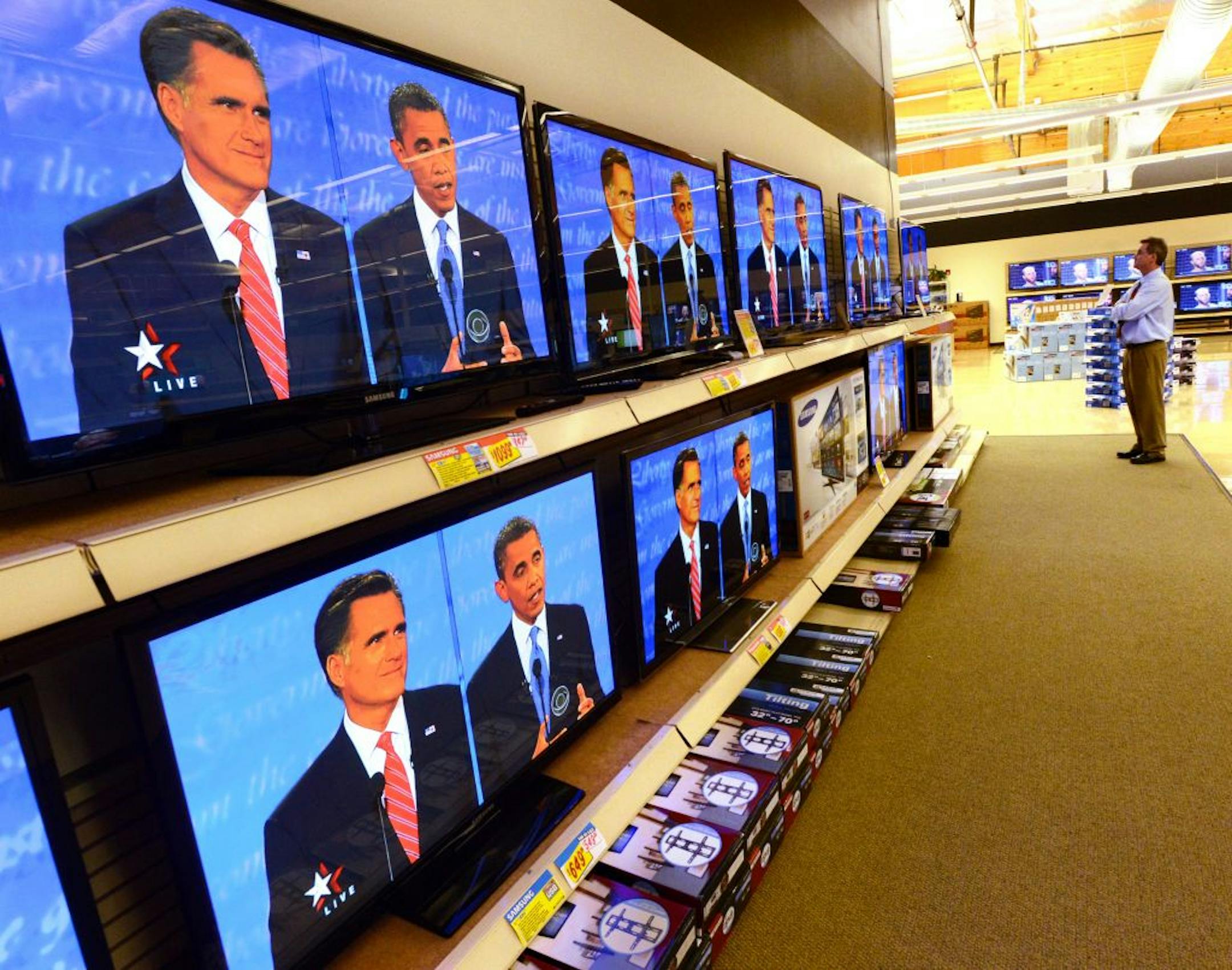
By now, the debate about the debate centers around just how dramatically it has reset the race for president. Postdebate polls by CBS and CNN indicated a clear-cut victory for Republican Mitt Romney, whose debate performance showed voters a more sure-footed, substantive and plausible candidate than many had seen before.
It was good to see an almost entirely issues-based discussion. But repeated references to mind-numbing numbers -- Romney's alleged $5 trillion tax cut, or President Obama's alleged $716 billion cut to Medicare -- did not equate to clarification. Each candidate focused more on rhetoric than arithmetic and only proved former President Bill Clinton right: It is about math, as he said during his Democratic National Convention speech.
In the weeks ahead, at future debates and on the campaign trail, Romney and Obama must show how their numbers and their plans add up.
For instance, Romney was right and eloquent in framing public debt, and the burden it could place on future generations, as a moral issue. But he still needs to spell out which tax deductions and exemptions he would close in order to make his large reduction in tax rates revenue-neutral. He also needs to name, and sell, some of the painful spending cuts that the next president will need to ask of the American people if the nation's fiscal affairs are to be put right.
It's easy to take aim at public broadcasting's Big Bird. But what about the Air Force and other military spending, or a solid plan to curb costs on Medicare and other costly entitlement programs? Romney's repeated promises to protect the Pentagon, Medicare and other programs, coupled with his tax plan, have led independent analysts to predict even more red ink.
For his part, Obama obfuscated on how his second term would achieve the policy compromises the country needs in order to avoid a European-style fiscal crisis. That is, unless the new Congress is decisively controlled by Democrats, hardly a sure thing. Wednesday's hesitant counterpuncher needs to show himself a more forceful and persuasive leader in the remaining month of the campaign.
Obama also needs a much more full-throated defense of his policies, including and especially green energy: Leaders shouldn't just have their sights set on the next four years, but the next 40 -- and beyond. The president should not back down from his data-driven concern about climate change, and he should push for energy alternatives that may be part of an energy and environmental mitigation.
Obama did defend, rightly, the ($716 billion) reduction in Medicare reimbursements that is part of his signature health plan. In fact, Rep. Paul Ryan, Romney's running mate, had the same cut in his "road map" budget. And regarding the president's plan -- officially the Affordable Care Act -- Obama shrewdly decided to own the previously pejorative "Obamacare" label by calling it just that himself.


