

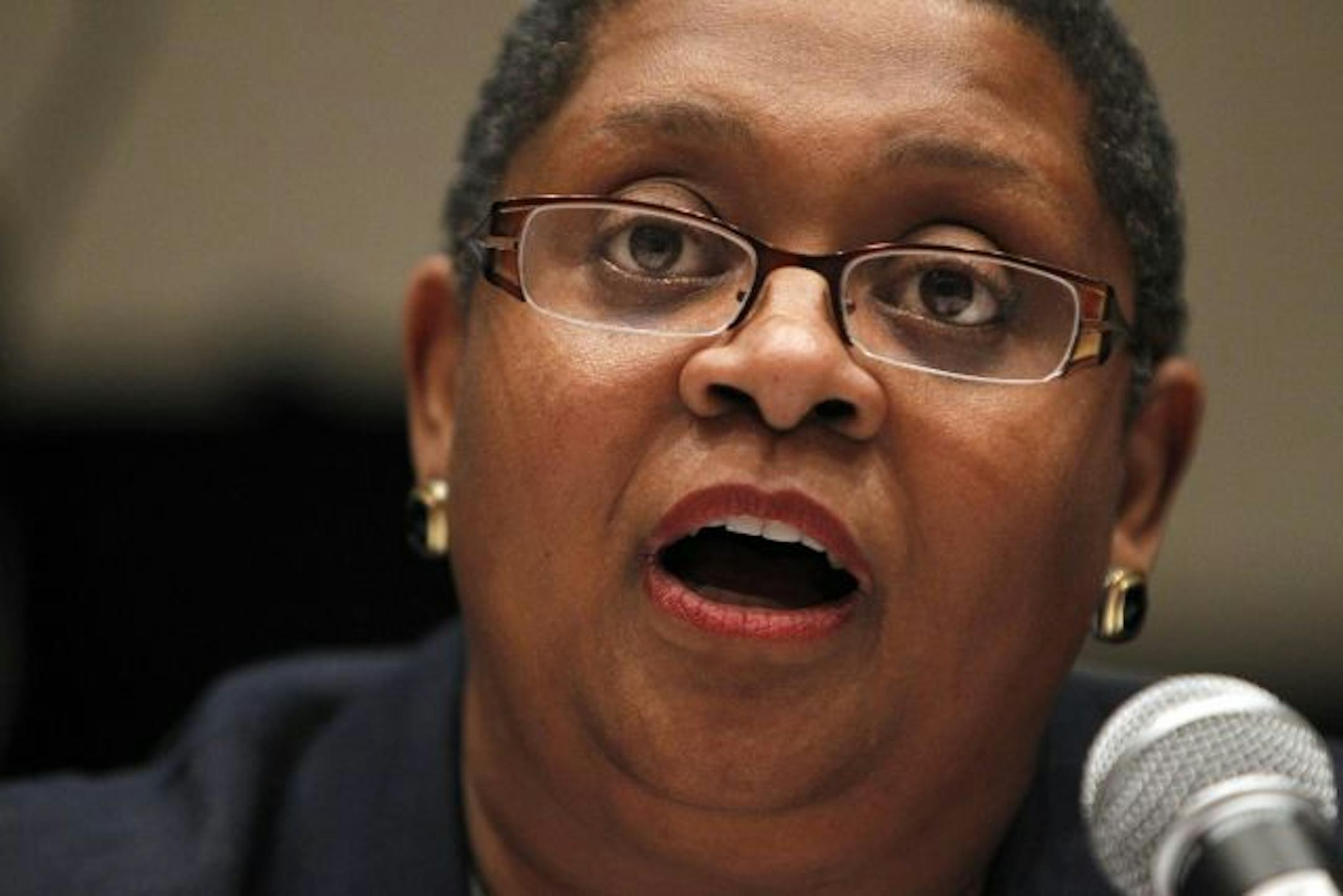
Given widespread angst over public employee pay, school staff cuts and teacher-management labor issues, Minneapolis Schools Superintendent Bernadeia Johnson should have known better.
Her recent decision to approve more than $270,000 in retroactive pay raises to executive staff showed a disturbing lack of sensitivity to the financial realities in her district.
It's not that top-notch administrators don't deserve competitive salaries, but the timing for the raises couldn't have been worse. Johnson also should have done a more effective job making the case for the pay hikes to the school board and to the public.
Based on a consultant's study that concluded some school administrators were underpaid (and that some were overpaid), lump-sum checks were sent to 35 administrators retroactive to July 2010.
A consultant found that 75 percent of district employees are compensated slightly above market and that 38 percent received more than 5 percent below the average for people working similar jobs in other districts.
On average, the employees who received raises are paid $100,000 per year. The executive workers are not represented by a union, and all serve at the pleasure of the superintendent, who earns $190,000 annually. She hires, fires and sets compensation for the 60 people who are part of the central office group. About half of the employees in the group received raises.
News of the pay hikes hit near the end of a 20-day Minnesota state government shutdown and just a month after the Minneapolis district said it would cut at least 118 jobs, including 52 teachers, to help with a $20 million deficit.
Although the back pay represents a small portion of the district's $600 million budget, it sends the wrong message to constituents -- some of whom already have trust issues with the district.


