
Editorial: A new safety threat for bike commuters

With bike thefts rising, owners need to take a few simple steps.

August 20, 2012 at 12:12AM
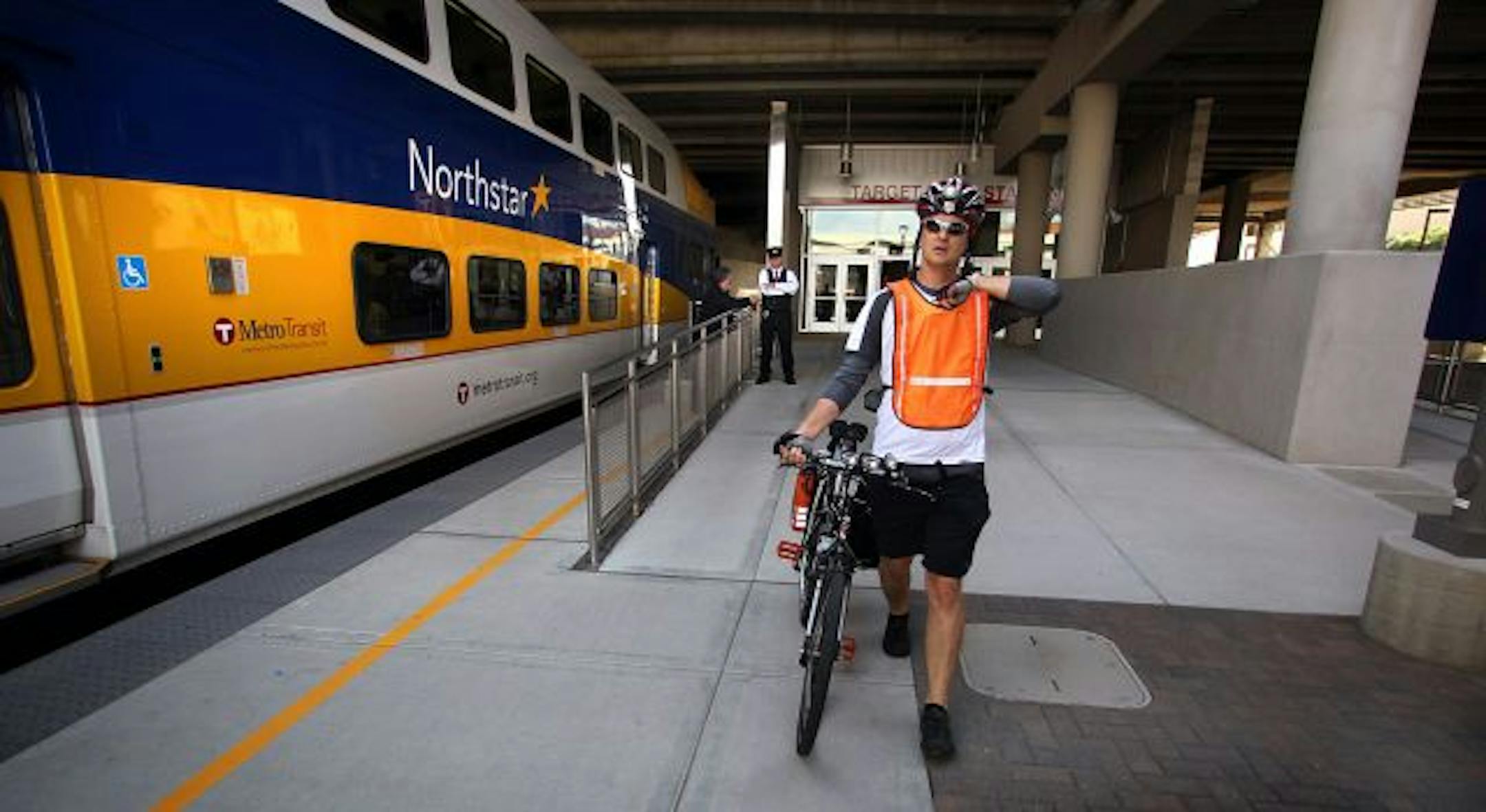
Kyle Torfin prepared to board the Northstar commuter train for his home in Elk River. Torfin recently paid $280 to have his one-of-a-kind Trek bicycle that his uncle built repainted, however the work is still not completed and the bike has not been returned. Using a bicycle he recently purchased, Torfin commutes several times a week between Elk River and Minneapolis.
Kyle Torfin prepared to board the Northstar commuter train for his home in Elk River. Torfin recently paid $280 to have his one-of-a-kind Trek bicycle that his uncle built repainted, however the work is still not completed and the bike has not been returned. Using a bicycle he recently purchased, Torfin commutes several times a week between Elk River and Minneapolis. (Star Tribune/The Minnesota Star Tribune)

It's bad enough that thieves are stealing bikes at a higher rate than last year in the Twin Cities: It would compound the crime if it also stole momentum from the surge in bike commuting and recreational riding that led Bikescore.com to rank Minneapolis as the nation's most bikeable city.

While law enforcement plays a key role, the spike in thefts can be reversed only if bike owners take personal responsibility.

A recent Star Tribune story reported that more than 1,000 bikes have been reported stolen in Minneapolis since January, a 12 percent increase over 2011. An even higher jump in the percentage of bikes stolen in burglaries was recorded -- from 25 percent in 2011 to 34 percent since January. A significant number in this category were bikes stolen not from public racks, but from private garages. The average value of a stolen bicycle in Minneapolis is $625, although many are worth well more than $1,000.

The bad news about the increase in bike thefts is accompanied by the good news of rising ridership.

Biking reduces traffic -- and burns calories -- at a time when progress is needed on both fronts. While Minneapolis has yet to reach its 2014 goal of having 7 percent of commuters on bikes, the current estimate that 3.5 percent are wheeling it to work is well ahead of most metro areas. (Bike-friendly Portland, Ore., is at 6 percent).

Some of this success in getting people out of their cars and on two wheels is due to investments in infrastructure. According to Minneapolis' 2011 annual report on bicycling, 600 new durable bike symbols were applied to city streets; the city added four bicycle boulevards, and there was a 75 percent increase from 2010 to 2011 in the number of on-street bikeways. The 167 miles of bikeways on Minneapolis streets is just 11 miles short of the city's 2015 goal.

All this investment has paid off: From 2007 to 2011, there was a 47 percent jump in bicyclists counted annually, according to city estimates.

Police forces are responding as effectively to bike thefts as their resources allow, but it's difficult to catch thieves red-handed, and many recovered bikes are never claimed because victims have not kept adequate records of their bikes.

So it's up to cyclists to take action. Make it a project -- today -- to do the following:

• If you don't have a steel "U-lock," buy one. Then use it -- always -- including when the bike is in your garage.

• Record the make, model and serial number (usually permanently stamped on your bike), in your records.

• Take a photo of your serial number as well. Then use your camera to take a photo of the bike, which will greatly help in recovering it if it is stolen.

None of these steps guarantees bike security. But they will speed the return of recovered bikes to their owners. And they may help authorities track stolen bikes, capture thieves and reduce incentives to steal.

Among the many reasons to take pride in our national-leading cycling activity is that it's a combination of official initiative and a "just do it" ethos. The same approach can help reduce the movement's downside -- the growing number of bike thefts.

--------------------------

Readers, what do you think? To offer an opinion considered for publication as a letter to the editor, please fill out this form. Follow us on Twitter @StribOpinion and Facebook at facebook.com/StribOpinion.

about the writer

about the writer

Editorial Board

See Moreicon

More from No Section

See More
FILE -- A rent deposit slot at an apartment complex in Tucker, Ga., on July 21, 2020. As an eviction crisis has seemed increasingly likely this summer, everyone in the housing market has made the same plea to Washington: Send money — lots of it — that would keep renters in their homes and landlords afloat. (Melissa Golden/The New York Times) ORG XMIT: XNYT58
Melissa Golden/The New York Times

It’s too soon to tell how much the immigration crackdown is to blame.