

FORT SMITH, MT. - Flowing at perhaps twice the rate it usually does in August, the Bighorn River here was a study in contrasts the other day. Its 10,000 cubic-feet-per-second currents should have suggested a clean river, blown free of its loose aquatic vegetation and stream bank detritus. Instead, an algae bloom combined with various other weird green floating stuff to hamper both the dry fly and nymph angler. Yet, fishing was pretty good. Go figure.
Rounding a final bend leading to the place where I would pull my drift boat from the river, the temperature was either 98 degrees or 100, depending on the source you believed. Compared to Minnesota, humidity was non-existent. Nonetheless, it had been a hot day of rowing and casting on a cool river, meant both ways, and I would soon be looking for a chilled drink at my nearby campsite.
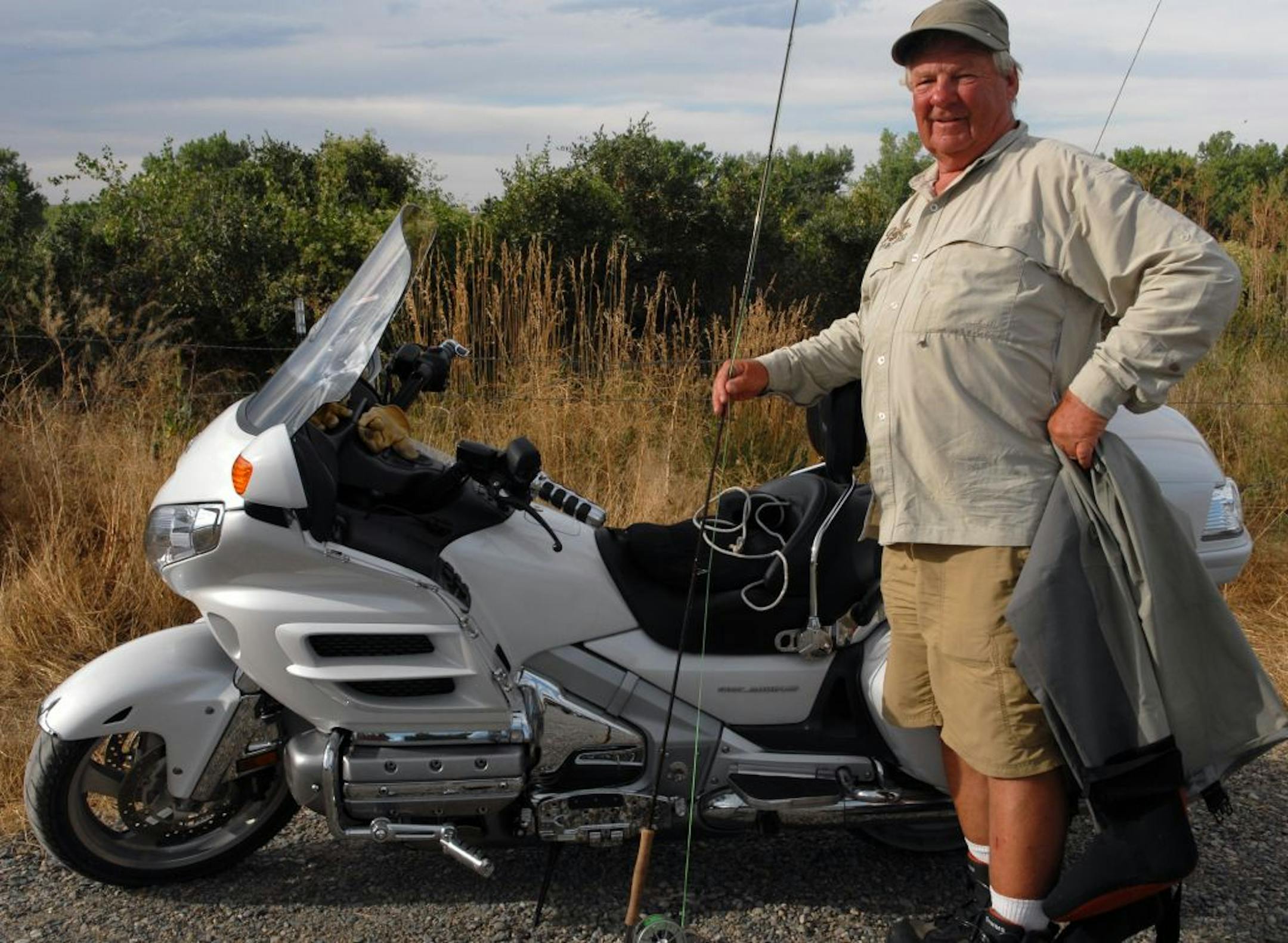
It was at the boat landing that I saw a man sitting at a picnic table beneath a cottonwood's broad shade. He was piecing together a fly rod and stringing line through its guides, readying for an evening's fishing on the Bighorn. He had no boat. Instead, he planned to wade upstream and down, foot traveling and looking for a few takers among the river's brown and rainbow trout. Nearby, like a horse tied to a post, was his motorcycle, a Honda Gold Wing, resting.
"I left a little over a month ago from the Twin Cities," said David Rovick, who lives in Edina. "I drove about 600 miles the first day to visit some pheasant-hunting friends from Deadwood, South Dakota. Then on to Wyoming and into Montana, where I fished the Madison River, then to Idaho to fish the Lochsa River, and from there out to Portland, where I fished the Deschutes."
A native Minnesotan and longtime angler, Rovick, 72, is a born again biker. While their two daughters were growing up, his wife believed he would make a more utilitarian father were he not so often astride his Harley. He agreed, and sold that machine. Now the girls are adults, one in Portland and one in San Diego, and Rovick is again fueling his twin pastimes, fishing and scooter riding, in month-long summer jags.
"I've done about 5,500 miles so far on this trip," he said. "The bike's been great. With cruise control and GPS, it's nothing like the old days. Seventy-five miles an hour and it just loafs along."
Aside from his cased fishing rods (fly and spinning), which he ties vertically to the Honda on each side of its passenger seat, Rovick doesn't need much by way of luggage. A few changes of clothes, give or take. Then, mile by mile, he sets his sites on various rivers and banks his bike in their direction, sometimes a hundred or so miles off a beaten path. As necessary he'll bum intel from a local fly shop before resting his pearl-white Honda on its kickstand and starting to cast.
"I fished the Bighorn on the way out to Portland, too, and it was good," Rovick said. "I used the same rig I would have used if I had been fly fishing. Except I used my spinning rod with a weighted bobber to get it out into the river. I could get a 50-foot drift with that thing."


