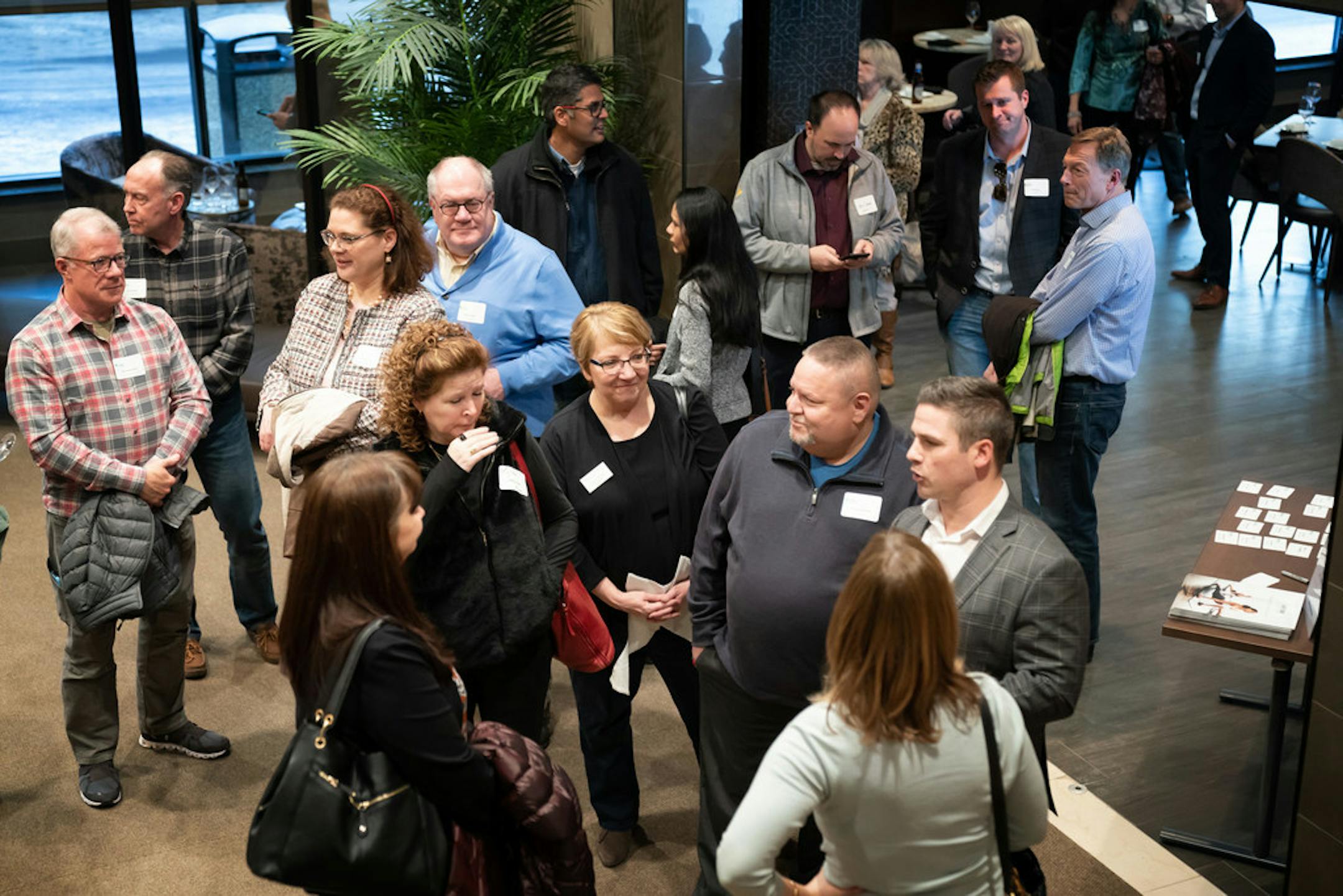
![Edina Chamber of Commerce president Lori Syverson, left, and development director Deb Hansen, right, spoke with folks gathered at the new Edina Life Time Fitness. ] GLEN STUBBE • glen.stubbe@startribune.com Friday, February 21, 2020 In an effort to stay relevant, many local chambers of commerce have moved away from traditional models, launching new initiatives and partnerships and taking on more sweeping roles in their communities.
We look at how metro area chambers are changing, focusing](https://arc.stimg.co/startribunemedia/EMSLHZLOKLSCNF5GCHW44T442Q.jpg?&w=1080)
When Lori Syverson's parents opened an Italian restaurant in Waukesha, Wis., more than 35 years ago, her father made a point of joining the local chamber of commerce. He figured membership could help bring more customers through the door.
Businesses today don't need the local chamber of commerce for marketing, said Syverson, who should know — she's president of the Edina Chamber of Commerce. Instead, she said, "New members are looking for something different than that traditional model."
Suburban chambers of commerce are branching out from the conventional chamber model, gearing more programming toward workforce development, shaping talent pipelines with local school districts, addressing job shortages and preparing young people for emerging industries.
While they continue to plug local businesses and offer networking, many chambers have revised their mission statements to play a more holistic role in the community.
Edina's chamber, for example, last week unveiled a new initiative aimed at branding the city as a center of well-being — a place where physical, social and spiritual health is cultivated and residents and visitors can find purpose.
The thought is simple, Syverson said: "If you have a healthy, more vibrant community as a whole, you are then going to have a healthier and more vibrant business community."
"We have to be thinking about programs that are relevant to the community and the times," said Tom Snell, executive director of the White Bear Area Chamber of Commerce. For Snell, that means anticipating trends and thinking about what successful businesses and employees will need a decade from now.
Two years ago, a White Bear Area chamber luncheon featured a visit and speech by a humanlike robot that talked about the future of artificial intelligence and robotics. Snell had worked for years to bring the robot to White Bear Lake to spark a conversation about what industries may someday employ humanoid robots and how employers and educators could prepare.