
East Coast researchers bobbing for rip-current data

For beachgoers' safety, scientists are using buoys to predict rip currents.

July 26, 2014 at 10:54PM
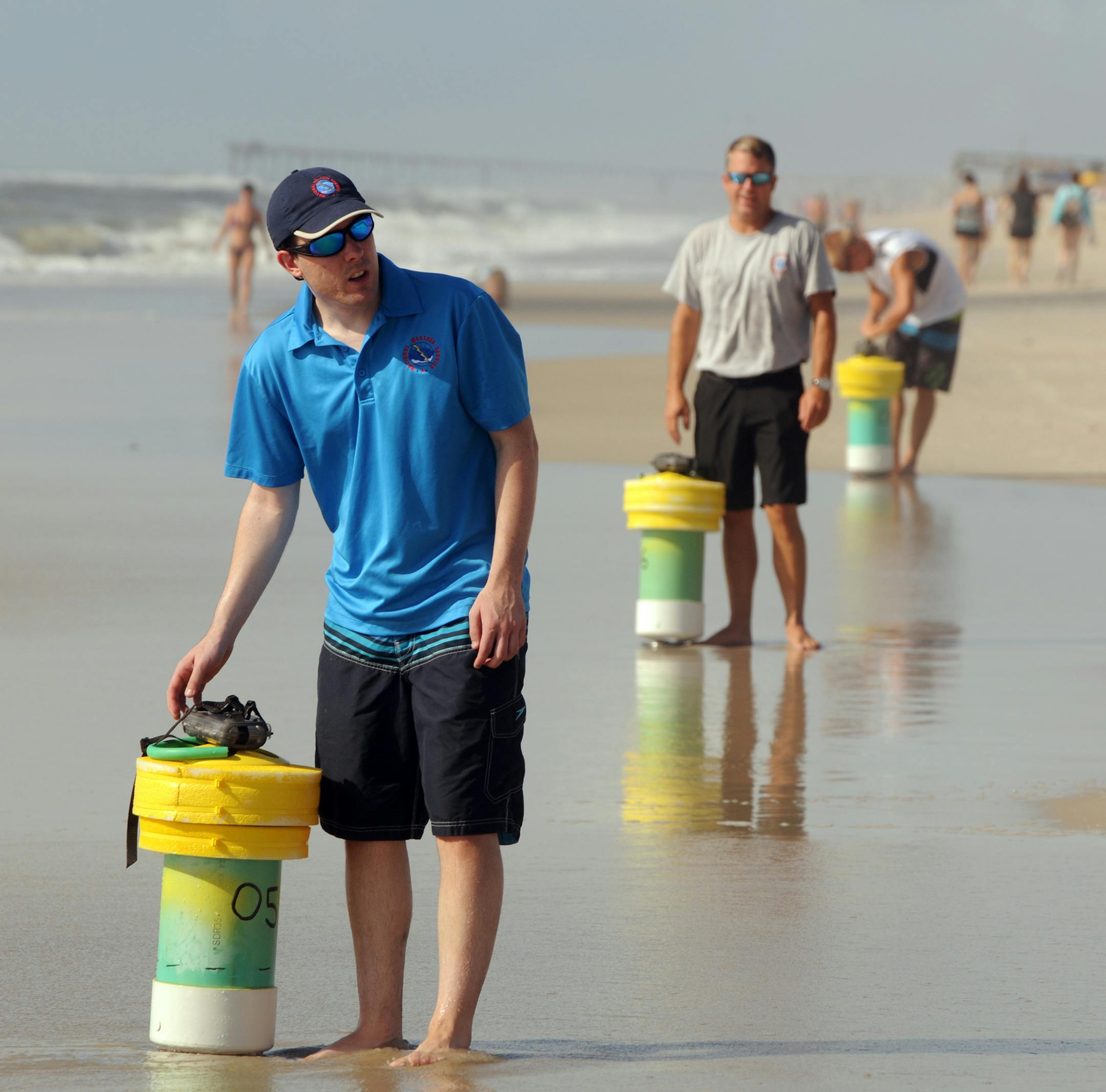
Brad Reinhart, a meteorologist and rip current forecaster with the National Weather Service, prepares to launch a buoy into the surf that will collect rip current data in Carolina Beach, N.C., Wednesday, July 23, 2014. (AP Photo/The Star-News, Mike Spencer) LOCAL TELEVISION OUT; LOCAL INTERNET OUT ORG XMIT: MIN2014072615044342
National Weather Service meterologist Brad Reinhart prepared to launch a buoy that collected rip current data into the surf Wednesday. Researchers hope the data will help with predicting rip currents. (The Minnesota Star Tribune)

CAROLINA BEACH, N.C. – For much of Wednesday, a small group of volunteers and researchers walked in and out of the surf testing a new form of surveillance on the biggest killer of beach swimmers — rip currents.

Again and again, the researchers toted 3-foot yellow-and-green contraptions fashioned from foam, plastic sewer pipe, gym weights and cheap GPS units into the surf, then walked along the beach to wherever the odd devices washed up and retrieved them under the gaze of puzzled sunbathers.

Rip currents are thought to be responsible for 80 percent of all U.S. surf rescues and are by far the most common reason that coastal swimmers drown.

"It's really frightening for swimmers because it's like an endless treadmill for them," said Simon Sanders, an ocean-rescue supervisor who was part of the research team.

The vast majority of his lifeguards' rescues, he said, were because of rip currents. The guards who know how to deal with the currents often use them to zip out more quickly to swimmers in trouble.

The nature of perilous currents is straightforward: Water piles up between the beach and an offshore sandbar, then finds a low point in the bar and rushes back out to sea, sometimes carrying swimmers.

But scientists have only recently begun figuring out the life-or-death nuances of the currents. The 22 "data-logging drifters" that the team on the beach deployed Wednesday up the center of a weak rip current are thought to be the first ever used on the East Coast.

The team hopes the research will lead to more accurate ways of predicting rip currents and also, perhaps, better methods of escaping them.
The gadgets float along as swimmers would and let researchers precisely and repeatedly track where the rip currents take them. They also gather other data on the currents' behavior, said Spencer Rogers, coastal erosion and construction specialist from North Carolina Sea Grant.

Sea Grant, which sponsors research, education and outreach on coastal issues, paid for the drifters and is partnering on the project with the National Weather Service, the Center for Marine Science at the University of North Carolina-Wilmington and several local lifeguard programs.

Last week, the surf was relatively calm and the likelihood of dangerous rip currents was at the lowest of three risk levels that the National Weather Service uses for predictions. The group had set up right in front of a rip current that had been seen in the same location for weeks.

The rip current clearly was happening, but the current was weak, and several swimmers and surfers bobbed cheerfully right in the middle of it.

The lack of danger actually underlined one reason why the research that could improve forecasting rip currents is important: They are unpredictable.

The currents develop constantly, but a given stretch of beach in North Carolina may develop the right combination of conditions to create lethally strong ones only five to 10 days a year, Rogers said.

"They're almost never dangerous, but when they are, Michael Phelps couldn't keep up with one," he said.


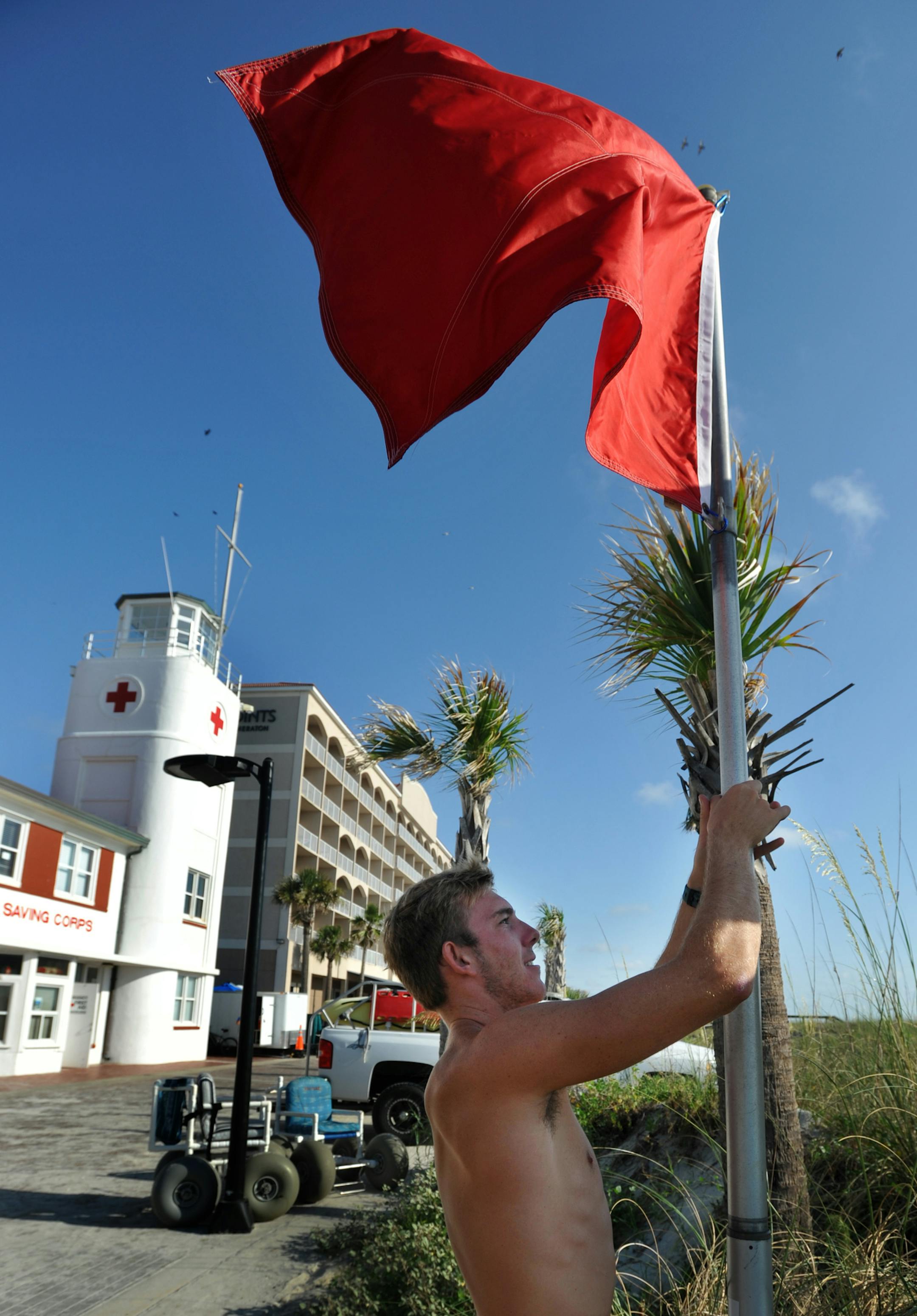
07/01/14--Lifeguard Travis Blakeslee raises the red high hazard flag, Tuesday morning, July 1, 2014, at the Red Cross lifeguard station in Jacksonville Beach, Fla. The red flag was raised in anticipation of rip currents and high waves from a tropical depression forming off Florida's coast that is expected to become Tropical Storm Arthur and pass to the east of Florida. (AP Photo/The Florida Times-Union, Will Dickey) ORG XMIT: MIN2014070212282427
Red high-hazard flags are usually raised by lifeguards in anticipation of rip currents. (The Minnesota Star Tribune)
about the writer

about the writer

Jay Price, Raleigh News & Observer

More from No Section

See More
FILE -- A rent deposit slot at an apartment complex in Tucker, Ga., on July 21, 2020. As an eviction crisis has seemed increasingly likely this summer, everyone in the housing market has made the same plea to Washington: Send money — lots of it — that would keep renters in their homes and landlords afloat. (Melissa Golden/The New York Times) ORG XMIT: XNYT58
Melissa Golden/The New York Times

It’s too soon to tell how much the immigration crackdown is to blame.