

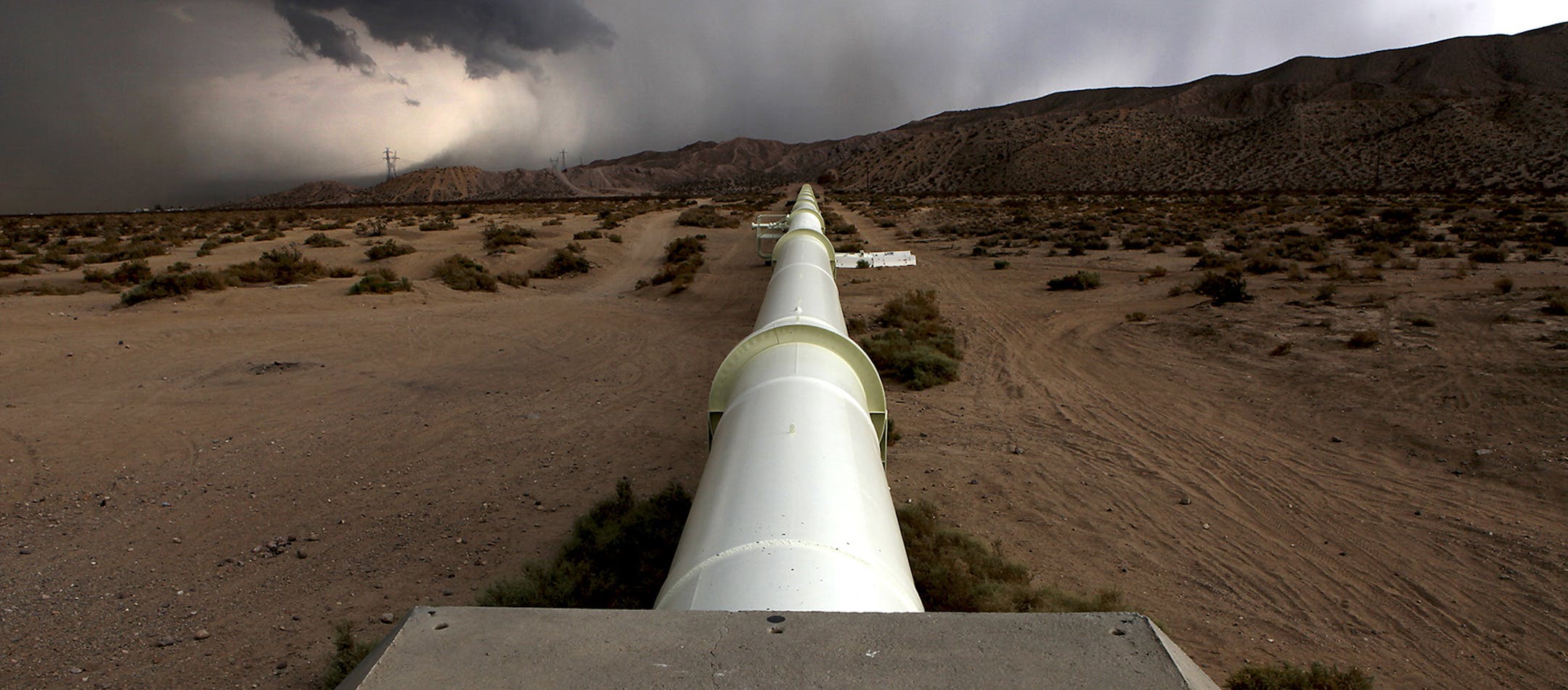
Los Angeles – This city gets 88 percent of its water from three major aqueducts, flowing from the Colorado River, Owens Valley and the Sacramento-San Joaquin River Delta. But as they make their way into the region, the aqueducts cross the San Andreas fault 32 times.
Officials have long warned that a big earthquake on the San Andreas could destroy key sections of the aqueducts, cutting off the water supply for more than 22 million people in Southern California.
L.A. officials are for the first time taking concrete steps to address the problem. Making the water supply less vulnerable to a huge quake will probably cost billions of dollars, and it is unclear where that money would come from.
Mayor Eric Garcetti has asked for proposals aimed at protecting the water supply and developing alternatives in case a quake blocks the aqueducts. Ideas include strengthening waterways and developing an emergency supply for firefighters using ocean water and reclaimed water.
Los Angeles is behind the San Francisco Bay Area in this effort. The East Bay Municipal Utility District has built backup tunnels, stronger pipes and new waterways to ensure that water continues flowing from the Sierra Nevada even if one of its three main aqueducts is blocked. The efforts have cost more than $350 million, paid by water customers, bonds and government grants.
Flexible pipe
The San Francisco Public Utilities Commission built a new water tunnel under San Francisco Bay and installed a pipe that crosses the Hayward fault. The pipe is connected by accordionlike joints that allow it to flex and swing. The projects are part of a $4.8-billion effort funded by a surcharge on water bills.
Compared with other large cities, Los Angeles is critically dependent on water sources far from the city center, said U.S. Geological Survey seismologist Lucy Jones, the mayor's science adviser.
"We're the first city that's really bet its life on outside water," Jones said. "We have to cross the faults."


