

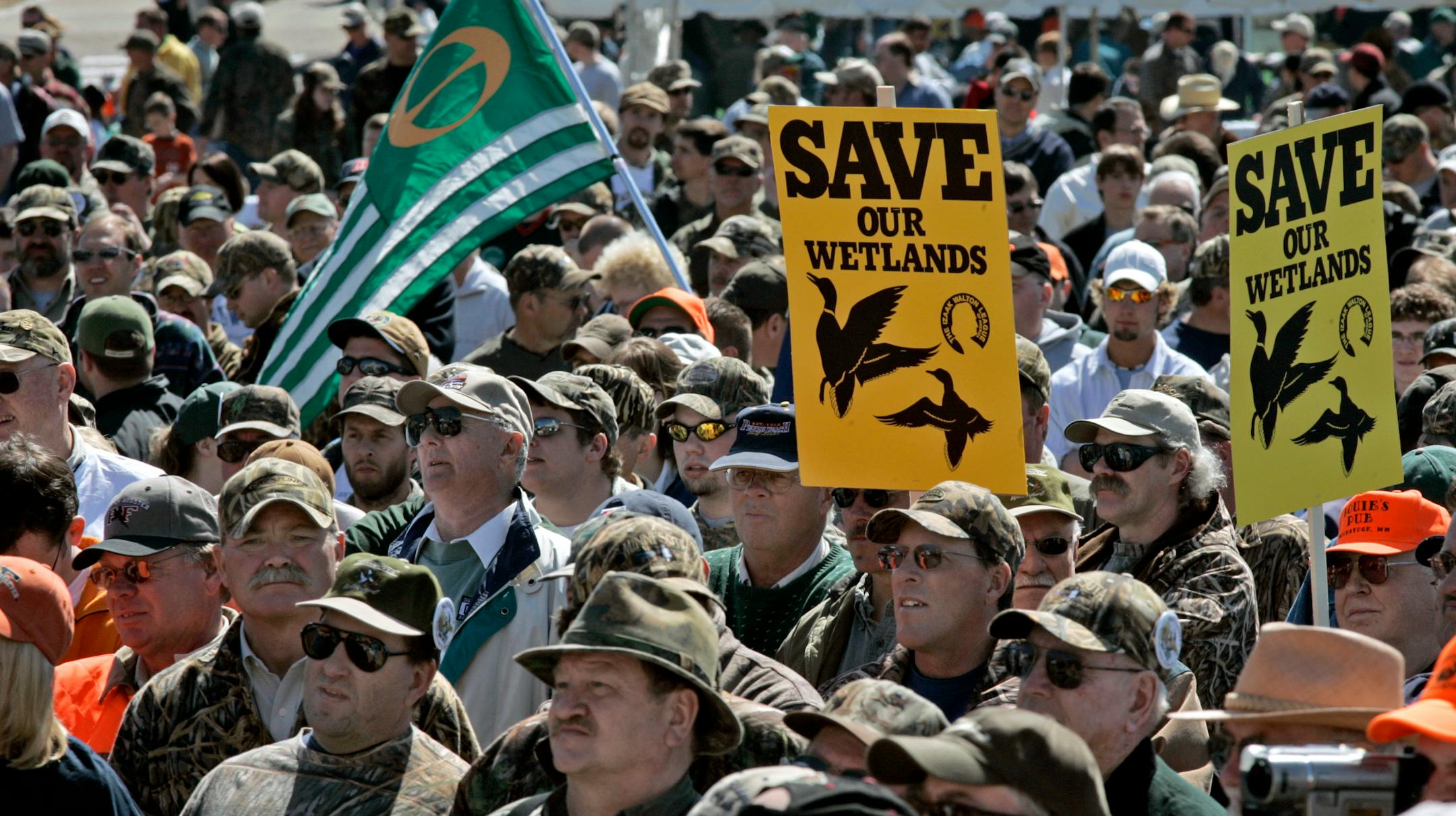
In a perfect world, Earth Day — celebrated worldwide each year on April 22 — would remind hunters and anglers, as well as those who are more generally described as "environmentalists," that only by working together can today's manifold threats to land, water, air, fish and wildlife be effectively countered.
The 1970 brainchild of Gaylord Nelson, then a U.S. senator from Wisconsin, Earth Day was initially organized as a "teach-in'' to be held on college campuses. April 22 was chosen because it marked "a weekday falling between spring break and final exams to maximize the greatest student participation.''
Initial Earth Day gatherings were successful because they capitalized on the revulsion many Americans felt following multiple environmental catastrophes, including the 1969 Santa Barbara, Calif., blowout that spewed oil into the ocean for 11 consecutive days.
It's unlikely the first Earth Day would have gathered much attention, or participation, if Nelson hadn't leveraged the tactics and rage of 1960s-era anti-Vietnam War protests.
"I am convinced that the same concern the youth of this nation took in changing this nation's priorities on the war in Vietnam and on civil rights,'' Nelson said, "can be shown for the problem of the environment. That is why I plan to see to it that a national teach-in is held."
Nelson had served in the Wisconsin Legislature for 10 years and was that state's governor for four years before beginning an 18-year U.S. Senate career.
Growing up in Clear Lake, Wis., not far northeast of the Twin Cities, Nelson knew firsthand the popularity of hunting, fishing, canoeing, camping and boating.
These pastimes and the lifestyles of many Americans who enjoyed them were threatened, Nelson believed, by pollution and other environmental hazards. In 1963, he convinced President John F. Kennedy to barnstorm the U.S. speaking about the importance of conservation and the environment.


