When birds are making a commotion, I always follow the sounds to the source, because it usually leads to a hidden raptor. One day this mobbing behavior led me to a fierce little owl, gripping a tree branch while three blue jays made a fearsome racket overhead.
This was my first-ever sighting of an Eastern screech-owl, some 30 years ago, and little did I know that many years would go by before I'd see another one.
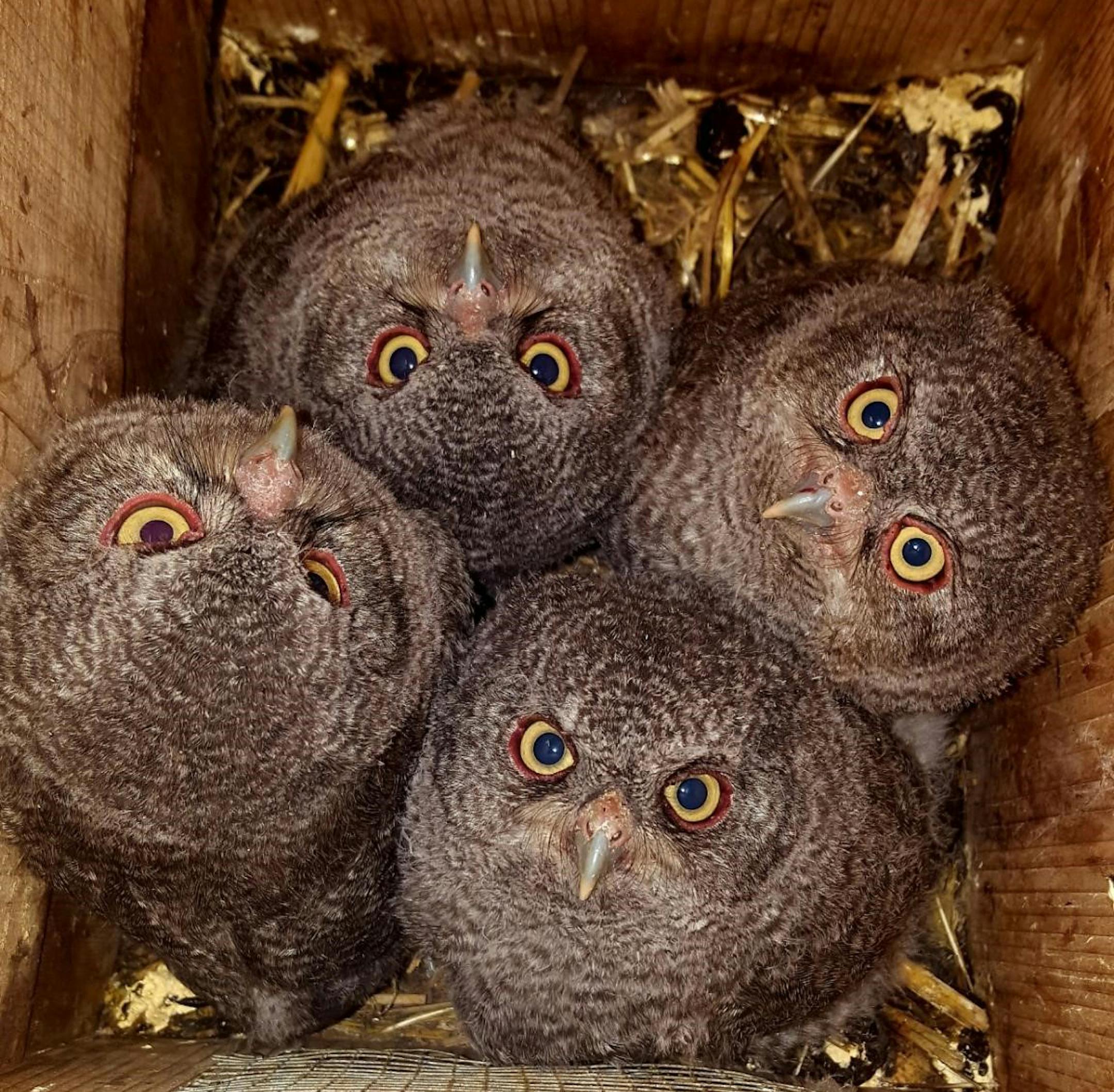
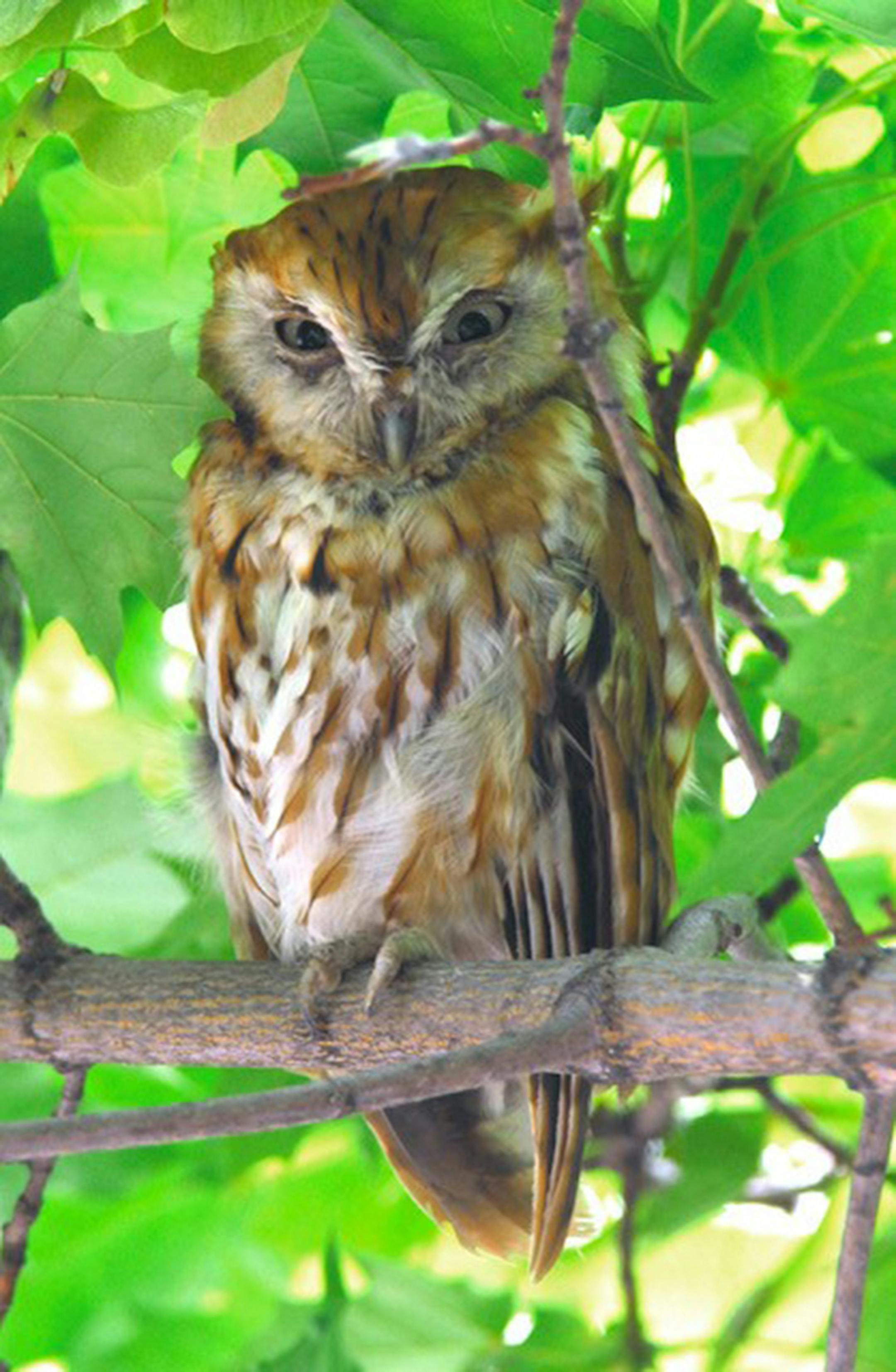
Screeches are handsome little owls, only about 8 inches tall even with their prominent ear tufts, so similar to great horned owls that some mistake them for "baby" versions of the large owls.
These owls are said to be widespread, even fairly common, in the eastern half of the country, often living in proximity to humans. But still, they're a challenge to find, and few of us ever see one. I've seen four screeches in my lifetime, and in every case, I didn't find the owl on my own but was led to it by noisy songbirds trying to drive it away.
They're so secretive that many of us may not realize we have owls living nearby. They don't migrate, so are around all year long.
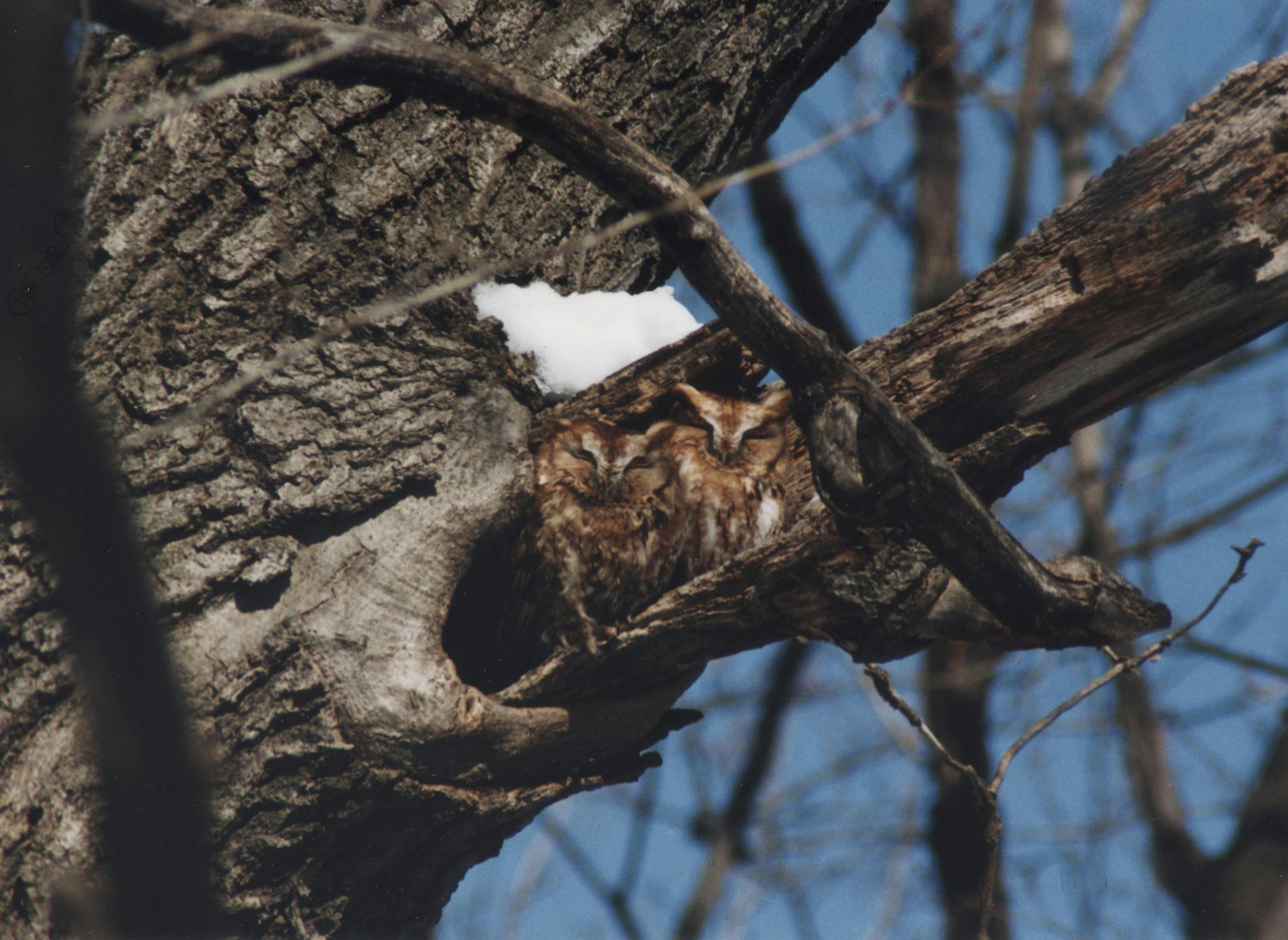
Screech owls need trees. They're found in a diversity of habitats — farmland, suburbs and even city parks — as long as there's sufficient tree cover. They roost during the day in trees and build their nests inside tree holes. And they love nothing better, on a cold day, than to sit in the entrance to a tree cavity, soaking up some winter sun.
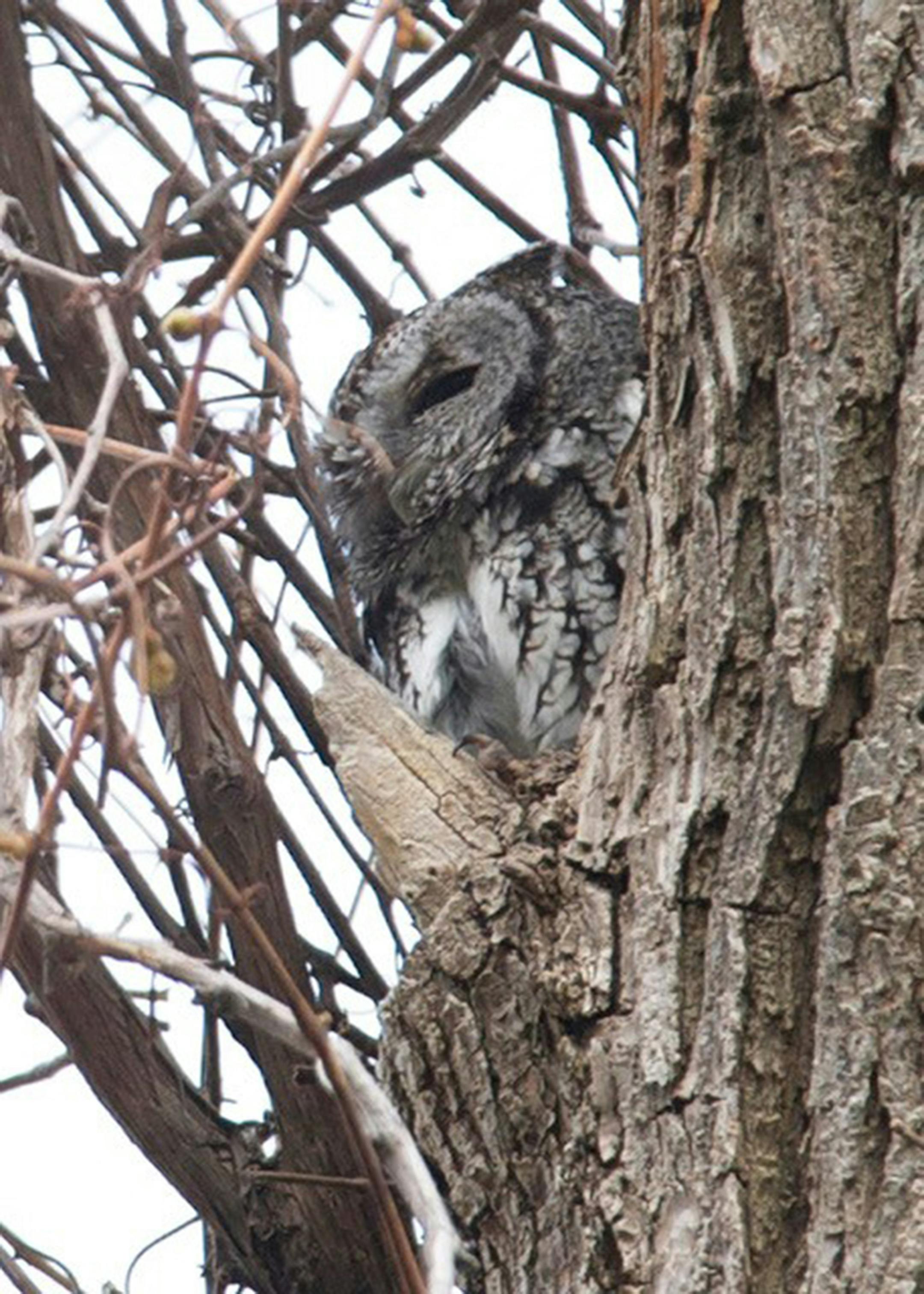
Screeches blend in perfectly with the tree bark behind them, especially if their large, yellow eyes are closed. And they work the night shift, hunting for their prey after dusk and through the night.
Owl spotters recommend listening for screech owls talking to each other after dark in the woods. They're vocal little owls, engaging in trills and whinnies to stay in touch with each other or warn off an intruding owl. If it's daytime and songbirds are making a commotion, follow their sounds and you may find an owl at the source.