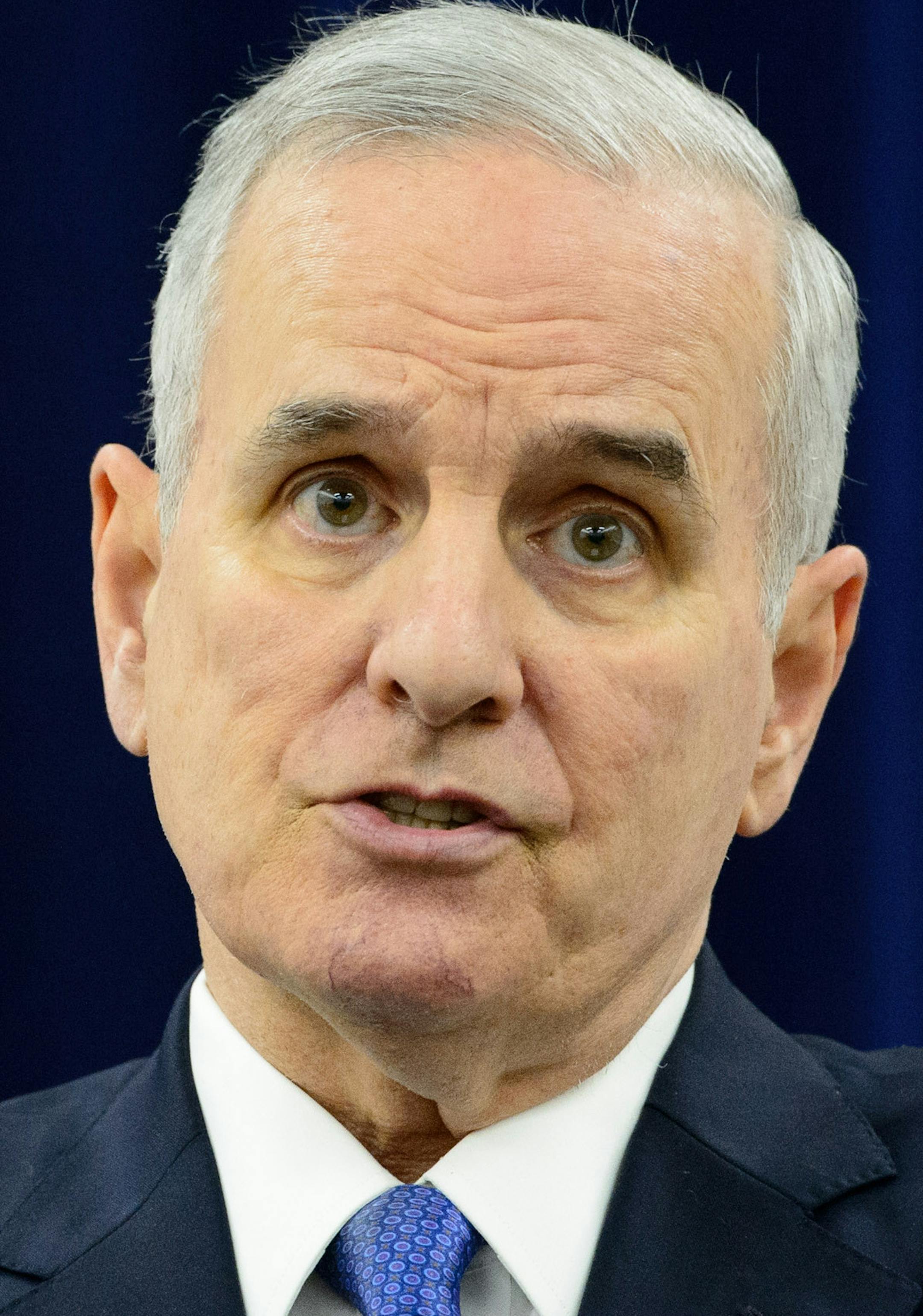
House Republicans and Gov. Mark Dayton each called in academic heavyweights to make their cases as negotiations over how Minnesota should deliver preschool instruction continued Thursday.
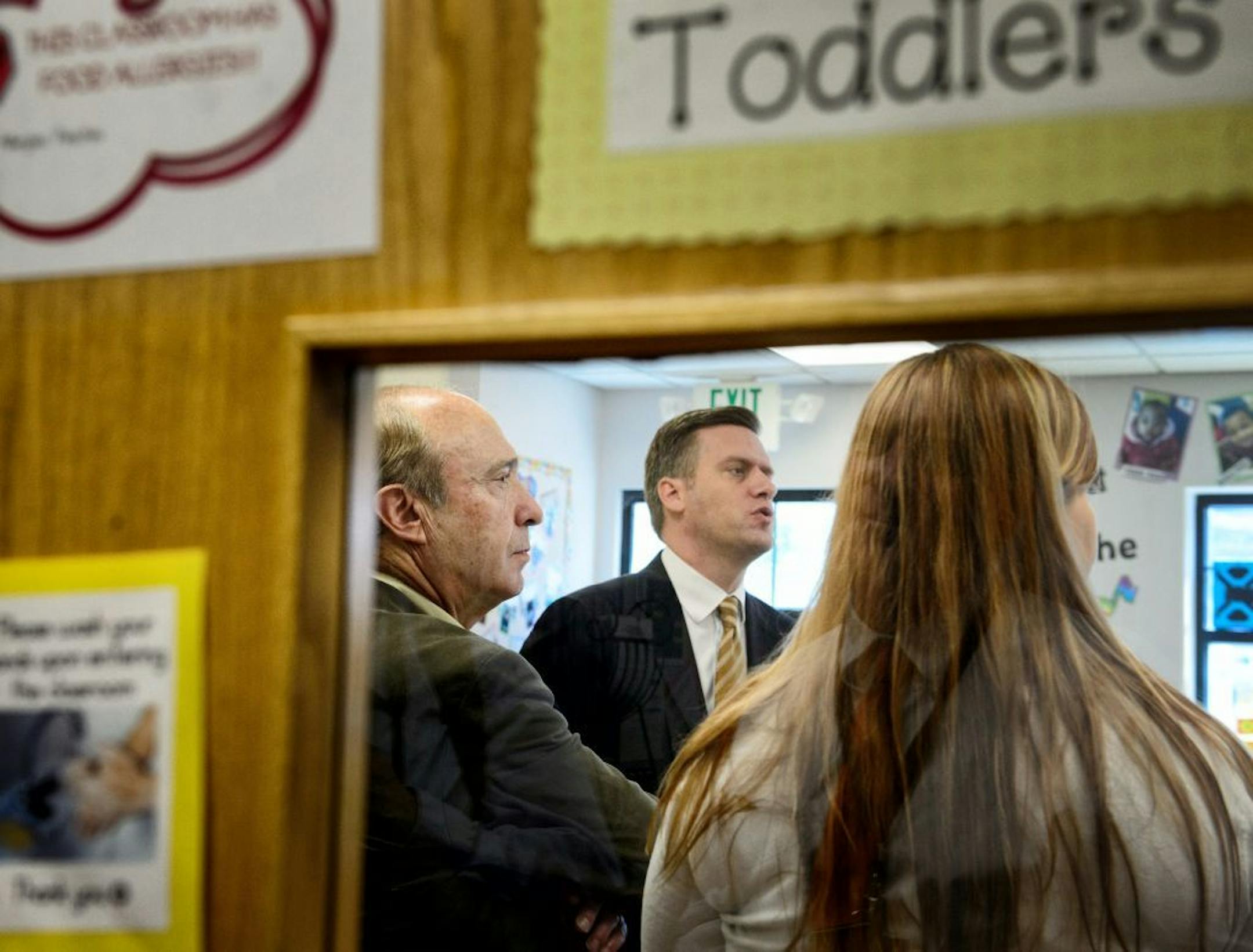
Art Rolnick, formerly a senior vice president at the Federal Reserve Bank of Minneapolis who has studied the benefits of early-childhood education, is standing with GOP leaders as they press for more funding for early learning scholarships. Rolnick and House Speaker Kurt Daudt touted the benefits of scholarships during a visit to a St. Paul day-care center Thursday.
Dayton, meanwhile, tapped Arthur Reynolds, a University of Minnesota professor in early childhood development, to join him, Daudt and other education officials during budget talks.
The discussions this week centered on the governor's top priority of universal access to preschool for an estimated 47,000 4-year-olds. Dayton recently rejected a $17 billion education budget bill, in part because lawmakers snubbed his preschool proposal over concerns of cost and effectiveness.
"What the governor and I agree on is, we want to close the achievement gap," Daudt, R-Crown, told reporters after visiting with preschoolers at a New Horizon Academy in St. Paul. "We have a little difference of opinion on how to achieve that, but I think Minnesota deserves to have a great debate like this."
Minnesota boasts a projected budget surplus of $1.9 billion, but lags many other states in access to prekindergarten programs. Experts point to research that shows strong early-learning programs ensure children are prepared for kindergarten and pay off in the long run by reducing the rate of juvenile delinquency and boosting high school graduation rates, among other benefits.
"This isn't theory anymore," Rolnick said after the New Horizon Academy tour. "Our kids are starting school healthy and ready to learn. It is working … It makes no sense to say you can only go to a public program. It makes no sense to start at 4."
Rolnick argues that scholarships give parents the choice between private providers or public programs, and allows families to enroll their children in programs beginning at birth.