

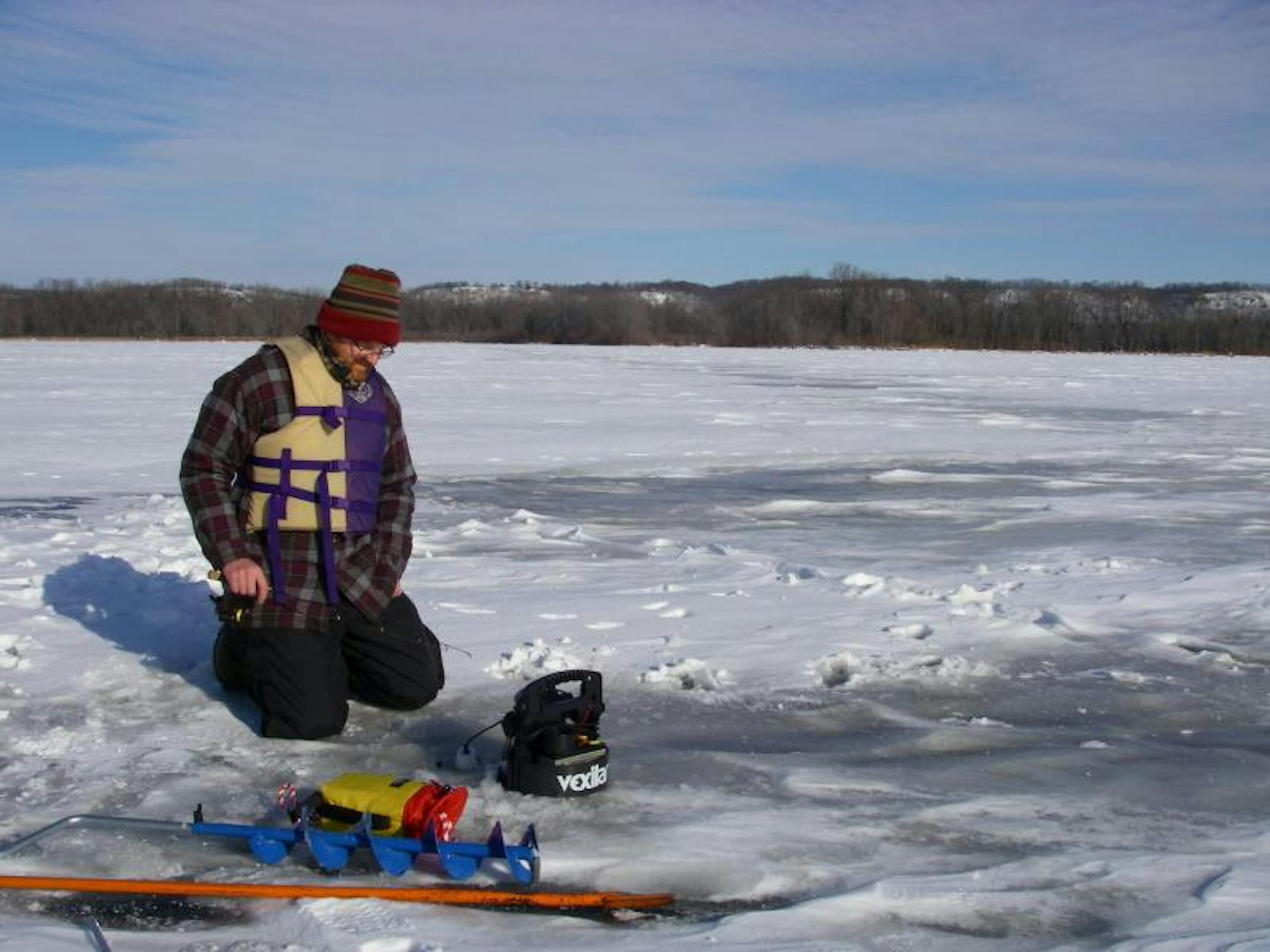
Early ice does not have to be a dangerous adventure.
The Star Tribune asked me to cover the topic of fly fishing even though a good portion of the fishing I do is not related to the subject. Occasionally you'll find me writing about other aspects of fishing. With many anglers venturing out to do some ice fishing I wanted to cover ice fishing safety in more detail. I'm not an expert on the subject, but have been ice fishing every year since I was two years old. I'd like to share some of the things I do to stay safe.
The first thing is to have a plan in place before you leave the house. Make sure someone knows where you are going. I highly recommend fishing with another person or at least in an area with other fishermen. Self rescue is far too risky. Check ice conditions before you go when possible. Bring along equipment for checking the ice and getting someone out of the water. Make sure there is some place real close to warm up in case someone goes through. Also bring a change of clothes just in case.
If you're not familiar with ice conditions on the body of water you want to fish, ask around. Good places to check are local tackle shops or business on the lake that have fishermen come through their doors. Ask about specific areas to watch out for as well as general ice conditions. If you're not able to get the information that you need you can check ice conditions as you go. Be prepared to move around slowly and use extra caution. Large bodies of water take longer to freeze because of the mass of water that needs to cool down to the freezing point. Shallow ponds and lakes will be the first to freeze unless there is something that keeps them from doing so. Ice will be thinner around moving water inlets and outlets. It will also be thinner around ground water springs. Thin ice can be more dangerous than ice with open water areas. You can see where the open water is and stay away from it. You can't tell where the thin ice is unless you know where to look or check for it. Also be aware that snow insulates the water from the cold air which helps form ice. It's possible to find thinner ice under snow covered areas. This may be the whole lake or only areas that are covered in snow.
Equipment to bring and how to proceed. An ice chisel or spud will be your primary tool for checking the ice. Use it to chop a hole in the ice as you go and check the ice depth often. A sharp heavy chisel will blow through a couple inches of ice with a couple of good blows. Each person and chisel will vary so learn your tool. I like to have at least four inches of ice under me when I'm fishing on foot. If I find three inches or less I back off and fish the safer ice. A chisel does not chop a clean hole so drilling a hole with an auger will give you the most accurate ice measurement. Have your fishing partner follow behind a safe distance as you proceed to check a new area. I like to have the person following carry a rescue throw bag. This is a floating rope stuffed inside a floating bag. You can see the yellow and red bag laying on the ice in the photo above. You can buy these at canoe and kayak shops. They are most often used for river rescue. If an accident happens and the lead person checking the ice goes through the other person can grab the end of the rope and throw the bag to the person in the water. They can help pull the person out from a distance on safe ice. Wearing a life jacket will keep you warmer summer or winter and more importantly it will keep you afloat. It's like wearing an insulated vest. Have a pair of ice safety picks hanging around your neck on the cord or in a open pocket so you can grab them easy. You can buy these where you get ice fishing tackle. Ice picks are held in you hand and stuck into the ice to help pull yourself out of the hole. Imagine trying to grab onto a sheet of ice to pull yourself and heavily soaked clothes out of the water then you'll understand why a life vest, picks, and a throw bag are a smart choice. And don't forget to put your cell phone in a zip lock bag so it works if you need it.
Fishing early ice can be a rewarding experience. The bite is often better than in the oxygen deprived waters of mid and late winter. In the 35 years that I have been ice fishing I have not seen anyone go through the ice. I only hear of it occasionally on the news. Most folks have enough common sense to be safe, but accidents do happen. As a community of anglers we should look out for one another and encourage each other to be safe. Since we spend a good deal of time on ice we can educate the inexperienced or unfortunate who may end up on the news. There's a good chance they would not be on there if they had a plan in place. What's your plan? Please share your knowledge and experience for the benefit of us all.


