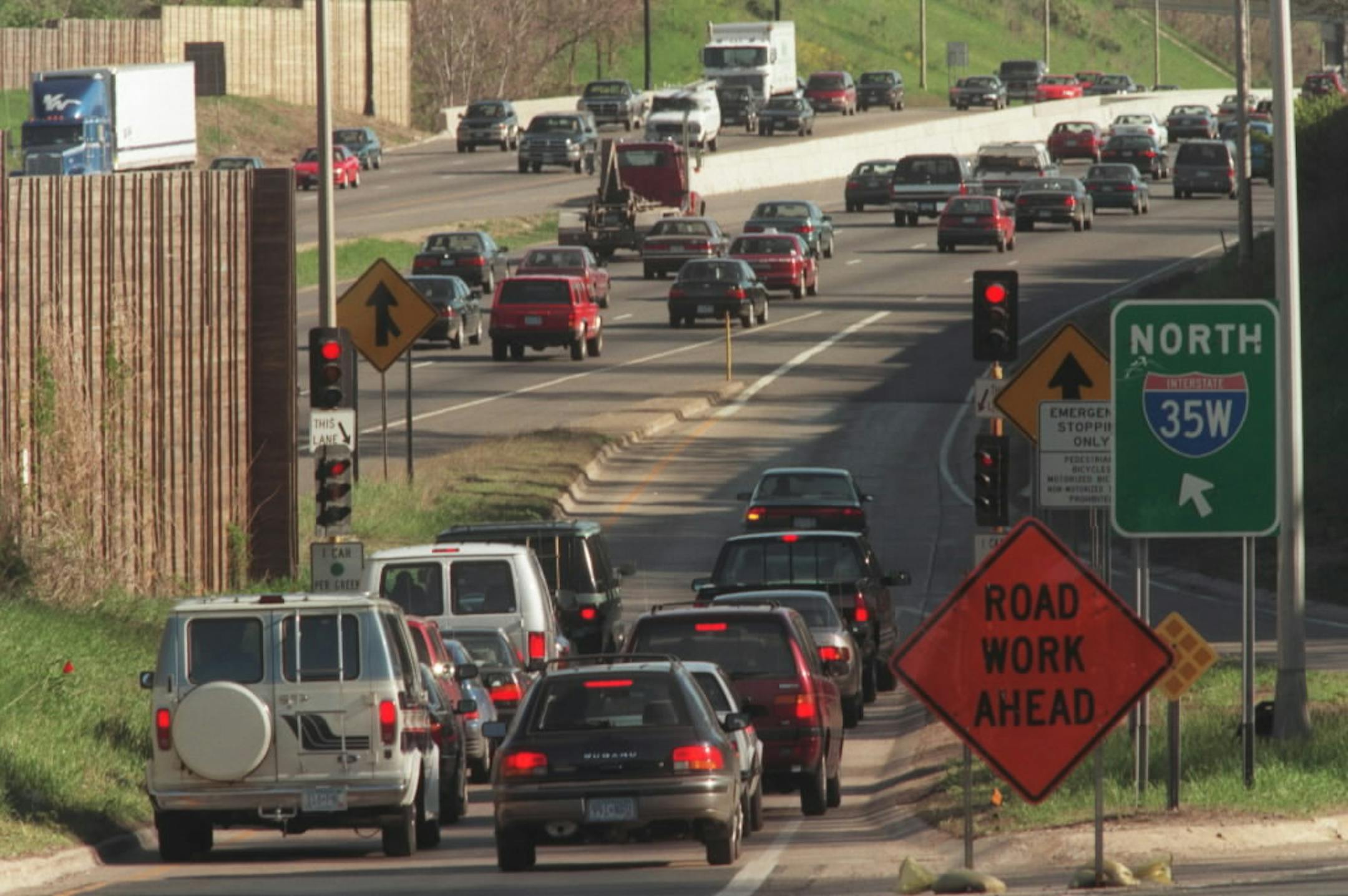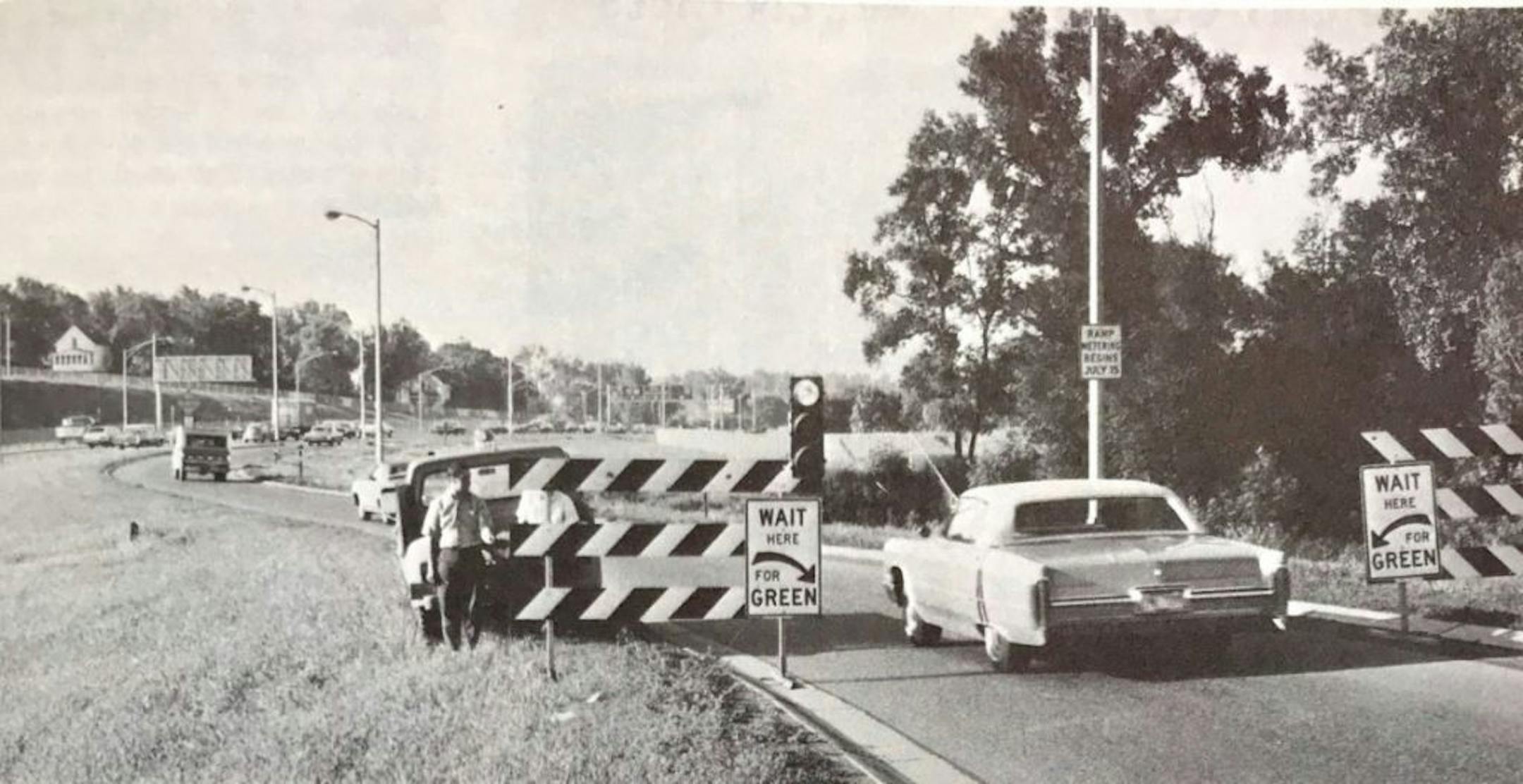
In the summer of 1969, the Minnesota Department of Transportation (MnDOT) tried a two-week experiment to alleviate congestion on Interstate 35E near downtown St. Paul. The agency installed traffic signals on ramps leading from Maryland Avenue, Roselawn Avenue and Wheelock Parkway to southbound I-35E to see if putting space between vehicles getting onto the freeway would improve traffic flow.
The metering operation worked.
"It found that through traffic will cooperate with a single car merging from the ramp, but has a tendency to be hostile to platoons of cars entering from the ramp," according to an article published in "Minnesota Highways," MnDOT's employee newsletter at the time.
Ramp meters became permanent at Maryland and Wheelock in October 1970, and a half-century later the Twin Cities has 461 meters — one of the largest networks of the quick-cycling lights in the nation.
"We were an early adopter," said Brian Kary, MnDOT's director of traffic operations, noting that the first meters in the nation appeared in Chicago in 1963 and Los Angeles in 1967.
Today, the meters are one of MnDOT's most effective tools in its efforts to keep traffic flowing as congestion worsens, Kary said. The 2018 Metropolitan Freeway Congestion Report found that motorists are caught in congestion 25% of the time during the morning and afternoon commutes, the highest levels since the state began conducting annual highway surveys.
MnDOT defines congestion as traffic moving at 45 mph or less.
In a study carried out in the early 2000s, MnDOT found using ramp meters during rush hours made travel times 22% faster, kept traffic moving 7 mph faster, and resulted in four fewer crashes on highways and freeways each day. MnDOT has not done a comprehensive study since, but Kary said drivers continue to benefit from the meters.