

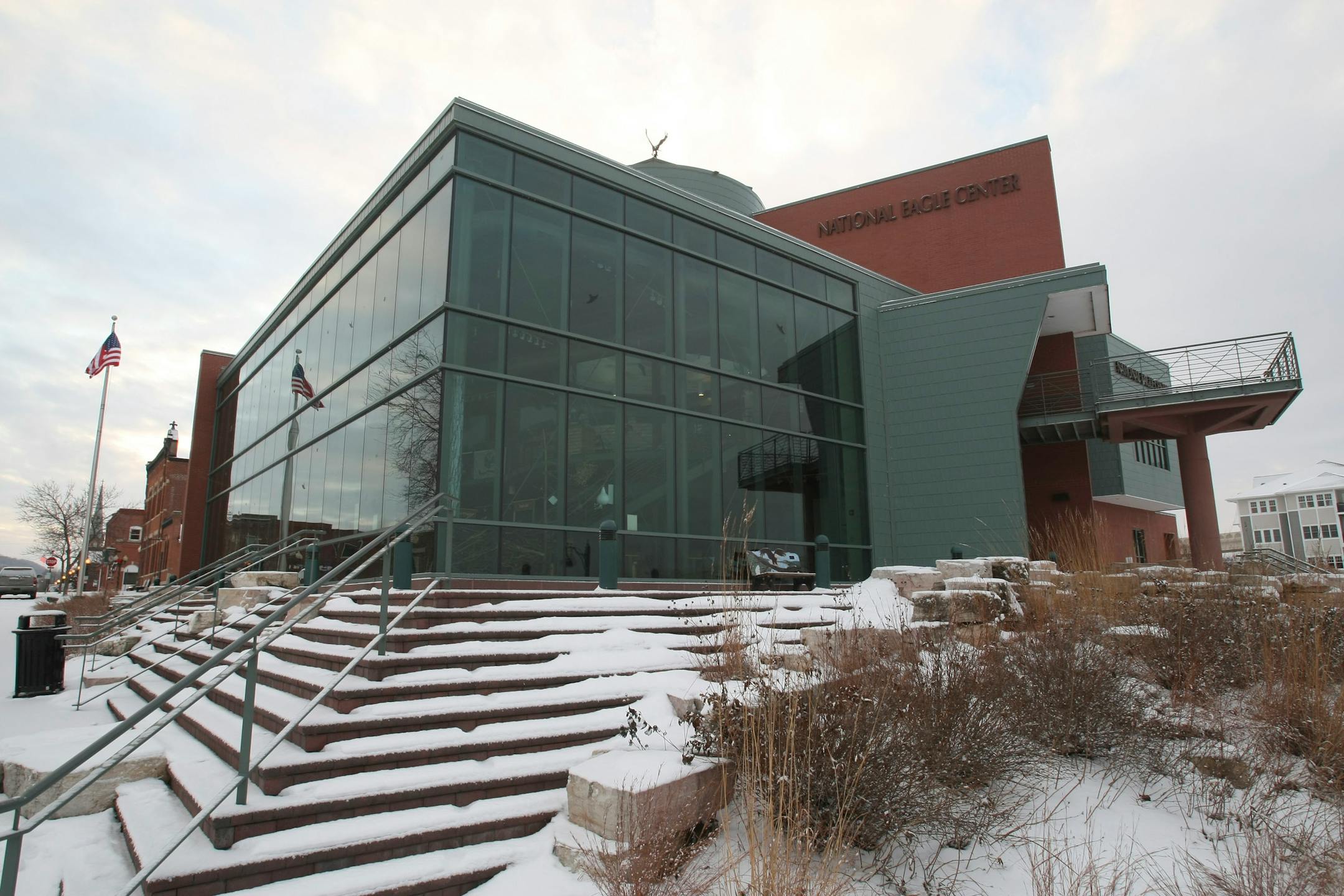
WABASHA, Minn. – What began 25 years ago as a simple idea — to help people see bald eagles during late fall, winter and early spring — has grown into the National Eagle Center, a major tourism draw for Wabasha and a center for educating people about eagle habitat.
But the center isn't big enough, and plans are in the works for a larger facility.
First there was Eagle Watch, which started with volunteers standing along the Mississippi River — often in nasty cold — with binoculars, spotting scopes and information. In 2007, the National Eagle Center opened with 15,000 square feet of space for exhibits, classrooms, and captive bald and golden eagles — all with the goal of educating the public about eagles. Today, you don't have to stand outside to watch eagles.
Growth will continue into the next five or 10 years, said executive director Rolf Thompson, but the mission won't change. The center is still here to help people see and better understand eagles and, the center hopes, to spur people to do more to protect eagle habitat.
Several decades ago, eagle numbers, as well as those of other raptors, were dropping because the chemical DDT got into their eggs, thinning the eggshells and resulting in fewer hatchlings. Habitat loss and intrusion by human activities also had an effect. Once DDT was banned, eagle numbers rebounded and the birds are now numerous.
Eagles are such great symbols, easy for people to admire and understand, Thompson said. Roman legions had eagles on all of their standards, for example, and eagles can be found on the flags of all U.S. military branches, he said. The birds are also very important to Native Americans.
Other raptors might be as large or faster, but they "don't mean the same thing to Americans as eagles do," Thompson said. "It is a very charismatic subject; everybody has an eagle story."
In addition, eagles can also push people to help the environment, because the birds are an indicator of how the Mississippi River is doing.


